
Yes, wiping with a paper towel can irritate your skin. The risk is highest when the sheet feels rough, you rub repeatedly, the skin is already dry or inflamed, or you wipe a delicate area such as the face, nose, or intimate skin. Friction is usually the main problem, rather than the paper towel causing a true allergy.
For occasional use, choose a soft, clean, fragrance-free sheet and press or blot instead of scrubbing. Stop if you notice burning, persistent redness, itching, cracking, or pain. A reaction that is severe, spreading, infected, or slow to improve needs medical assessment because eczema, contact dermatitis, infection, and other conditions can look similar.
Key takeaways
- Paper towel irritation is usually caused by friction, repeated wiping, pressure, or contact with already-sensitive skin.
- Wet, inflamed, recently shaved, sunburned, or eczema-prone skin is more vulnerable to rubbing.
- Blotting or pressing creates less friction than dragging a dry sheet across the skin.
- A soft facial tissue or clean cotton cloth may be better for frequent contact with delicate skin.
- Persistent rash, swelling, broken skin, discharge, severe pain, or breathing difficulty requires appropriate medical care.
Why Can Paper Towels Irritate Skin?
Paper towel irritation develops when wiping removes or disrupts more of the skin’s protective surface than it can comfortably tolerate. The outer skin barrier limits water loss and helps keep irritants outside. A single gentle blot on healthy skin may cause no problem, but firm back-and-forth wiping creates mechanical friction. Repeating that motion can leave the area red, warm, tight, tender, or stinging. The same pressure feels more abrasive when the sheet has a coarse texture, raised embossing, stiff wet-strength construction, or a dry surface that catches against the skin.
Moisture changes the situation but does not always make it safer. Damp skin can become softer and more vulnerable to rubbing, especially after handwashing, sweating, bathing, diarrhea, or repeated nose wiping. Soap, sanitizer, cleanser, household chemicals, body fluids, or food residue may remain on the skin or transfer to the sheet. In that case, the irritation can come from a combination of friction and chemical exposure. The paper towel may be the wiping tool, but it may not be the only cause.
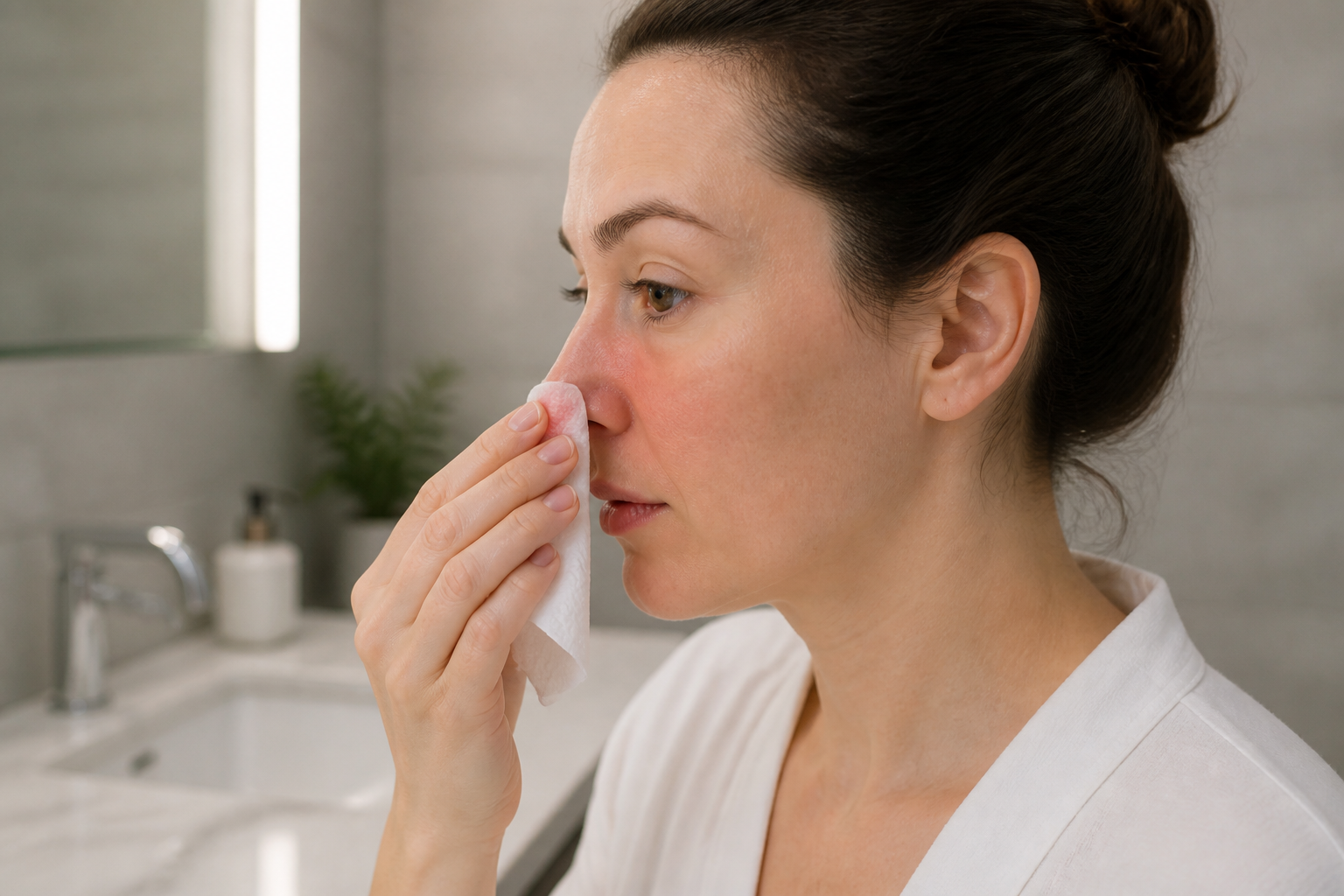
Friction and Repeated Wiping
Friction increases with pressure, speed, surface roughness, and the number of passes over the same spot. You can see this after wiping a runny nose throughout the day, drying hands after frequent washing, removing sweat during exercise, or cleaning an area until it feels completely dry. The first few wipes may feel harmless, while later contact produces burning because the skin has already been stressed. Scrubbing harder rarely solves the underlying task. If moisture or residue remains, switch to a clean section, rinse when appropriate, or use a product designed for that body area.
Skin Barrier and Existing Sensitivity
Your starting skin condition matters as much as the paper product. Dry skin, eczema, contact dermatitis, rosacea, acne treatment, recent exfoliation, sunburn, shaving, minor cuts, and cold-weather chapping can reduce tolerance for friction. Children, older adults, and people who need frequent personal care may also have more fragile skin in certain areas. If wiping causes discomfort only when the skin is already inflamed, the paper towel may be aggravating an existing problem rather than creating a new condition. Reducing contact is still useful, but recurring symptoms deserve a closer look at soaps, cleansers, medications, laundry products, workplace exposure, and the underlying skin condition.
Where Can Paper Towels Irritate Skin?
Paper towel irritation can occur anywhere, but risk changes with skin thickness, moisture, frequency of wiping, and the reason for contact. Hands often tolerate an occasional sheet but may react after repeated washing and drying. Facial skin, the area around the nose, eyelids, lips, genitals, and skin folds are more delicate. Recently shaved skin and active rashes also respond poorly to rough contact. The correct alternative therefore depends on the location and the task, not on one universal rule.
| Area or situation | Why irritation may occur | Lower-friction approach |
|---|---|---|
| Face after washing | Thin or treated skin may react to rough texture and dragging. | Press gently with soft facial tissue or a clean, soft face cloth. |
| Nose during a cold or allergies | Frequent wiping and moisture repeatedly stress the same skin. | Use soft, fragrance-free facial tissue and blot instead of scrubbing. |
| Hands after washing | Water, soap, sanitizer, and rubbing can combine to dry the skin. | Rinse thoroughly, blot dry, and apply fragrance-free moisturizer when needed. |
| Intimate or perianal skin | Thin skin, moisture, body fluids, and repeated wiping increase sensitivity. | Use products intended for personal hygiene, gentle water cleansing, and careful patting. |
| Cut, rash, burn, or medical procedure site | The protective barrier is already damaged and loose fibers may stick. | Follow wound-care or clinician instructions and use the specified sterile material. |
Face and Nose
Kitchen paper towels are made to absorb spills and remain usable while wet. Those performance goals do not automatically make them suitable for repeated facial contact. A sheet that works well on a counter may feel too firm around the eyes, lips, or nostrils. If you need to remove water or sweat from your face, a soft facial tissue designed for skin contact is usually a more appropriate disposable option. Whatever you use, press and lift. Do not use dry wiping as a substitute for cleansing sunscreen, makeup, or visible dirt.
Hands and Work Settings
In kitchens, clinics, workshops, schools, and other shared settings, paper towels are useful because each user receives a fresh sheet. Irritation is more likely when handwashing is frequent, soap is harsh, sanitizer is used repeatedly, or drying involves vigorous rubbing. The best response is not necessarily to stop using paper towels. You can reduce pressure, blot between the fingers, remove soap residue completely, and use a compatible moisturizer. A controlled dispenser may also prevent you from grabbing a large bundle that encourages unnecessary rubbing.
Which Paper Towels Are Better for Sensitive Skin?
Paper towels for sensitive skin should feel soft, release little lint, absorb with light pressure, and contain no added fragrance. No product can guarantee that every person will avoid irritation, and terms such as soft or gentle do not replace checking the complete product information. You should also match the product to the task. A strong kitchen paper towel may be appropriate for drying intact hands but still be unsuitable for the face, a rash, or broken skin.
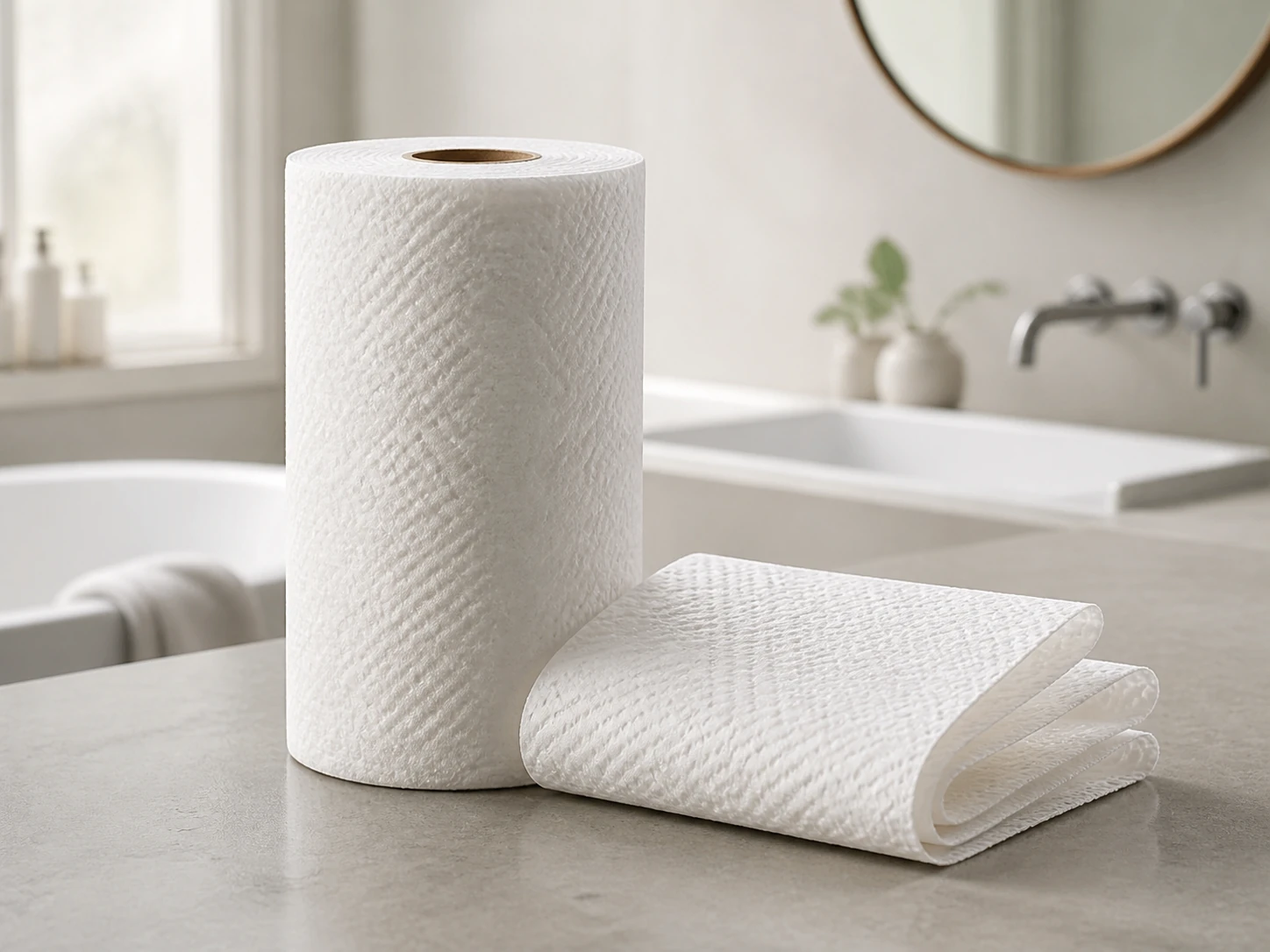
When you compare products for routine skin contact, focus on the features that change the wiping experience:
- Surface feel: Choose a sheet that does not feel scratchy when moved lightly across the back of your hand.
- Absorbency: Better paper towel absorbency may reduce the number of contacts needed to remove water, although absorbency does not make rough wiping safe.
- Wet integrity: The sheet should stay together during light blotting without leaving pulp or fibers on the skin.
- Fragrance and lotion: Select fragrance-free products if you are sensitive to scented personal-care or cleaning products.
- Intended use: Use facial tissue, toilet tissue, medical gauze, or another purpose-designed product when the body area calls for it.
- Personal response: Stop using a product that repeatedly causes redness, itching, burning, or swelling, even if its label uses sensitive-skin language.
Do not assume that brown, white, recycled, bamboo, virgin-pulp, embossed, or multi-ply paper towels are automatically better or worse for skin. Fiber source and appearance do not tell you everything about surface softness, dust, wet strength, additives, or consistency. If you are evaluating samples, compare the finished sheets under the same conditions and record how many gentle blots are required. A product that absorbs quickly but leaves visible lint may not suit facial use, while a very smooth product that collapses when damp may require repeated contact.
How Can You Use Paper Towels Without Irritating Skin?
You can lower the chance of irritation by using the least pressure and the fewest passes needed for the task. The goal is to absorb moisture or lift residue without dragging the sheet repeatedly over the same skin. Start with a clean product that suits the body area, and replace it when it becomes saturated, dirty, or rough. If the task requires actual cleansing, use water and an appropriate cleanser rather than trying to scrub the skin clean with a dry paper towel.
- Choose the correct material: Use paper towels for intact hands or brief general drying, facial tissue for the face or nose, and clinician-recommended material for wounds.
- Remove the irritant first: Rinse away soap, sanitizer residue, sweat, cleaning solution, or body fluid when water cleansing is appropriate.
- Fold the sheet: A stable folded surface is easier to control than a crumpled edge that may scrape or concentrate pressure.
- Press and lift: Hold the sheet against the damp area briefly, then lift it away instead of moving it back and forth.
- Use a fresh section: Rotate or replace the sheet rather than spreading moisture, residue, or contaminants over a larger area.
- Stop before discomfort: Stinging, heat, or increasing redness is a signal to stop wiping and reassess the product and method.
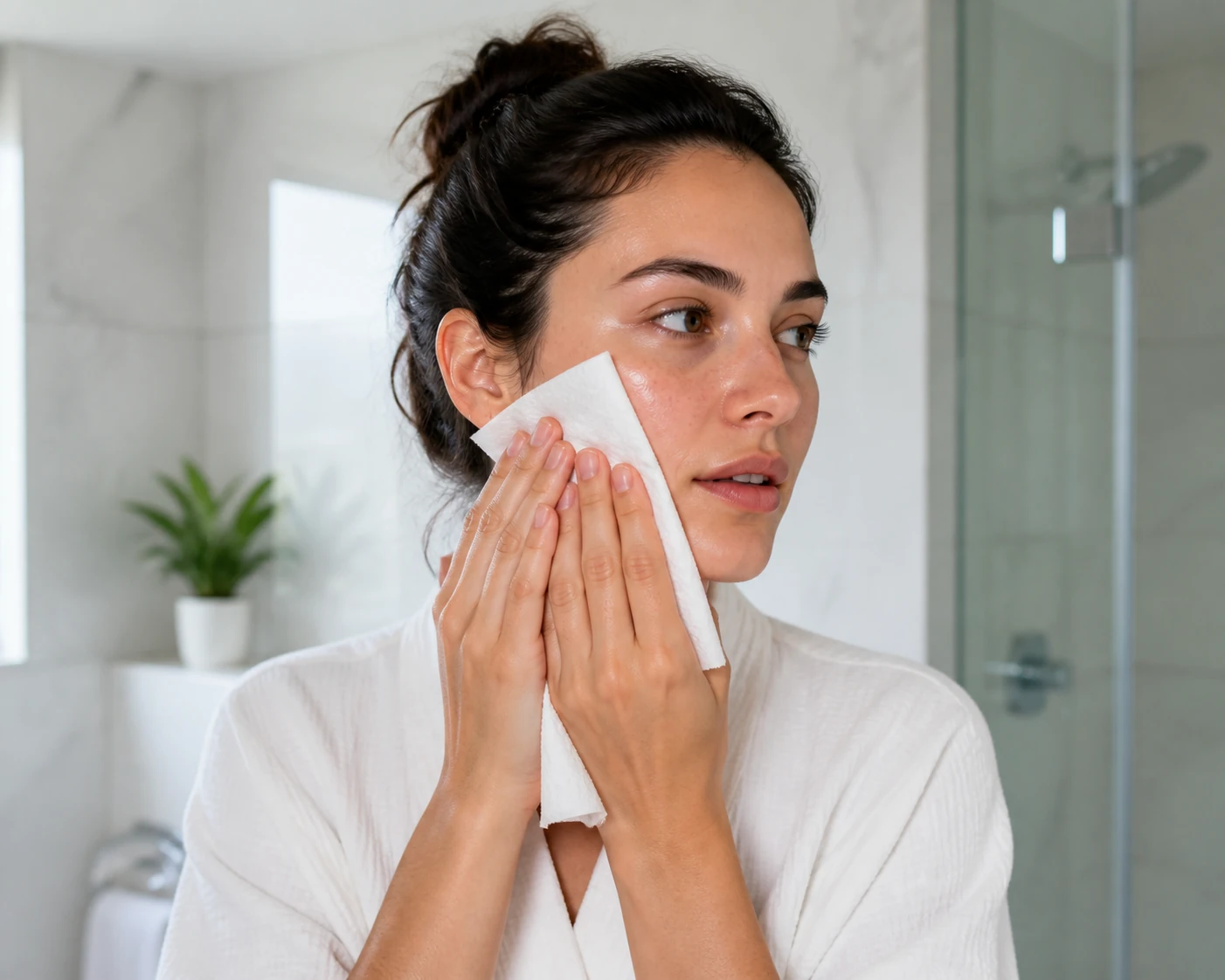
Blotting is especially important after frequent handwashing, during a cold, after exercise, and whenever the skin is damp for a long period. You do not need to remove every trace of moisture by force. For dry or eczema-prone skin, applying a fragrance-free moisturizer after gentle drying may support the skin barrier. Use products recommended for the affected area, and avoid applying new fragranced creams to a fresh reaction because they can make it harder to identify the trigger.
Is Paper Towel Irritation an Allergy?
Most immediate discomfort after wiping is more consistent with physical irritation than a true allergy. Irritant contact dermatitis can occur when friction, water, soap, cleaners, or repeated exposure damages the skin barrier. Symptoms may begin quickly and remain concentrated where the wiping occurred. Allergic contact dermatitis involves an immune reaction to a particular substance and may appear hours or days after exposure. Fragrances, preservatives, lotions, inks, or materials transferred from another product are possible triggers, but you cannot identify an allergy from the paper towel alone.
Timing and pattern provide clues, not a diagnosis. A red area that appears after vigorous wiping and settles when you stop is different from a recurring itchy rash that develops after one particular product. A reaction can also come from the cleaner on the counter, hand soap, laundry residue on nearby cloths, skincare products, or the substance you were wiping away. If the rash repeatedly returns, photograph the area, note the products involved, and keep the packaging. A dermatologist may recommend examination or patch testing when allergic contact dermatitis is suspected.
Common Signs to Watch
- Mild friction response: Temporary pinkness, warmth, tightness, or tenderness limited to the wiped area.
- Developing dermatitis: Persistent redness, itching, scaling, cracking, burning, swelling, or small bumps.
- Possible infection: Increasing pain, warmth, pus, crusting, spreading redness, or fever.
- Possible serious allergy: Facial or mouth swelling, widespread hives, wheezing, dizziness, or trouble breathing.
- Another condition: Recurrent bleeding, sores, a persistent rash, or pain unrelated to wiping may require a different diagnosis.
What Should You Do After Paper Towel Irritation?
If your skin feels irritated after wiping, stop the rubbing and remove any remaining irritant gently. Mild redness caused by friction often improves when the area is left alone and protected from further contact. Do not keep testing the same sheet on the affected spot. Avoid fragranced products, exfoliants, alcohol-based products, hot water, and tight clothing over the area until the skin is comfortable again. Treatment depends on the location and the cause, so use caution with over-the-counter creams on the face, genitals, broken skin, or near the eyes.
- Stop exposure: Set aside the paper towel and any soap, cleaner, or personal-care product that may have contributed.
- Rinse when appropriate: Use lukewarm water to remove residue, but do not repeatedly wash an already-dry area.
- Pat dry: Use a soft, clean material and minimal contact, or allow a small area to settle without additional wiping.
- Protect the barrier: A plain fragrance-free moisturizer may help intact dry skin, provided it is suitable for that body area.
- Monitor the pattern: Note whether symptoms improve, spread, recur with the same product, or develop signs of infection.
- Get medical advice: Contact a healthcare professional when symptoms are severe, recurrent, worsening, or not settling with simple avoidance.
If a paper towel was used with bleach, solvent, disinfectant, strong cleaner, or another hazardous substance, follow the product’s first-aid instructions rather than treating the problem as ordinary friction. Rinse or seek urgent guidance as directed on the label or safety data sheet. Do not apply neutralizing chemicals to the skin unless a qualified professional specifically tells you to do so. For eye exposure, significant chemical burns, breathing symptoms, or severe pain, use emergency or poison-control services appropriate to your location.
What Can You Use Instead of Paper Towels on Skin?
The best alternative depends on what you are wiping. For a clean face after washing, soft facial tissue or a freshly laundered face cloth can reduce rough contact. For a runny nose, facial tissue is designed for repeated use on delicate skin. For intact hands in a shared washroom, disposable paper towels remain practical when you blot rather than rub. For intimate hygiene, use toilet tissue or a water-based method intended for that area; the differences between dry toilet paper and wet toilet paper include friction, ingredients, plumbing behavior, and disposal requirements.
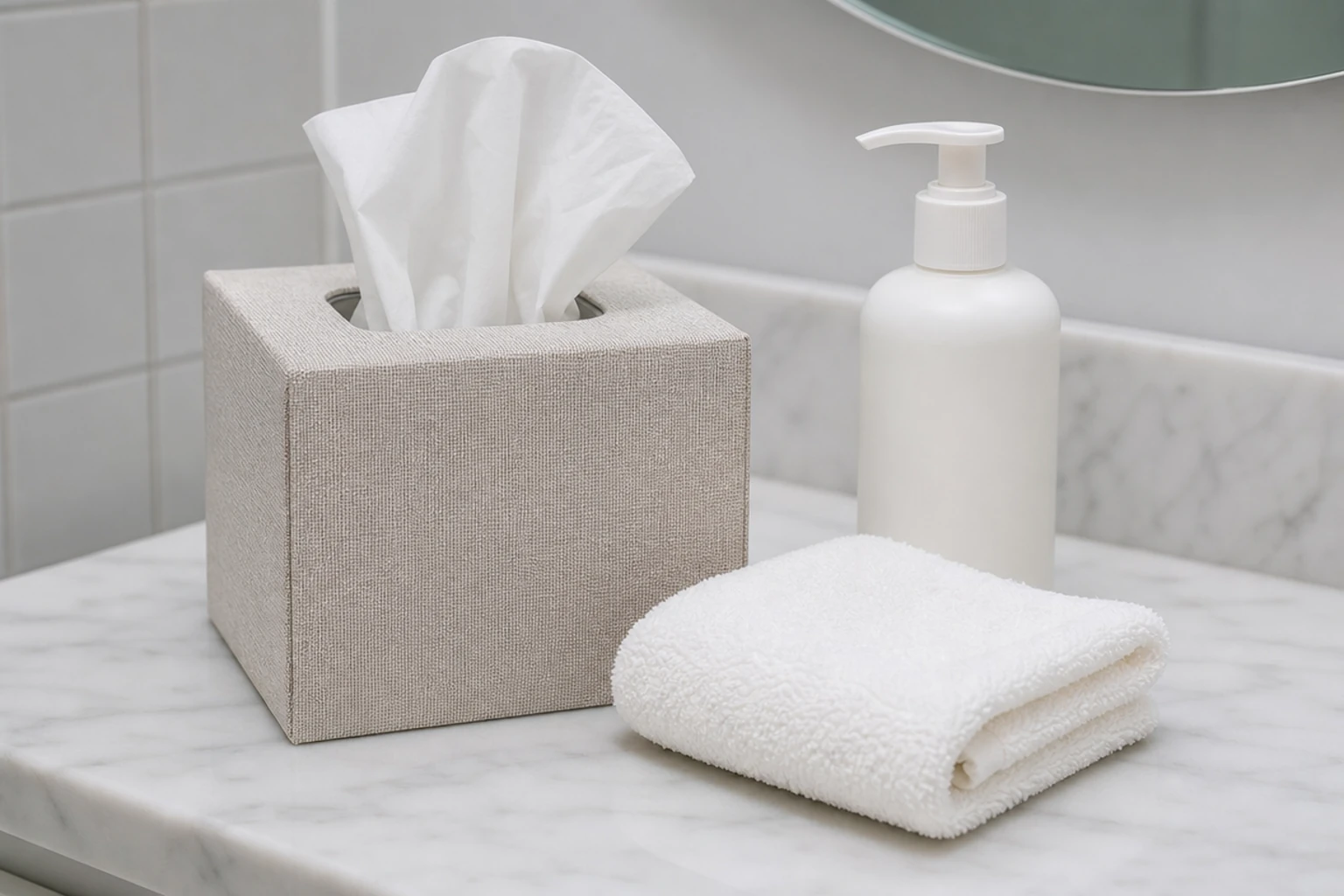
Match the material to these common situations:
- Drying washed hands: Use one or two absorbent sheets and blot every area without aggressive rubbing.
- Drying the face: Choose soft facial tissue or a clean cotton cloth and press gently while the skin remains slightly damp.
- Wiping the nose: Use fragrance-free facial tissue and protect chapped skin with an appropriate plain barrier product.
- Personal hygiene: Choose soft, fragrance-free toilet paper for sensitive skin or rinse gently with water when suitable.
- Cleaning a wound: Follow medical guidance and use sterile gauze, wound dressings, or the specified product rather than household paper towels.
- Removing household chemicals: Follow the product label, use protective equipment, and keep contaminated paper away from your skin.
A reusable cloth is not automatically gentler. Worn fabric can become rough, and detergent, fabric softener, fragrance, or retained moisture can contribute to irritation. Wash personal cloths thoroughly, rinse out detergent, dry them completely, and avoid sharing face or personal-care towels. Disposable products offer a fresh contact surface, while reusable cloths can offer a softer texture; the safer choice is the one that is clean, suitable for the area, and used with minimal friction.
When Does Skin Irritation Need Medical Care?
Seek medical advice when irritation is painful, keeps returning, spreads beyond the contact area, forms blisters, cracks or bleeds, or does not improve after you stop the suspected exposure. You should also obtain care for signs of infection such as increasing warmth, swelling, pus, crusting, fever, or rapidly spreading redness. A healthcare professional can determine whether the problem is friction, irritant contact dermatitis, allergic contact dermatitis, eczema, infection, a medication reaction, or another condition.
Breathing difficulty, swelling of the lips or mouth, widespread hives, faintness, or a severe chemical exposure requires urgent or emergency help. Sensitive areas deserve a lower threshold for assessment. Contact a clinician for eye involvement, genital pain, persistent perianal burning, an open wound, or symptoms in a baby, frail older adult, or person with reduced immunity. This article provides general information and cannot diagnose or treat an individual skin reaction.
Conclusion
Paper towel irritation is possible, especially when a rough or dry sheet is rubbed repeatedly across delicate, wet, inflamed, or damaged skin. For occasional contact with healthy skin, a soft clean sheet and a press-and-lift motion usually reduce the risk. Match the product to the body area, stop when discomfort begins, and seek medical care for severe, persistent, infected, or unexplained symptoms.
Liansheng Sempo is a tissue factory. If you are evaluating paper towel softness, absorbency, wet integrity, low-lint performance, or packaging requirements for a specific application, contact Liansheng Sempo with the intended use and target market.
FAQ
Can paper towels cause skin irritation?
Yes. Rough texture, firm pressure, repeated wiping, moisture, and existing skin sensitivity can cause redness, burning, dryness, or soreness.
Is it okay to wipe your face with a paper towel?
Occasional gentle blotting may be acceptable, but kitchen paper towels can be rough for facial skin. Soft facial tissue or a clean face cloth is usually more suitable.
Can paper towels cause contact dermatitis?
Repeated friction can contribute to irritant contact dermatitis. A true allergic reaction is less common and may involve fragrance, lotion, ink, preservatives, or another substance transferred to the sheet.
Why does my skin burn after wiping?
Burning can result from friction, dry or damaged skin, soap residue, cleaning chemicals, body fluids, or an underlying rash. Stop wiping and seek advice if it persists or worsens.
Are paper towels safe for sensitive skin?
They may be safe for brief, gentle contact when soft, clean, and fragrance-free. Sensitive, inflamed, recently shaved, or broken skin may require a gentler purpose-designed product.
Should you pat or rub skin dry?
Patting or blotting is gentler because it reduces friction. Use light pressure and a clean, soft material rather than rubbing repeatedly.


