
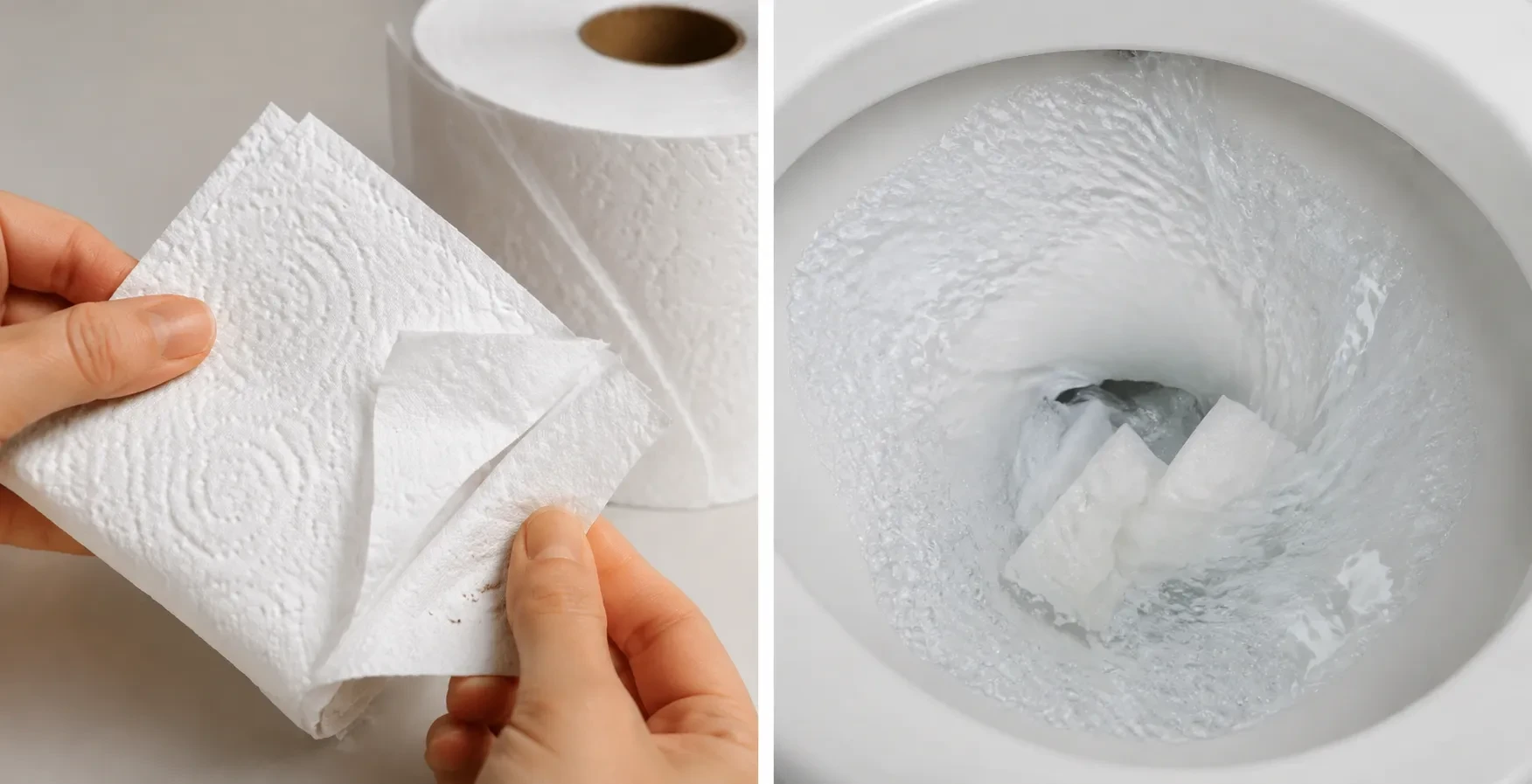
2 ply toilet paper consists of two individual, thin layers of paper bonded together to form a single sheet. This design creates a functional balance between absorbency, surface softness, and structural strength.
Unlike single-ply options, the dual-layer construction prevents the paper from tearing easily during use, while remaining thin enough to dissolve quickly in water.
At Liansheng Sempo, we manufacture 2 ply rolls using high-quality virgin or recycled fibers, ensuring the sheets degrade effectively to prevent plumbing clogs.
For most homes and commercial restrooms, this is the practical middle-ground option: comfortable enough for regular use, strong enough to hold up in use, and usually more cost-efficient than premium 3 ply or 4 ply toilet paper.
Key Takeaways
-
2 ply toilet paper uses two bonded layers for added strength and comfort.
-
It is usually softer and more absorbent than 1 ply.
-
It typically dissolves well in water, making it suitable for most plumbing systems.
-
Comparison Guide: Analyzing the trade-offs between 1-ply, 2-ply, and 3-ply options.
What Is 2 Ply Toilet Paper
2 ply toilet paper means each sheet is made from two separate paper plies pressed together. You are not just getting a thicker-looking sheet; you are getting a layered product designed to improve handling, wipe performance, and user comfort.
Single-layer paper can feel thin and may require more sheets per use. Two layers help reduce that tradeoff.
How 2 Ply Toilet Paper Is Made
2 ply toilet paper is made by combining two tissue layers during the converting process. These layers are bonded together so the finished sheet acts as one product. The exact result depends on the paper base, embossing pattern, and how tightly the plies are joined.
At Liansheng Sempo, this structure is important because it affects the final feel, strength, and absorption. A well-made 2 ply tissue sheet should stay intact during use, yet still break apart efficiently when flushed.
Common Manufacturing Factors
| Factor | What it affects | Why it matters |
|---|---|---|
| Paper basis weight | Thickness and strength | Heavier paper usually feels more substantial |
| Ply bonding | Sheet integrity | Helps the two layers stay together during use |
| Embossing | Softness and absorbency | Improves texture and performance |
| Fiber quality | Comfort and tear resistance | Better fibers support a cleaner user experience |
| Perforation | Sheet separation | Makes dispensing easier and more consistent |
Key Characteristics Of 2 Ply Toilet Paper
2 ply toilet paper is defined by its two-layered structure, which offers more bulk and liquid capacity than 1 ply tissue.
When you examine a sheet from a Liansheng Sempo roll, you can often see the embossed patterns that hold these layers together. This embossing creates tiny air pockets that enhance softness and improve the paper’s ability to clean effectively.
Despite the extra thickness, it retains a high degree of flushability, ensuring it doesn’t settle in pipes and cause expensive blockages.
Thickness, Absorbency, And Tactile Feel
The primary reason you choose 2 ply over 1 ply is the tactile experience.
By layering two sheets, Sempo toilet paper manufacturers increase the “GSM” (grams per square meter) of the finished product. This results in a sturdier sheet that doesn’t shred or fail when wet.
In professional testing environments, 2 ply paper consistently shows higher tensile strength, meaning you use fewer sheets per visit to the bathroom compared to thinner alternatives.
Plumbing Compatibility And Septic Safety
A common concern for facility managers is whether thicker paper leads to more clogs. 2 ply toilet paper is specifically engineered to break apart within seconds of being agitated in water.
Because the layers are thin, they lose their structural integrity quickly once flushed. This makes 2 ply an ideal middle ground for older buildings with sensitive plumbing or homes using septic tanks.
At Liansheng Sempo, we prioritize the dispersion rate of our paper to ensure it meets international plumbing standards.
2 Ply Vs 1 Ply Vs 3 Ply Toilet Paper
| Feature | 1 Ply Toilet Paper | 2 Ply Toilet Paper |
|---|---|---|
| Layer Count | Single Layer | Double Layer |
| Average GSM | 13 – 15 gsm | 26 – 30 gsm (total) |
| Absorbency Rate | Low | High |
| Softness Level | Basic / Rough | Moderate / Smooth |
| Plumbing Risk | Extremely Low | Low (Septic Safe) |
| Usage Volume | High (more sheets needed) | Moderate (fewer sheets needed) |
Understanding these core traits helps explain why 2 ply is so ubiquitous in both homes and businesses. However, to truly see its value, you need to look at how it compares directly with other ply counts, especially when considering cost-per-use and luxury requirements.
1 Ply Toilet Paper
1 ply toilet paper uses a single layer. It is usually the lowest-cost option and breaks down quickly in water.
The tradeoff is performance. It can feel thin and may require more sheets per use. In busy restrooms, that often means higher consumption, which can reduce the price advantage over time.
3 Ply Toilet Paper
3 ply toilet paper uses three layers and is designed for a softer, more premium feel. It tends to be more absorbent and more comfortable.
The downside is cost. It is usually more expensive, and in some older plumbing systems, the heavier sheet structure can create more concern if users flush too much at once.
How 2 Ply Compares To 1 Ply And 3 Ply
When you compare these options, the primary differences lie in sheet thickness, tensile strength, and price-per-roll. While a 1-ply roll is often the cheapest, it typically requires using more sheets to achieve the same level of cleanliness, leading to faster consumption. 3 ply or 4 ply options offer a plush, premium feel but carry a higher price point and a slightly increased risk of plumbing issues in low-flow systems.
The Trade-off Between 1 Ply And 2 Ply
1 ply toilet paper consists of a single, continuous sheet. It is most commonly found in high-traffic public venues like airports or stadiums where the absolute lowest cost per roll is the priority.
However, because it is so thin, you often find yourself doubling or tripling the paper just to make it functional. This “over-usage” often negates the initial price savings.
By switching to a Liansheng Sempo 2 ply roll, you get a significant upgrade in softness and strength. Most users find that a 2 ply sheet provides a much more secure “barrier” during use, making it the preferred choice for office buildings and hotels.
Comparing 2 Ply To 3 Ply
3 ply and 4 ply tissues are considered luxury, often featuring quilted patterns and extra-thick fibers for maximum softness.
The downside is cost. It is usually more expensive, and in some older plumbing systems, the heavier sheet structure can create more concern if users flush too much at once.
2 ply remains the safer, more versatile option. It provides 80-90% of the comfort of a 3 ply roll but at a much lower price point, making it easier to manage facility budgets without sacrificing the user experience.
| Type | Comfort | Strength | Absorbency | Cost | Flushability |
|---|---|---|---|---|---|
| 1 ply | Low to moderate | Low | Low | Lowest | Very fast breakdown |
| 2 ply | Good | Good | Good | Moderate | Usually safe for standard use |
| 3 ply | High | High | High | Higher | Slower breakdown than 1 ply and 2 ply |
When You Should Choose 2 Ply Toilet Paper
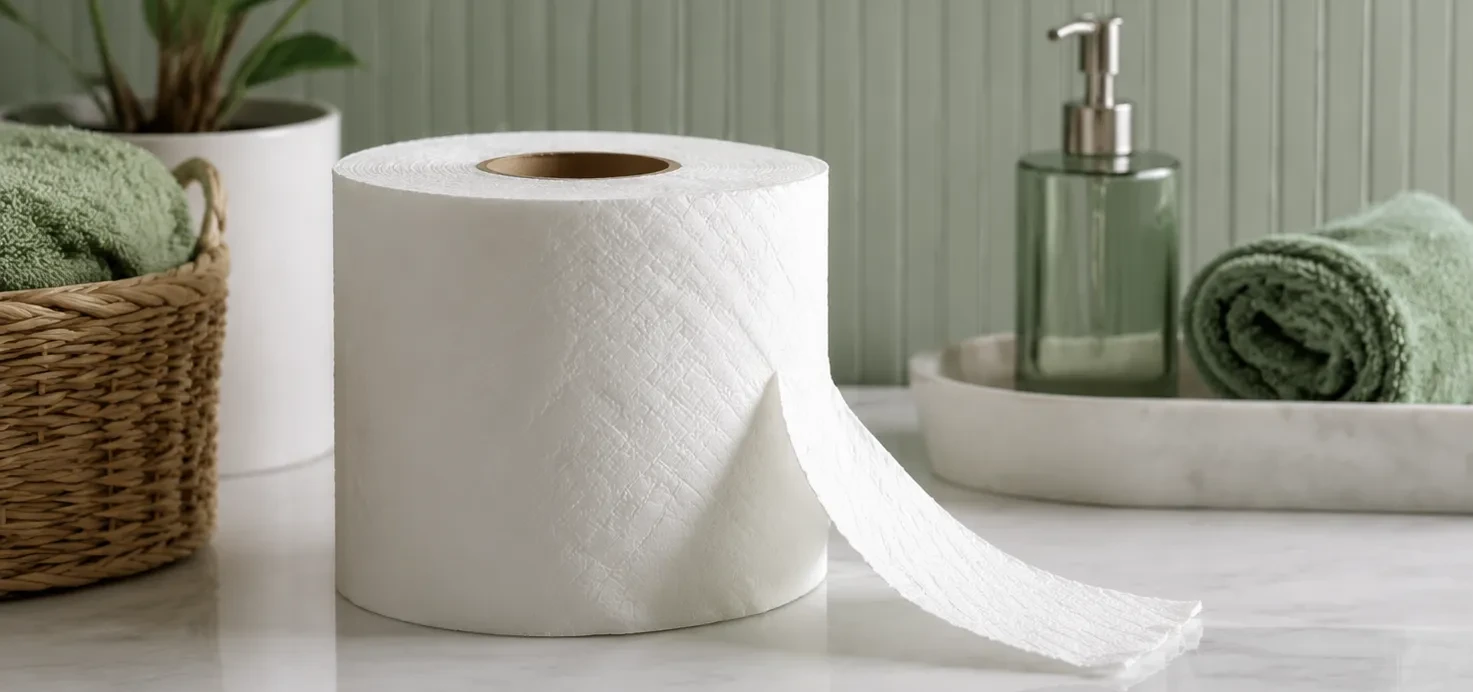
2 ply toilet paper is the standard choice when you want practical performance and broad user acceptance. It works well in homes, offices, hotels, schools, restaurants, and most public restrooms.
If your priority is a product that feels better than economy tissue but still fits a controlled procurement budget, 2 ply is usually the right target. It is also a strong choice for distributors and private-label buyers because it has wide market appeal and is easy to position across different customer segments.
Use Scenarios
- Family households
- Office restrooms
- Hospitality washrooms
- Retail and food service facilities
Residential And Family Use
In a household setting, 2 ply toilet paper is often the most practical choice for daily hygiene. 2 ply toilet paper is more absorbent, naturally reducing the amount of paper needed per use.
This means a roll of 2 ply toilet paper lasts longer than single-ply toilet paper, thus reducing monthly household waste.
Furthermore, 2 ply toilet paper is specially designed for safe use in septic tanks; you don’t need to worry about undissolved paper accumulating in pipes or the septic tank.
Commercial And Hospitality Facilities
For facility managers overseeing office buildings, restaurants, or boutique hotels, 2 ply is the professional’s choice. It conveys a level of quality to guests and employees that 1 ply simply cannot achieve. Providing a sturdier, softer tissue improves the overall impression of your facility’s maintenance standards.
2 ply tissue fits into standard commercial dispensers and handles the high-frequency use typical of public restrooms without the constant restocking required by thinner papers.
Conclusion
Choosing 2 ply toilet paper is ultimately about selecting the most efficient tool for hygiene. It bridges the gap between the budget-focused 1 ply and the premium 3 ply, offering the durability needed for effective cleaning without the unnecessary bulk that clogs pipes.
For most users, 2 ply provides the ideal tactile experience, soft, absorbent, and reliable.
The 2 ply remains the most cost-effective investment. At Liansheng Sempo, we specialize in producing high-quality 2 ply tissue that meets these rigorous demands. By choosing the right ply, you ensure comfort for the user and longevity for your plumbing system.
FAQ
What is a 2 ply toilet paper? 2 ply toilet paper consists of two individual layers of tissue bonded together to form a single sheet. This design creates a thicker, more durable product than single-layer tissue. The two layers are often held together by embossed patterns, which also create tiny air pockets that enhance softness and absorbency.
What is the difference between 1-ply and 2 ply? The main difference lies in the layer count and performance. 1-ply is a single layer, making it thinner and often rougher, typically used in high-traffic public restrooms to minimize cost. 2 ply uses two layers, offering superior strength, more “bulk” in the hand, and better absorbency. While 1-ply is cheaper per roll, 2 ply usually requires fewer sheets per use, making it more efficient.
What is better, 1-ply or 2 ply toilet paper? For most users, 2 ply is the better choice because it provides the best balance of comfort, strength, and value. While 1-ply is the most budget-friendly and dissolves the fastest, it is often less comfortable and requires using more paper. 2 ply provides a more reliable “barrier” and a softer feel, making it the standard for both homes and professional office environments.
How do I know if toilet paper is 2 ply? The easiest way to tell is the “peel test”: gently rub the corner of a single sheet between your fingers until the edges separate. If it splits into two distinct layers, it is 2 ply. Additionally, 2 ply paper almost always features embossed textures (like floral or diamond patterns) used to lock the layers together, whereas basic 1-ply is often flat or has very light texture.


