
How to Manufacture Toilet Paper
Toilet paper is a household essential with steady demand across global markets. Its production is a highly specialized process that transforms raw materials into soft, absorbent rolls with precise perforation and consistent quality. This requires not only natural fiber resources and industrial machinery, but also strict process control at every stage.
The manufacturing process of toilet paper typically includes three main stages: raw material sourcing, production processing, and quality control.
- First, suitable fiber materials such as virgin wood pulp, recycled pulp, or bamboo pulp are selected based on product requirements.
- Next, the materials go through pulping, forming, pressing, embossing, cutting, and rewinding to create finished rolls that meet size and performance standards.
- Finally, each batch is inspected to ensure softness, absorbency, cleanliness, strength, and packaging consistency.
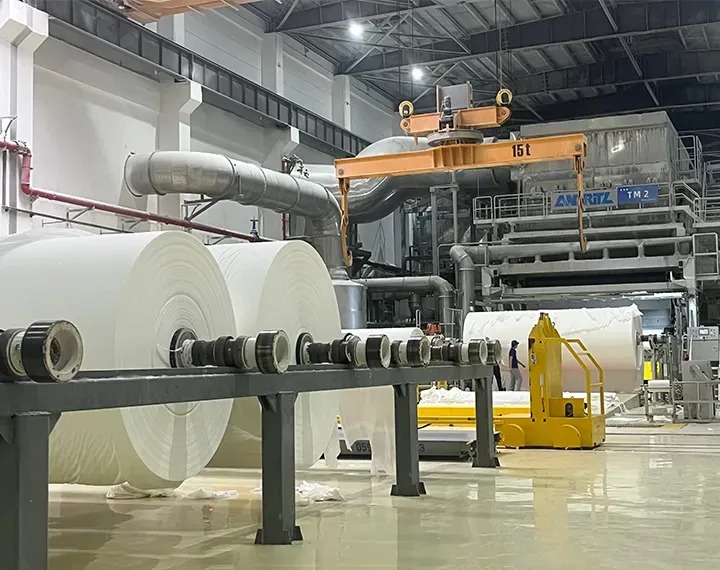
Key Steps in Toilet Paper Production
Raw Materials Preparation for Manufacturing Toilet Paper
| Raw Material | Description | Common Uses |
|---|---|---|
Virgin Wood Pulp | Sourced from freshly harvested wood, typically softwood and hardwood fibers. Softwood helps improve strength, while hardwood contributes to a smoother and softer texture. | Used in toilet paper products where softness and durability are required. |
Recycled Paper | Made from recovered paper materials such as office paper, newspapers, and cardboard. The fiber is cleaned, de-inked, and reprocessed into pulp. | For affordable or environmentally friendly toilet paper solutions. |
Bamboo Pulp | Produced from fast-growing bamboo fibers, offering a renewable and sustainable alternative to traditional wood pulp. | Preferred for eco-friendly toilet paper brands focused on sustainability. |
Sugarcane Bagasse | A fiber-based byproduct of sugarcane processing. It is renewable, biodegradable, and suitable for sustainable paper production. | Used in toilet paper products designed with environmental performance in mind. |
Hemp Pulp | Derived from hemp fibers, known for their strength, rapid growth, and low environmental impact. | Used for high-end or environmentally friendly toilet paper. |
The Manufacturing Process of Toilet Paper
Step 1 – Pulping Process
The first step in toilet paper production is converting raw materials into usable pulp. Depending on the product type, Sempo uses virgin wood pulp, recycled pulp, bamboo fiber, or other alternative fibers.
- Fiber breakdown: Wood chips, recovered paper, or other fibers are mixed with water and processing chemicals in large pulping tanks.
- Heating and fiber separation: The mixture is heated so the chemicals can break down the material into a fine slurry of fibers and water.
- De-inking for recycled materials: When recycled paper is used, the pulp must go through de-inking and purification stages to remove inks, adhesives, and other contaminants.
The result is a clean, uniform fiber pulp that serves as the foundation for toilet paper production.
Step 2 – Sheet Formation
Once the pulp is ready, it is spread onto a moving wire mesh or a paper machine forming section to create a continuous sheet.
- Pulp distribution: The diluted pulp is evenly deposited onto a wire screen, where water begins to drain away and a wet fiber mat is formed.
- Pressing: The fiber mat passes through a series of press rolls that remove additional moisture while helping the fibers bond more tightly.
- Drying: The pressed sheet then moves through heated drying cylinders, which remove the remaining moisture and turn the wet mat into a continuous paper web.
Step 3 – Rewinding And Converting
After drying, the paper web is wound into large parent rolls, which may weigh several hundred kilograms. These rolls are then sent to converting equipment for further processing.
- Embossing: Patterns are pressed into the paper surface to enhance softness, texture, and strength. Embossing can also create a fuller, more premium appearance.
- Perforating: Uniform perforations are added so the paper can be torn cleanly into individual sheets.
- Plies formation: For multi-ply toilet paper, two or more layers are bonded together to improve strength, comfort, and overall performance.
Step 4 – Cutting And Packaging
The large parent rolls are cut into smaller consumer-size rolls that match standard toilet paper specifications.
- Slitting and cutting: Automated machines trim the large rolls into individual toilet paper rolls in the required dimensions.
- Packaging: Each roll is wrapped in plastic or paper to protect the product and improve presentation.
- Bundling: The finished rolls are packed into retail-ready sets. Depending on the brand strategy, the packaging may feature logos, product labels, and eco-friendly wrapping materials.
Quality Control in Manufacturing Toilet Paper
Quality control is a critical part of toilet paper production. It ensures the final product meets expectations for softness, strength, absorbency, and hygiene. Checks are carried out throughout the entire production line so that every roll delivers reliable performance and consumer comfort.
1. Raw Material Quality Control
Common inputs include virgin pulp from softwood and hardwood, recycled paper, bamboo pulp, and sugarcane bagasse.
- Material Cleanliness: Raw materials must be free from contaminants such as plastic, metal, and other foreign matter. Recycled materials require extra attention to remove leftover inks, adhesives, and impurities.
- Fiber Performance: Fiber length, strength, and consistency are tested to ensure the material can produce soft yet durable toilet paper.
2. Pulp Quality Control
Once the raw materials enter the pulping process, quality checks continue at the fiber slurry stage.
Pulp uniformity: The consistency of the pulp is monitored closely to ensure stable thickness and even paper formation.
De-inking effectiveness: For recycled pulp, the cleaning process must remove ink particles and impurities efficiently. Clean pulp is important for maintaining brightness, softness, and overall appearance.
3. Sheet Formation and Drying Control
During sheet formation, the fiber slurry is laid onto the wire mesh to create a wet paper web. This stage is monitored carefully because it has a direct effect on finished product quality.
- Sheet uniformity: Thickness, texture, and strength must remain even across the sheet. Inconsistent areas can lead to weak spots, uneven absorbency, or tearing.
- Drying balance: The wet sheet must be dried evenly by heated cylinders. If drying is uneven, the paper may wrinkle, distort, or develop irregular texture, which can reduce usability and comfort.
4. Embossing and Perforation Inspection
Embossing gives the paper a more refined surface and can improve softness. Perforation allows the paper to tear cleanly into separate sheets.
- Embossing uniformity: The design pattern should remain consistent throughout the batch. Proper embossing can improve the tissue’s hand feel and visual appeal.
- Perforation accuracy and tear control: Perforations must be positioned correctly so the paper tears easily when needed, but not so weak that it breaks too early during use.
5. Cutting and Packaging Inspection
Once the paper is embossed and perforated, it is cut into rolls and packaged for distribution.
- Roll consistency: Each roll should meet the required length, diameter, and weight. Variations can affect customer satisfaction and packing efficiency.
- Packaging protection: Packaging must be clean, secure, and durable enough to protect the product during storage, handling, and transport.
6. Softness, Strength, and Absorbency Testing
These three properties are key to toilet paper performance. sempo use testing procedures to make sure the product meets market expectations.
- Softness testing: Softness may be evaluated through hand-feel assessment or with specialized softness testing equipment.
- Strength testing: Dry and wet strength tests are used to confirm that the tissue holds up during use. Tensile and burst strength measurements help verify tear resistance.
- Absorbency testing: Toilet paper must absorb moisture effectively. Tests measure how quickly the paper absorbs water and how much liquid it can retain.
7. Hygiene and Safety Standards
Because toilet paper is used for personal hygiene, product cleanliness and safety are extremely important.
- Microbiological testing: Samples are tested for bacteria, fungi, and other microorganisms to confirm product safety.
- Chemical residue testing: Final products are checked for undesirable chemical residues such as bleaching agents or colorants, helping ensure the paper is safe for skin contact and compliant with hygiene standards.
8. Inspection and Sampling
Before products are shipped, each batch goes through a final inspection to confirm that it meets specification.
- Visual inspection: Rolls are examined for defects such as holes, tears, stains, or color inconsistency.
- Random sampling: Selected rolls are tested again for softness, strength, and absorbency to confirm consistent quality across the production run.
Liansheng Sempo
Your Trusted Facial Tissue Manufacturer
Liansheng Sempo is a professional Facial Tissue manufacturer and supplier offering OEM, wholesale, and private label solutions for global B2B buyers.
We support custom material selection, ply options, sheet sizes, packaging design, and logo printing to help you create products that fit your brand and market demand.
With stable production, strict quality control, and export-ready packaging, we deliver reliable Facial Tissue solutions for wholesalers, distributors, hotels, and retailers.
- Custom Facial Tissue available
- OEM / Private Label supported
- Sample and bulk order service
- Fast quotation within 24 hours
Let’s Talk!
Share your needs with us, Well contact youin very short time.