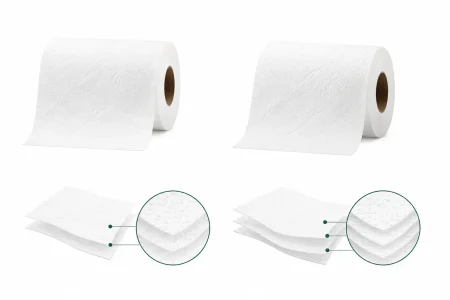
Yes, you can use a paper towel as a coffee filter in an emergency, but it is a temporary substitute rather than an equal replacement. Choose a plain, unscented, unprinted sheet with no lotion or cleaning additives. Fold it to fit the basket or cone, support it fully, add a modest amount of coffee, and pour hot water slowly so the wet paper does not collapse or tear.
The result may brew more slowly and taste slightly different because paper towels vary in thickness, fiber release, wet strength, and manufacturing purpose. Stop if the sheet breaks, the water stalls, or you notice an unusual odor or flavor. For routine brewing, a coffee filter, reusable metal filter, French press, or clean purpose-dedicated cloth is more predictable.
Key takeaways
- A paper towel can filter coffee for one emergency brew if it is plain, clean, unscented, unprinted, and strong enough when wet.
- Coffee filter paper is designed for controlled flow and particle retention; a household sheet may drain too quickly, too slowly, or tear.
- Support the paper towel inside the brewer, keep coffee grounds below the rim, and add water in small pours.
- Do not use scented, printed, colored, lotion-treated, visibly recycled, dirty, or cleaning-product-contaminated paper.
- A metal filter, French press, fine mesh strainer, or clean dedicated cloth is usually a better reusable alternative.
How Paper Towel Coffee Filtration Works
A paper towel can filter coffee because its network of cellulose fibers allows water and dissolved coffee compounds to pass while holding back most ground particles. The same porous structure that creates paper towel absorbency also creates a temporary barrier between the grounds and your cup. If the sheet stays intact, the brewed liquid moves through the small spaces between fibers while larger coffee particles remain above it.
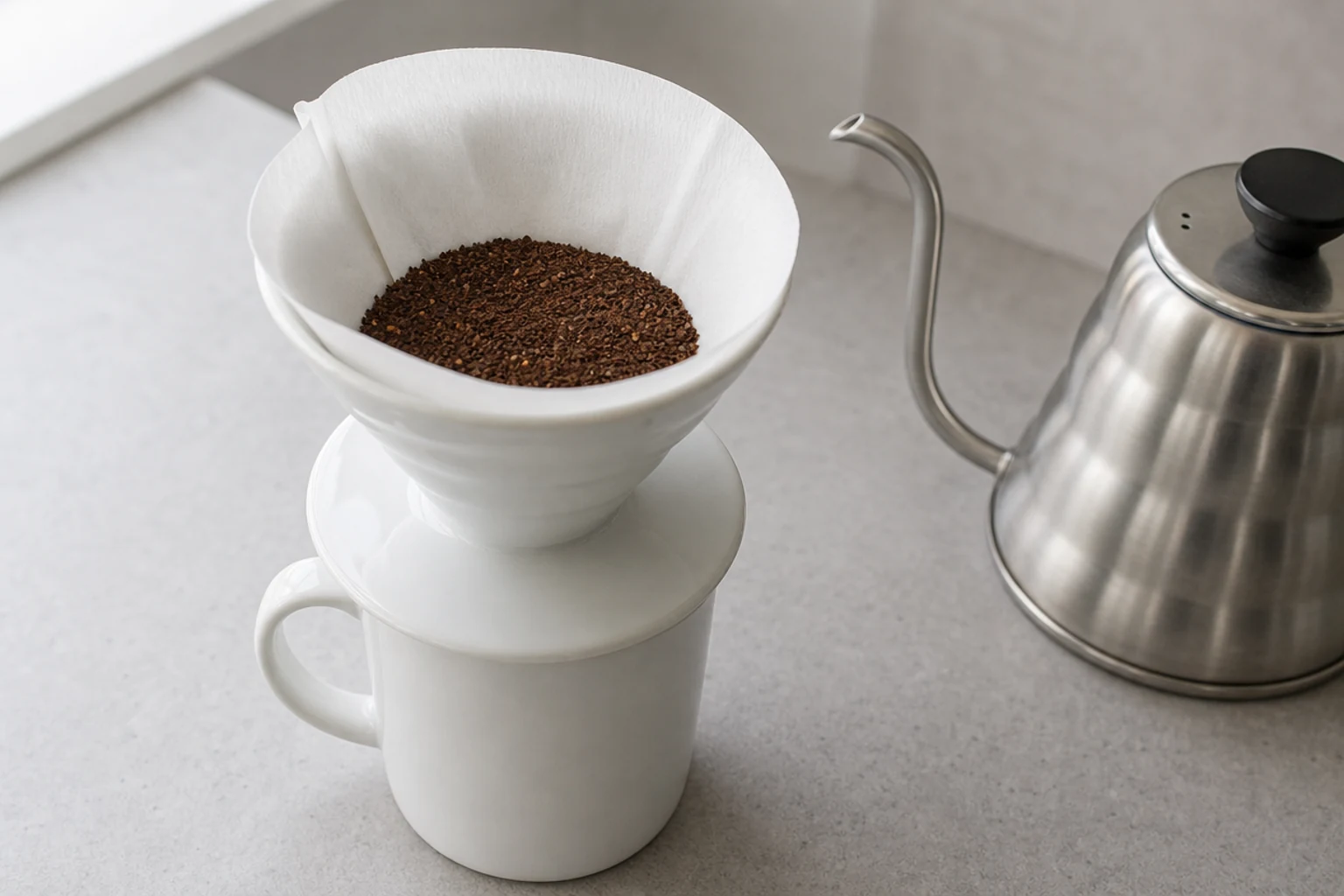
That basic mechanism does not mean every sheet will perform like filter paper. A coffee filter is shaped and manufactured for a specific combination of hot-water flow, seam strength, particle retention, and contact time. Paper towels are mainly designed to absorb spills, wipe surfaces, and retain useful strength while damp. Their texture, ply construction, embossing, additives, basis weight, and pore structure vary by product, so two household sheets can produce very different brew times.
The brewer also matters. A flat-bottom basket supports a substitute filter differently from a cone dripper. A broad basket spreads the coffee bed and may reduce pressure on one weak point, while a narrow cone channels more water toward the bottom fold. If the paper towel bridges an open area without support, the weight of wet grounds can pull it downward. Good physical support is therefore more important than making an exact imitation of a commercial filter shape.
How Paper Towels Differ From Coffee Filter Paper
Coffee filter paper is intended to produce a repeatable extraction. It should keep most sediment out of the cup without stopping the water for an unreasonable time. A paper towel may contain a denser region, a perforation line, an embossed pattern, or several plies that separate when saturated. Those features help with household wiping but can create uneven coffee flow. Water may find one fast channel, collect above a dense section, or soften the sheet until it deforms.
Oil retention can also differ. Paper filtration generally removes more suspended material and oils than a coarse metal screen, but you cannot assume that a paper towel will match a particular bleached or unbleached coffee filter. The cup may taste lighter, flatter, papery, or unusually strong depending on flow time. Treat the result as an improvised brew, not as a controlled comparison of beans or roast quality.
Safety Limits for a Paper Towel Coffee Filter
Using a paper towel once is generally a practical emergency method when the sheet is clean, plain, and suitable for normal kitchen use, but safety cannot be judged from color alone. Paper towels are not all made for the same applications, and packaging instructions take priority. If a manufacturer warns against food contact, heat, or a particular use, do not use that product for brewing. A sheet with fragrance, lotion, disinfectant, printing, decorative color, or an unknown coating does not belong in hot coffee.
Food-contact rules cover substances that may reasonably become components of food, but a household paper towel package does not automatically promise performance as a hot-beverage filter. The practical question is not simply whether the sheet is white or made from plant fiber. You need to consider its intended use, cleanliness, additives, odor, wet integrity, and direct exposure to hot water. When that information is unclear, choose a different method.
Avoid using a sheet that has been stored near cleaners, air fresheners, pesticides, paint, automotive products, or other strong-smelling materials. Paper readily picks up odors, and a clean-looking roll can still carry contamination from storage. Do not reuse a paper towel that previously touched a counter, hand, package, or spill. Start with a fresh sheet from a clean roll and discard it after brewing.
Which Paper Towels Should You Avoid?
A suitable emergency sheet should be visually clean and neutral in smell. Reject a product when its construction or previous use creates an unnecessary uncertainty:
- Scented or lotion-treated sheets: Added fragrance or skin-conditioning ingredients can transfer odor or flavor and were not selected for coffee extraction.
- Printed or colored sheets: Decorative ink and dye add variables that provide no brewing benefit.
- Very thin or perforated sections: Weak points can split under the combined weight of hot water and wet coffee grounds.
- Sheets with a chemical smell: Odor may indicate storage contamination, fragrance, or another substance that should stay out of a beverage.
- Used or exposed sheets: A paper towel from an open work surface may have collected dust, grease, cleaning spray, or microorganisms.
- Unknown industrial wiping paper: Shop and maintenance wipes may be designed for solvents, machinery, or heavy cleaning rather than kitchen contact.
Bleached versus unbleached appearance is not a complete safety test. White paper is not automatically unsuitable, and brown paper is not automatically free of processing aids or contaminants. Product instructions and intended use provide more useful information than appearance. The same caution applies to recycled content: recycled fiber can be appropriate in many paper products, but you should not invent a food-contact claim from the word recycled on its own.
Brewing Coffee With a Paper Towel
To make coffee with a paper towel, create a supported liner that covers the brewer openings without extending into an unstable loose pouch. Use a fresh plain sheet, fold it into the basket or cone, and press it gently against the brewer walls. Add a smaller coffee dose than you would use in an overfilled basket, then pour water gradually. Slow, controlled pouring gives you time to stop if the water level rises or the sheet begins to sag.
- Inspect the paper towel: Confirm that it is plain, unprinted, unscented, clean, and free from lotion, cleaning chemicals, or a noticeable odor.
- Fit it to the brewer: Fold one sheet so it follows the basket or cone and remains supported by the sides. Avoid placing a perforation at the lowest pressure point.
- Secure the upper edge: Keep the paper above the coffee bed but away from a burner, heating plate, flame, or exposed hot surface. The brewer, not the paper alone, should carry the weight.
- Add a moderate amount of coffee: Use medium grounds when possible and leave enough space above them for water. Fine grounds can slow an already dense substitute filter.
- Wet the grounds carefully: Start with a small pour. Watch the bottom and sides for sagging, separation, fast leaks, or grounds entering the cup.
- Continue in short pours: Keep the water level comfortably below the paper edge. Wait for drainage rather than forcing more water into a stalled basket.
- Remove the filter promptly: Once dripping slows, lift the supported basket or filter assembly according to the brewer design. Do not grab a sagging sheet full of hot grounds with bare fingers.
Do not place a loose paper towel directly over a mug and hold it by hand while pouring. Hot water, a shifting sheet, and wet grounds create an avoidable burn and spill risk. The paper needs a stable dripper, basket, strainer, or other heat-safe support. If you have no support, a steep-and-settle method is safer than balancing hot liquid over unsupported paper.
Should You Rinse the Paper Towel First?
Rinsing can reduce loose surface dust or a papery taste, but it can also weaken the sheet before coffee is added. If the paper towel has strong wet integrity and is fully supported, you may rinse it briefly with hot water and discard that water. If it stretches, separates, or tears during rinsing, do not continue. Replace it with a stronger option or choose another brewing method.
You should never rinse away a chemical or fragranced smell and then assume the paper is suitable. An unusual odor is a reason to reject the product. Rinsing is a brewing adjustment, not a method for making an inappropriate sheet safe.
Common Brewing Problems and Warning Signs
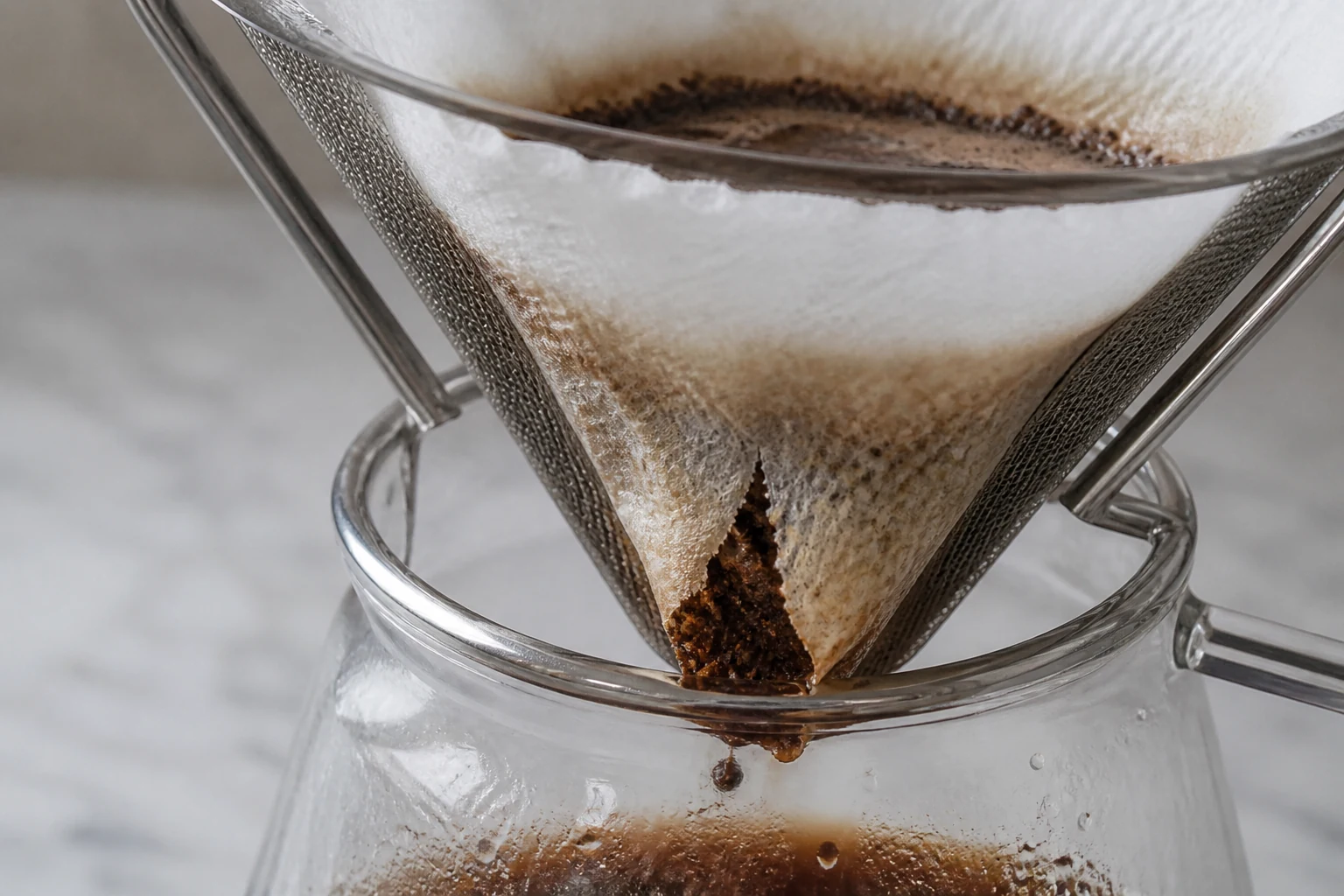
The most common problems are slow drainage, tearing, bypass around the edge, paper flavor, and loose fibers in the cup. Most can be recognized before you finish the pour. If water remains high in the basket, reduce the pouring rate and wait. If the paper changes shape, separates into plies, or pulls away from the brewer wall, stop adding water. Saving one batch of coffee is not worth a hot overflow.
Ground size and dose influence the result. Fine coffee particles can pack against a dense paper towel and block flow. A large dose increases both hydraulic resistance and physical weight. Coarser grounds and a moderate coffee bed are easier for an improvised filter to manage, although changing the grind will also change extraction and flavor.
| What you notice | Likely reason | What to do |
|---|---|---|
| Water drains very slowly | Dense paper, multiple plies, fine grounds, or excessive coffee | Stop pouring, allow drainage, and use a smaller dose or different method next time |
| Grounds appear in the cup | Tear, open fold, edge bypass, or weak perforation | Stop the brew and pour the coffee through a clean fine strainer if available |
| Paper sags into the cup | Insufficient support or too much wet weight | Stop adding water and wait until the assembly is safe to remove |
| Coffee tastes papery | Paper flavor, long contact time, or unsuitable sheet | Discard an unpleasant cup and use proper filter paper or another brewing method |
| Water rises toward the rim | Pouring is faster than filtration | Stop immediately and let the level fall before deciding whether to continue |
Can the Paper Towel Touch a Hot Plate?
No part of the paper should extend onto a hot plate, burner, open flame, heating coil, or other exposed heat source. The relevant heat exposure is the hot brewing water inside a supported brewer. Dry paper near an external heating element creates a different risk. The same distinction matters when using paper towels around hot food: product instructions, moisture, placement, and the heating method all affect whether a use is appropriate.
Does a Paper Towel Change the Taste of Coffee?
A paper towel can change the taste of coffee because it may alter both contact time and the compounds that reach the cup. A dense sheet can slow the brew and increase extraction, sometimes producing bitterness or dryness. A weak fold can allow water to bypass the coffee bed and create a thin, uneven cup. Paper odor or loose fibers may add an unwanted papery note, especially when the sheet has not been designed for beverage filtration.
Your expectations matter. If you need caffeine during a power outage, hotel stay, office shortage, or camping setup, a slightly different cup may be acceptable. If you are evaluating a specialty coffee, comparing roast profiles, or trying to repeat a recipe, the uncontrolled flow makes the substitute unsuitable. Use the same beans with a proper filter before deciding that the coffee itself has a flavor defect.
Do not mask an unusual chemical, perfumed, or strongly papery flavor with milk or sugar. Stop drinking and inspect the materials. A normal emergency brew may be less refined, but it should not smell like cleaner, fragrance, plastic, or ink.
Practical Coffee Filter Alternatives
The best substitute depends on the equipment you already have. A reusable metal filter is closest to a normal pour-over workflow, while a French press avoids disposable filtration entirely. A fine mesh strainer can remove larger particles after steeping, and a clean cloth can work when it is reserved for food use, free from detergent fragrance, and supported securely. Each method changes sediment, oils, flow, and cleanup.
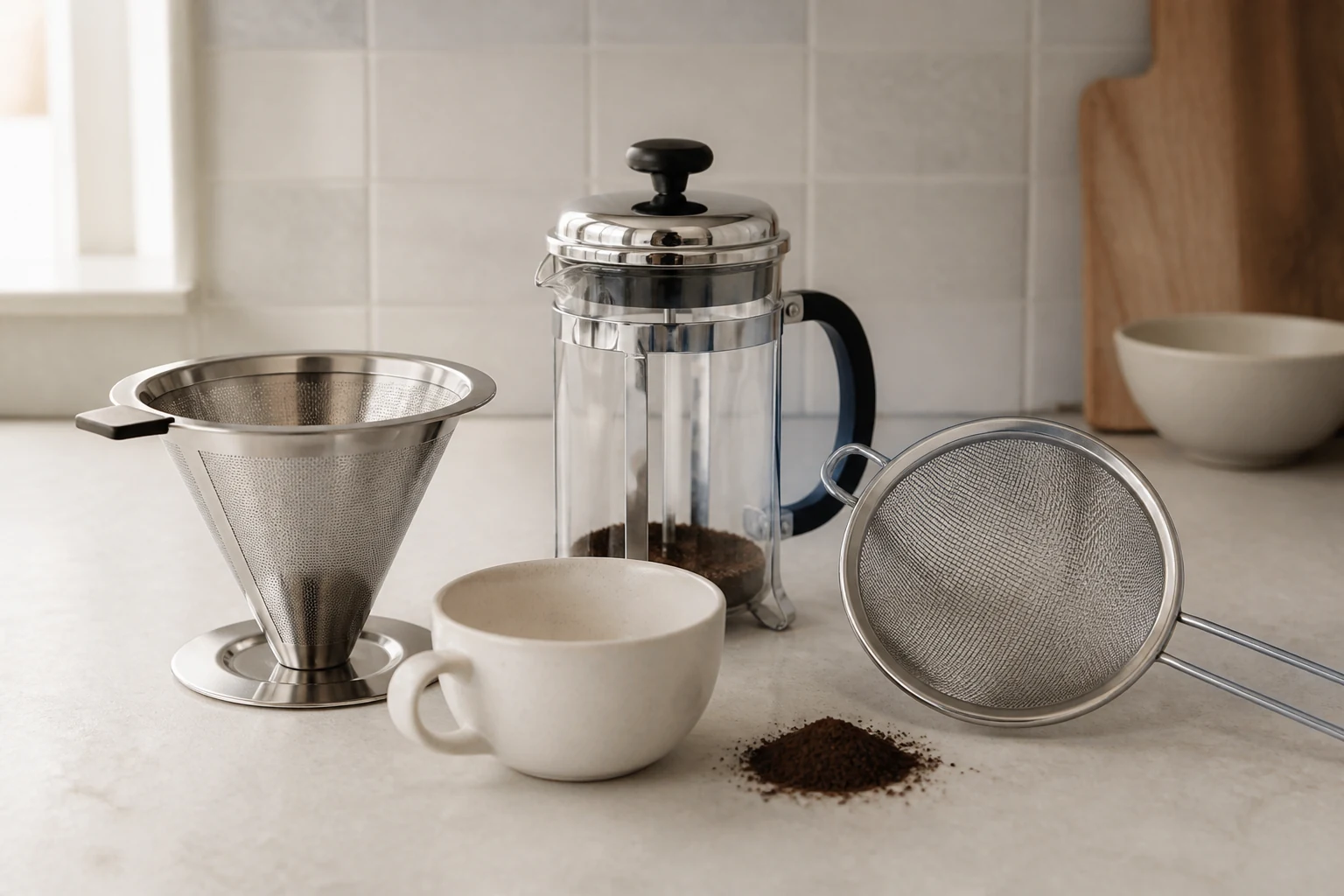
Choose an alternative that is heat-safe, clean, stable, and easy to control. Do not improvise with plastic mesh that is not intended for hot liquids, fabric carrying laundry fragrance, medical products with unknown treatments, or thin paper held over a cup by hand. Stability is a safety requirement, not merely a convenience.
- Reusable metal coffee filter: It fits the brewer, tolerates hot water, and allows more oils and fine sediment into the cup than paper filtration.
- French press: Coffee steeps in water before a mesh plunger separates most grounds, so no disposable liner is required.
- Fine mesh kitchen strainer: Steep coffee in a heat-safe vessel, allow coarse grounds to settle, then pour slowly through the strainer.
- Clean dedicated cotton cloth: Support it securely, use fabric reserved for beverage or food filtration, and rinse it thoroughly after use. The handling and reuse considerations differ from cloth and kitchen paper towels used for general cleaning.
- Steep-and-settle coffee: Mix coarse grounds with hot water in a heat-safe container, wait for extraction and settling, then pour gently while leaving the sediment behind.
Napkins and facial tissues are usually weaker choices because many products separate, release lint, or tear readily when saturated. Toilet tissue is specifically designed to break apart in water and should not be used as a coffee filter. A clean paper towel is generally more workable than those options, but proper brewing equipment remains the better solution.
Choosing Kitchen Paper Towels for Food-Related Tasks
For food-related tasks, choose a paper product according to its stated intended use rather than assuming every household roll is interchangeable. Useful features include neutral odor, clean packaging, reliable wet strength, controlled lint, and enough absorbency to complete the task with fewer sheets. These qualities help with draining fried food, drying produce, blotting surface moisture, or cleaning a food-preparation area when the product instructions allow it. They still do not convert a general-purpose sheet into certified coffee filter paper.
If you compare kitchen paper towels, look beyond ply count. Embossing influences contact and liquid distribution, wet-strength performance affects whether a sheet stays together, and basis weight influences bulk and capacity. Packaging should clearly identify the product and protect it during storage. For a restaurant, office pantry, hotel, retailer, or private-label program, consistency across batches matters because users expect the same dispensing, feel, and absorbency each time.
Keep the roll dry and separated from chemicals. Use clean hands or a protected dispenser, and discard sheets exposed to splashes or dirty surfaces. When direct food contact is part of your normal process, request the appropriate product information from the supplier and confirm that the paper is intended for that task. Emergency coffee filtration should remain occasional; recurring use is a signal to stock the correct coffee filters or reusable equipment.
When Should You Stop Using the Paper Towel Method?
Stop the method whenever the paper towel loses structural integrity, the brewer becomes unstable, the water approaches the rim, or the beverage develops an unusual smell. You should also stop when you cannot confirm what the sheet contains or how it was stored. Improvisation is reasonable only while you can control the material, support, hot water, and drainage.
Several warning signs mean you should switch methods immediately:
- The sheet tears, separates into plies, stretches downward, or releases visible fragments.
- Hot water stops draining and continues rising despite a pause in pouring.
- The paper slips away from the brewer wall or grounds bypass the fold.
- You smell perfume, cleaner, ink, plastic, or another non-coffee odor.
- The paper extends near an exposed heat source or requires you to hold it over the cup.
- You are brewing for someone with a sensitivity and cannot verify the product’s ingredients or intended use.
If grounds enter the cup but there is no unusual odor or contamination concern, you can let the coffee settle and pour the clearer liquid from the top. Do not attempt to rescue a brew involving chemical odor, dirty paper, or a burned sheet. Discard it, clean the equipment, and start again with a suitable method.
Conclusion
You can use a paper towel as a coffee filter for an occasional emergency brew when the sheet is plain, clean, unscented, unprinted, and fully supported. Fold it carefully, use a moderate amount of coffee, pour slowly, and stop at the first sign of tearing, overflow, unusual odor, or poor drainage. Because household sheets vary, a proper coffee filter or reusable brewing method will give you safer handling and more consistent flavor.
Liansheng Sempo is a tissue factory serving paper-product requirements. If you need kitchen paper towels for your product range, contact us with the intended application, sheet format, absorbency expectations, packaging requirements, and target market so the discussion stays focused on the product you actually need.
FAQ
01
Can I use a paper towel instead of filter paper?
Yes, for one emergency brew. Use a plain, clean, unscented sheet, support it inside the brewer, and pour slowly. Proper coffee filter paper is more consistent and less likely to tear or stall.
02
What can I use if I do not have a coffee filter?
Use a reusable metal filter, French press, fine mesh strainer, clean food-dedicated cloth, or a steep-and-settle method. Choose equipment that is clean, heat-safe, stable, and intended for food or beverage use.
03
Can you use a napkin as a coffee filter?
A napkin is usually less reliable because it may tear, separate, release lint, or contain printing and decoration. A strong plain paper towel or a reusable brewing method is generally a better emergency option.
04
Can toilet paper be used as a coffee filter?
No. Toilet tissue is designed to break apart in water, so it can collapse, release fibers, and allow grounds into the cup. Use a stable food-safe brewing alternative instead.
05
Will a paper towel make coffee taste different?
It can. Different thickness, pore structure, paper odor, and drainage speed may produce a papery, weak, bitter, or otherwise uneven cup. Proper filter paper gives more repeatable flow and flavor.
06
How many paper towels should I use for coffee?
Start with one strong sheet folded to fit the brewer. Extra layers can slow drainage and cause overflow. If one sheet cannot hold its shape when supported and wet, use another brewing method rather than stacking many layers.