
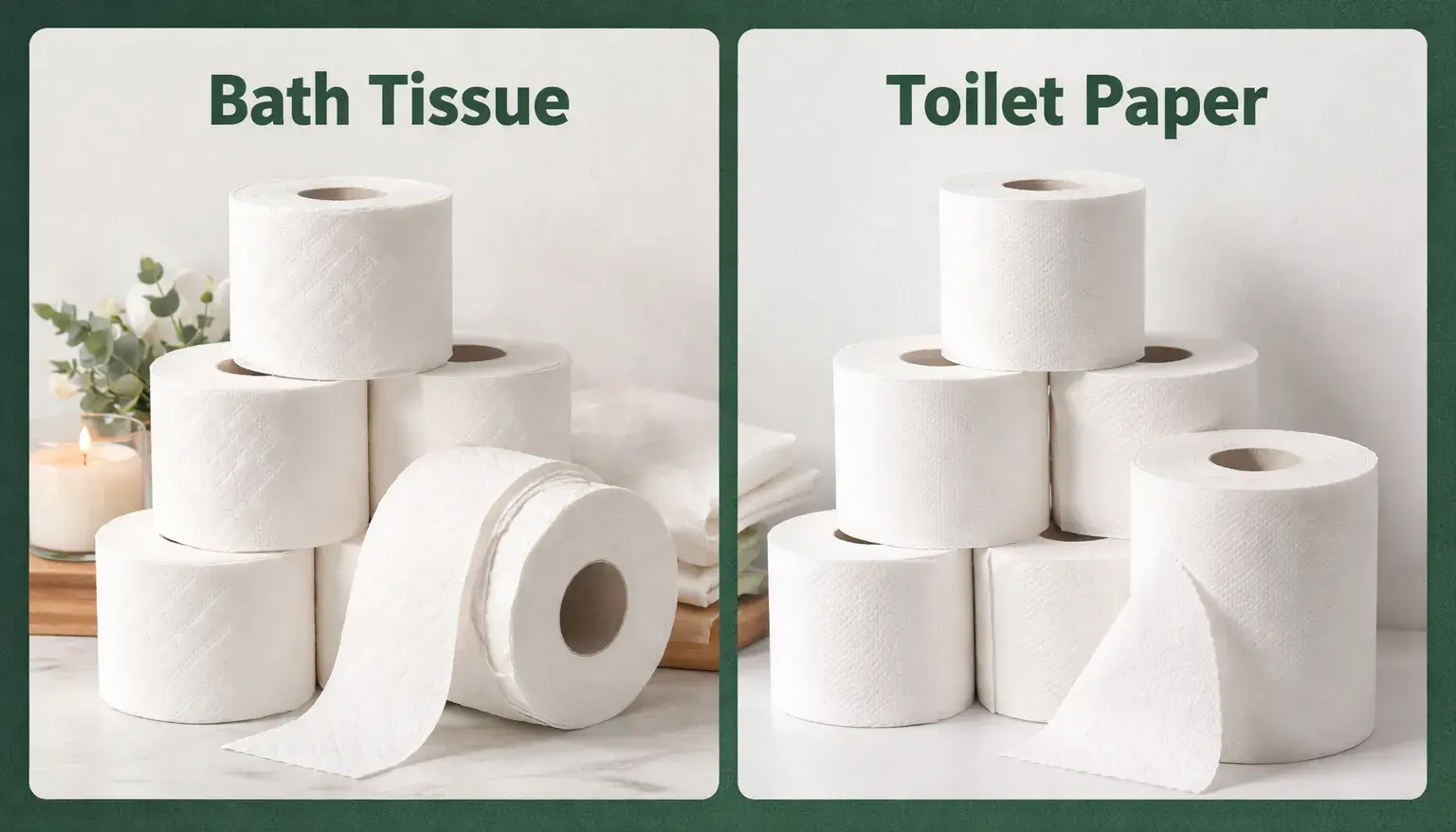
When comparing Bath Tissue vs Toilet Paper, many people assume they are two completely different products. In reality, the two terms often refer to the same basic item: soft, disposable paper designed for personal hygiene after using the toilet.
The difference between bath tissue and toilet paper often comes down to marketing, softness, material quality, consumer perception, intended use, packaging, and sometimes product performance.
In simple terms, toilet paper is the traditional and widely used name, while bath tissue is often a more refined or premium-sounding term used by brands to describe a softer, more comfortable bathroom paper product.
This guide explains the real differences, how each Toilet is used, what to look for when buying, and which option may be better for your home, business, hotel, office, or eco-conscious lifestyle.
Is Bath Tissue the Same as Toilet Paper?
Yes, in most cases, bath tissue is the same as toilet paper. Both products are used for personal cleaning after using the restroom and are usually sold in rolls with perforated sheets.
“Toilet paper” sounds practical and straightforward. “Bath tissue” sounds softer, cleaner, and more premium.
Products labeled as bath tissue may sometimes be made with softer fibers, extra embossing, more plies, or added comfort features. Products labeled as toilet paper may range from basic, economical rolls to ultra-soft premium options.
Why Is Toilet Paper Called Bath Tissue?
Toilet paper is sometimes also called bath towels.
By using the term “bath tissue,” brands create a softer, cleaner, and more elegant impression. The term also connects the product to the broader bathroom environment rather than only the toilet.
This is similar to how brands may use more polished names for everyday household products. “Bath tissue” sounds more comfortable and premium, while “toilet paper” sounds more functional and ordinary.
In many stores, both terms may appear on packaging. You might see “ultra-soft bath tissue,” “premium bathroom tissue,” or “2-ply toilet paper.” These phrases often describe the same product category.
Bath Tissue vs Toilet Paper
| Feature | Bath Tissue | Toilet Paper |
|---|---|---|
| Basic Meaning | A softer, more refined name for bathroom paper | The common everyday term for paper used after toilet use |
| Main Use | Personal hygiene in the bathroom | Personal hygiene after using the toilet |
| Marketing Position | Often premium, soft, gentle, comfortable | Often practical, essential, economical |
| Softness | Usually marketed as softer | Can range from basic to ultra-soft |
| Material | Virgin pulp, recycled fiber, bamboo, or blended pulp | Virgin pulp, recycled paper, bamboo, or other fibers |
| Ply Options | Usually 2-ply or 3-ply in premium products | 1-ply, 2-ply, 3-ply, or more |
| Price | Often slightly higher if premium | Wide price range from budget to luxury |
| Environmental Options | Recycled, bamboo, FSC-certified options available | Recycled, bamboo, septic-safe, and biodegradable options available |
| Septic Safety | Depends on product design | Depends on product design |
| Best For | Comfort, sensitive skin, premium bathrooms | Daily household use, office use, commercial use |
The Meaning of Bath Tissue
“Toilet paper” is usually used to describe toilet paper that is softer, cleaner, and more luxurious to the touch.
In many cases, bath tissue may be associated with:
- Soft texture
- Higher ply count
- Embossed surface
- Premium packaging
- Gentle use for sensitive skin
- Bathroom experience
However, it’s important to note that products labeled “toilet paper” are not necessarily superior to those labeled “Bath Tissue.” Actual quality depends on the material, number of layers, softness, strength, absorbency, and flushability.
Key Differences Between Bath Tissue and Toilet Paper
Although bath tissue and toilet paper are usually interchangeable, there are several practical differences worth understanding.
1. Material Composition
Both bath tissue and toilet paper can be made from similar materials. The most common materials include:
Virgin Wood Pulp
Virgin pulp is made from newly processed wood fibers. It is often used for soft, strong, and bright white tissue products.
Pros:
- ✓ Very soft
- ✓ Strong and absorbent
- ✓ Smooth texture
- ✓ Common in premium bath tissue
Cons:
- ✗ Uses more natural resources
- ✗ Less sustainable if not responsibly sourced
Recycled Paper Fiber
Recycled toilet paper or recycled bath tissue is made from post-consumer or post-industrial recycled paper.
Pros:
- ✓ More eco-friendly
- ✓ Reduces demand for virgin wood pulp
- ✓ Often biodegradable
- ✓ Good for environmentally conscious buyers
Cons:
- ✗ May be less soft than virgin pulp
- ✗ Can feel thinner or rougher depending on quality
Bamboo Fiber
Bamboo toilet paper and bamboo bath tissue are increasingly popular because bamboo grows quickly and requires fewer resources than many trees.
Pros:
- ✓ Renewable material
- ✓ Often soft and strong
- ✓ Biodegradable
- ✓ Good eco-friendly alternative
Cons:
- ✗ Usually more expensive
- ✗ Quality varies by brand
Alternative Plant Fibers
Some tissue products may use sugarcane bagasse, wheat straw, or other plant-based fibers. These materials can reduce waste and support sustainable production.
2. Softness and Comfort
Softness is one of the biggest reasons consumers may prefer bath tissue. Bath tissue is often marketed as:
- Softer
- Smoother
- Thicker
- More gentle on skin
- Better for sensitive users
Softness depends on several factors:
- Fiber quality & Ply count
- Surface embossing
- Lotion or aloe additives
- Manufacturing process & Sheet thickness
However, softer does not always mean better for every situation. Ultra-soft paper may be thicker and less quick to break down in water, which can matter for septic systems or older plumbing.
3. Ply Count
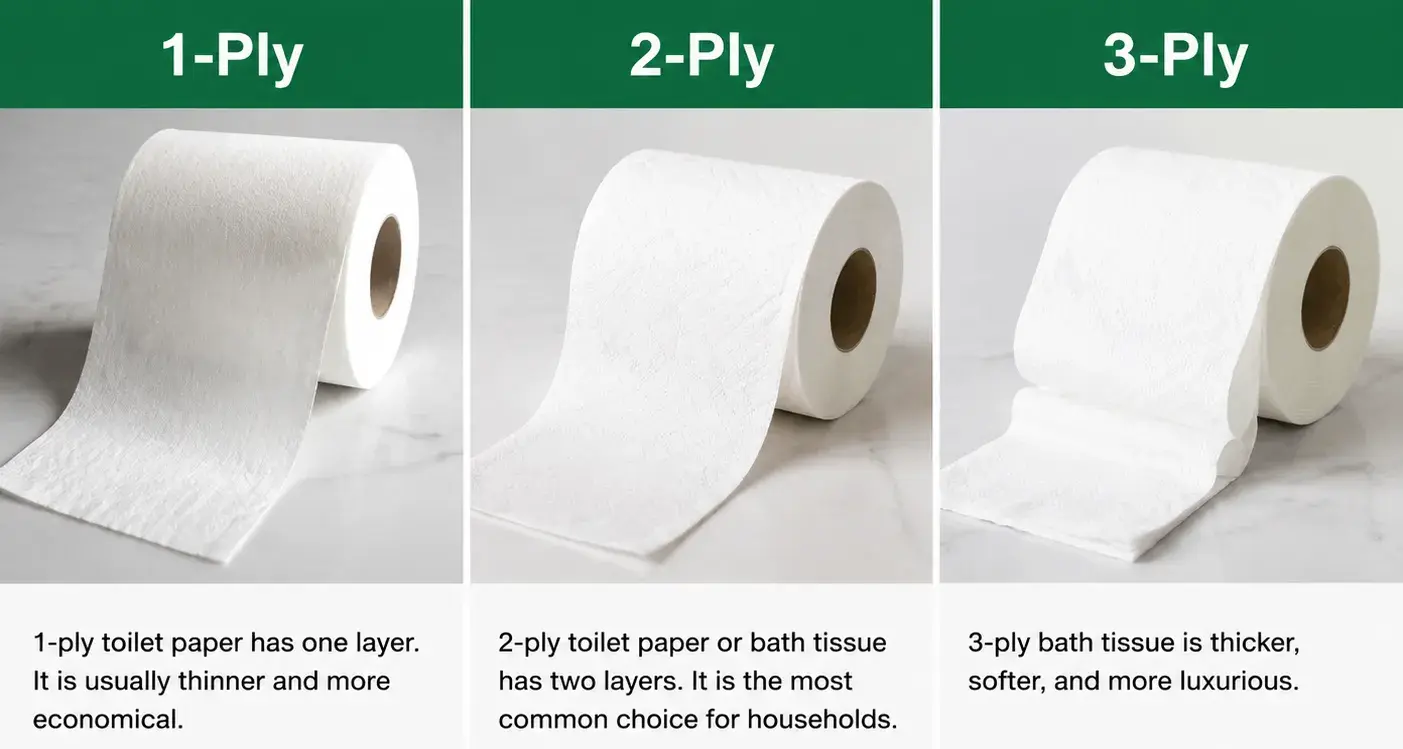
Ply refers to the number of layers in each sheet. Common options include:
1-Ply
1-ply toilet paper has one layer. It is usually thinner and more economical.
- Best for: Offices, Public restrooms, High-traffic facilities, Septic systems, Budget-conscious buyers.
2-Ply
2-ply toilet paper or bath tissue has two layers. It is the most common choice for households.
- Best for: Daily home use, Comfort and value balance, Guest bathrooms, Small businesses.
3-Ply
3-ply bath tissue is thicker, softer, and more luxurious.
- Best for: Premium home bathrooms, Hotels, Sensitive skin, Users who prioritize comfort.
The right ply depends on your needs. Thicker tissue may feel better, but it may also cost more and use up faster.
4. Strength and Absorbency
A good bathroom tissue should be soft but also strong enough to avoid tearing during use.
Strength matters because low-quality tissue can fall apart too easily. Absorbency matters because thicker, more absorbent paper may allow users to use fewer sheets.
Paper that is too strong and too thick may not break down quickly after flushing. For homes with septic systems, this can be a serious consideration.
When choosing between bath tissue and toilet paper, look for a product that offers:
- Comfortable softness
- Enough strength
- Good absorbency
- Fast breakdown in water
5. Flushability and Septic Safety
Not all bath tissue or toilet paper performs the same after flushing.
If you have a septic system, RV toilet, marine toilet, or older plumbing, you should pay special attention to whether the product is labeled:
- Septic-safe
- Rapid-dissolving
- Biodegradable
- Sewer-safe
- RV-safe
Septic-safe toilet paper is designed to break down faster in water, reducing the risk of clogs and system problems.
Important note: Extra-thick, quilted, lotion-treated, or 3-ply products may feel luxurious, but they are not always ideal for delicate plumbing systems.
If plumbing safety is your top priority, choose a tissue that dissolves quickly rather than simply choosing the softest option.
6. Environmental Impact
Environmental impact is another important part of Bath Tissue vs Toilet Paper.
Both products can have environmental concerns, especially when made from virgin wood pulp. Tissue production may involve tree harvesting, water use, energy use, bleaching, packaging waste, and transportation emissions.
Eco-friendlier options include:
- 🌱 Recycled toilet paper
- 🌱 Bamboo bath tissue
- 🌱 FSC-certified paper
- 🌱 Chlorine-free or elemental chlorine-free tissue
- 🌱 Plastic-free packaging
- 🌱 Biodegradable / Unbleached bathroom tissue
When comparing products, look for certifications or claims such as:
- FSC Certified / PEFC Certified
- 100% recycled content / Post-consumer recycled fiber
- Chlorine-free processing / Plastic-free packaging
7. Cost and Value
Bath tissue is often priced higher than standard toilet paper, especially if it is positioned as premium, ultra-soft, eco-friendly, or luxury-grade.
A cheaper roll may run out faster if it has fewer sheets or lower strength. A more expensive roll may offer better value if users need fewer sheets.
When comparing cost, consider:
- Number of sheets per roll & Sheet size
- Ply count & Roll diameter
- Number of rolls per pack
- Strength and absorbency
- • How many sheets you actually use per visit
Bath Tissue vs Toilet Paper: Which One Is Better?
Choose Bath Tissue If You Want:
- ➔ A softer bathroom experience
- ➔ Premium comfort
- ➔ A product for sensitive skin
- ➔ Better guest bathroom presentation
- ➔ A luxury feel for home or hospitality use
- ➔ 2-ply or 3-ply softness
Choose Toilet Paper If You Want:
- ➔ Practical daily use
- ➔ Lower cost
- ➔ Easy availability
- ➔ Commercial restroom supply
- ➔ Septic-safe options
- ➔ High-volume purchasing
- ➔ Budget-friendly performance
For most households, a good 2-ply toilet paper or bath tissue provides the best balance between comfort, cost, and flushability.
Best Choice for Different Situations
For Home Use
For everyday home bathrooms, 2-ply toilet paper or bath tissue is usually the most balanced option. It offers enough softness and strength without being overly expensive.
- 2-ply
- Soft but not too thick
- Septic-safe if needed
- Good sheet count
- Reasonable price per square foot
For Sensitive Skin
If you or your family members have sensitive skin, choose soft bath tissue without harsh additives. Some ultra-soft products contain lotion, aloe, or fragrance. These may irritate sensitive skin.
- Fragrance-free & Dye-free
- Lotion-free if you are sensitive
- Soft virgin pulp or bamboo fiber
- Dermatologist-tested claims if available
For Septic Systems
For septic systems, RVs, boats, or older plumbing, choose rapid-dissolving toilet paper. Flushable wipes are not the same as toilet paper and can cause plumbing issues.
- Septic-safe label
- 1-ply or light 2-ply
- Rapid-dissolving design
- Avoid ultra-thick quilted products
- Avoid wipes, even if labeled flushable
For Hotels and Guest Bathrooms
Hotels often choose bath tissue because the term and product positioning feel more premium. A better tissue product can improve the overall bathroom experience.
- Soft 2-ply or 3-ply
- Embossed texture
- Attractive packaging
- Consistent roll quality
- Comfortable feel & Reliable bulk supply
For Offices & Commercial
Commercial spaces usually prioritize cost, availability, and low maintenance. Durability, supply efficiency, and cost control often matter more than luxury softness.
- 1-ply or economical 2-ply
- Large roll or jumbo roll format
- High sheet count & Fast breakdown
- Compatible with dispensers
- Bulk packaging
For Eco-Conscious Buyers
If sustainability is your main concern, choose recycled or bamboo tissue. It may cost more, but many consider it a worthwhile trade-off for reducing environmental impact.
- 100% recycled paper or Bamboo fiber
- FSC certification
- Plastic-free packaging
- Biodegradable claims
- Chlorine-free processing
Bath Tissue vs Toilet Paper: Final Buying Guide
When deciding between bath tissue and toilet paper, ask yourself these questions:
- Do I want the softest possible product?
- Do I need septic-safe performance?
- Is price more important than comfort?
- Am I buying for home, office, hotel, or commercial use?
- Do I prefer recycled or bamboo materials?
- Does anyone in my home have sensitive skin?
- How many sheets are included per roll?
- Is the product certified or sustainably sourced?
If you want premium comfort, choose a soft bath tissue. If you want an economical everyday option, choose a practical toilet paper. If you want sustainability, choose recycled or bamboo tissue. If you need plumbing protection, choose septic-safe toilet paper.
Conclusion: Bath Tissue vs Toilet Paper
In the comparison of Bath Tissue vs Toilet Paper, the two products are usually the same in basic function. Both are designed for personal hygiene in the bathroom and are commonly sold in rolls of perforated sheets.
The real differences are mostly related to branding, softness, material quality, ply count, price, environmental impact, and intended use.
The best choice depends on your needs. For comfort, choose soft bath tissue. For value, choose standard toilet paper. For sensitive plumbing, choose septic-safe toilet paper. For sustainability, consider recycled or bamboo bath tissue.
By understanding the differences, you can make a smarter purchase for your home, business, or commercial restroom.
FAQs About Bath Tissue vs Toilet Paper
1. Is bath tissue the same as toilet paper?
Yes. Bath tissue and toilet paper usually refer to the same type of product. Both are used for personal hygiene after using the toilet. The term bath tissue is often used to make the product sound softer, cleaner, or more premium.
2. Why do brands use the term bath tissue?
Brands use the term bath tissue because it sounds more refined than toilet paper. It creates a more comfortable and premium impression, especially for products marketed as soft, gentle, or luxury-grade.
3. Is bath tissue better than toilet paper?
Not always. Bath tissue may be softer or more premium, but the actual quality depends on material, ply count, strength, absorbency, and flushability. Some toilet paper products are just as soft and high-quality as bath tissue.
4. Which is softer, bath tissue or toilet paper?
Bath tissue is often marketed as softer, especially when it is 2-ply or 3-ply. However, softness depends on the brand and material. Premium toilet paper can also be very soft.
5. Can bath tissue be flushed?
Yes, bath tissue can usually be flushed if it is designed for toilet use. However, if you have a septic system or older plumbing, choose a product labeled septic-safe or rapid-dissolving.
6. Is bath tissue safe for septic systems?
Some bath tissue is septic-safe, but not all. Check the label. Ultra-thick, quilted, or lotion-treated products may break down more slowly than septic-safe toilet paper.
7. What is the most eco-friendly option?
Recycled toilet paper, bamboo bath tissue, and FSC-certified products are generally better environmental choices. Also look for plastic-free packaging and chlorine-free processing.
8. Is 1-ply or 2-ply toilet paper better?
1-ply is usually cheaper and dissolves faster, making it good for commercial restrooms and septic systems. 2-ply is softer and stronger, making it a popular choice for home use.
9. Why is some bath tissue more expensive?
Bath tissue may cost more because it uses softer fibers, more layers, embossing, premium packaging, or eco-friendly materials such as bamboo or recycled fiber.
10. What should I look for when buying bath tissue or toilet paper?
Look at ply count, sheet count, material, softness, strength, septic safety, environmental certifications, and price per sheet or price per square foot.


