
Bamboo toilet paper usually costs more than regular toilet paper because the raw material is harder to process, production runs are smaller, and premium tissue products often require stricter quality control. If you are comparing bamboo toilet paper with standard wood-pulp toilet paper, the price difference is usually tied to manufacturing cost, sustainable sourcing, packaging, and international logistics—not just the material itself.
In simple terms, Bamboo must be turned into pulp, cleaned, refined, and formed into tissue with the right balance of softness, strength, absorbency, and hygiene. That process is more complex than mass-producing conventional toilet paper, especially when the product is made to meet eco-friendly and premium market standards.
Key Takeaways:
- Bamboo toilet paper is usually priced higher because it is more expensive to produce.
- The production process is more complex than standard toilet paper manufacturing.
- Premium bamboo tissue often uses higher-quality raw materials, better embossing, and stronger packaging.
- Smaller production scale and global shipping can raise the final cost.
- The higher price does not always mean better performance, but it often means more controlled quality and a more sustainable positioning.
Why bamboo toilet paper costs more
Bamboo toilet paper is not made by simply turning bamboo toilet paper into a roll. The raw bamboo has to go through pulping, purification, bleaching, sheet forming, drying, embossing, rewinding, and packaging. Each stage adds labor, equipment use, and quality control requirements.
Compared with traditional wood-pulp toilet paper, bamboo tissue is often produced in smaller batches and with tighter product standards. That means fewer economies of scale. When a factory makes millions of standard rolls using established supply chains, unit cost goes down. When a brand produces bamboo toilet paper for a more specialized market, the unit cost usually stays higher.
Raw material and pulp processing costs
Bamboo is fast-growing, but fast growth does not automatically mean low production cost. To become tissue paper, bamboo must be turned into pulp and refined into a usable fiber base. That step requires equipment, energy, water management, and process control.
If the end product is positioned as premium bamboo toilet paper, Sempo need better fiber refinement and more consistent sheet formation. That affects softness, absorbency, and strength. In other words, the material may be natural, but the transformation into a stable tissue product is technically demanding.
Smaller-scale manufacturing
Traditional toilet paper is produced in massive quantities by large, mature supply chains. Bamboo toilet paper is still a smaller segment in many markets, which means factories often run lower volumes and have less room to reduce costs through scale.
For you as a buyer, that means the price per roll may stay higher even if the packaging looks simple. Smaller-scale production also means fewer suppliers, less standardized sourcing, and more variation in product quality. This is one of the main reasons bamboo toilet paper is usually sold as a premium tissue product rather than a budget one.
Sustainable sourcing and certification
Many bamboo tissue products are sold with sustainability claims.
A factory may need to invest in responsible sourcing, cleaner manufacturing processes, quality audits, and certification support. If the product carries claims such as FSC, chlorine-free bleaching, or biodegradable packaging, those requirements can increase testing, documentation, and production expense.
Shipping and logistics
Because Bamboo toilet paper products are bulky, transportation can become a meaningful part of the final price.
Even though each roll is lightweight, the volume is large. That means container space, freight rates, port handling, and warehousing all matter.
Is bamboo toilet paper better than regular toilet paper?
Bamboo toilet paper can be better in some use cases, but it depends on what you value most. If you want a cleaner sustainability story, a tree-free material choice, and a premium tissue feel, bamboo toilet paper is often a strong option. If your main goal is the lowest possible unit price, regular toilet paper usually wins.
Bamboo toilet paper is often designed for customers who want a better balance of softness, strength, and environmental responsibility. Regular toilet paper is typically optimized for mass-market affordability.
Softness
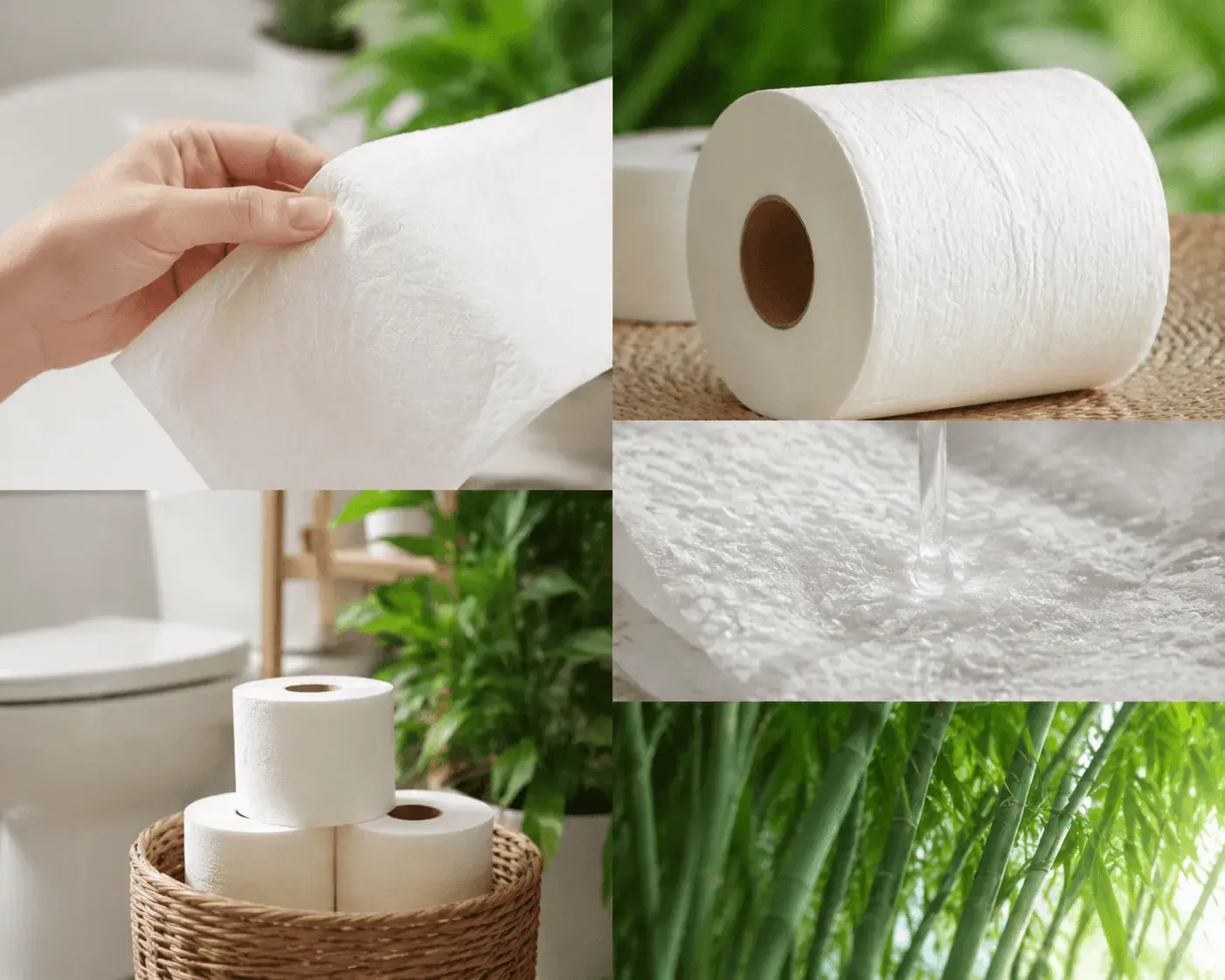
Good bamboo tissue can be soft and smooth, especially when the fiber quality and embossing design are well controlled. However, softness depends on the manufacturer, not just the raw material.
If the sheet is too thin or the embossing is weak, the product may feel rougher than expected. That is why premium bamboo toilet paper often costs more: the factory may use better sheet formation, higher base weight, or improved layering to create a more comfortable hand feel.
Absorbency
Bamboo toilet paper can perform well when the fiber structure is optimized, but not every product on the market delivers the same result. A well-made bamboo tissue should absorb quickly without breaking apart too early.
For you as a buyer, absorbency matters in real-life use situations such as home bathrooms, hotels, offices, and travel. The product must handle daily use without needing extra sheets. Better absorbency can justify a higher price because it improves efficiency per use.
Strength
Strength is where many premium tissue products separate themselves from low-cost options. A bamboo toilet paper roll may cost more if the manufacturer is targeting better wet strength, stronger dry strength, or more reliable performance during use.
Stronger tissue often means fewer tears, fewer complaints, and better customer satisfaction. This matters in hospitality, private label retail, and wholesale supply, where product consistency affects brand reputation.
Skin comfort
Bamboo toilet paper is often chosen by users who want a gentler feel. That said, “better for skin” is not automatic. A tissue product must still be properly processed, cleaned, and tested.
If the factory uses clean manufacturing, controlled bleaching, and stable hygiene standards, the final product can be a good fit for customers who prefer a softer, less irritating tissue. This is especially important for markets where consumers pay attention to product safety and everyday comfort.
Environmental impact
Bamboo is often marketed as a more sustainable raw material because it grows quickly and can reduce dependence on conventional tree-based pulp. But environmental impact is not defined by the raw material alone.
Processing, transportation, bleaching method, packaging, and production efficiency all matter. A bamboo toilet paper product can be more eco-friendly, but only when the manufacturer manages the full process responsibly.
Should you buy bamboo toilet paper?
If you care about sustainability, premium quality, or private label positioning, bamboo toilet paper can be worth it. If your priority is the lowest cost per roll, you may prefer standard toilet paper or recycled tissue.
In premium retail, boutique hotels, eco-focused brands, and households that want a more sustainable option, bamboo toilet paper fits well. In price-sensitive bulk purchasing, traditional wood-pulp tissue may still be the better fit.
When bamboo toilet paper makes sense
Bamboo toilet paper makes sense when the customer values brand image, product story, and material differentiation. It also makes sense when you want to offer a premium tissue line with a clear environmental angle.
For retailers and distributors, bamboo toilet paper can help build a higher-value product category. For end users, it can provide a more comfortable, more natural-feeling option, especially when the product is made with stable quality control.
Bamboo toilet paper vs regular toilet paper
| Factor | Bamboo Toilet Paper | Regular Wood-Pulp Toilet Paper |
|---|---|---|
| Raw material | Bamboo fiber | Wood pulp |
| Production scale | Usually smaller | Usually larger |
| Manufacturing complexity | Higher | Lower |
| Price level | Higher | Lower |
| Softness | Premium products can be very soft | Often soft, depending on grade |
| Absorbency | Good when well processed | Stable and widely available |
| Strength | Can be strong in premium versions | Good in standard products |
| Environmental positioning | Tree-free, sustainable story | Depends on sourcing and process |
| Market positioning | Premium / eco-focused | Mass market / value focused |
Why some bamboo toilet paper is much more expensive than others
Not all bamboo toilet paper is priced the same. Some rolls are sold at a modest premium, while others cost significantly more. The difference usually comes from product specification, quality control, and brand positioning.
Ply count and sheet design
A 2-ply or 3-ply bamboo toilet paper will usually cost more than a thinner alternative because it uses more material per roll. Sheet size also matters. Larger sheets, better embossing, and more precise perforation all increase production cost.
If the product is designed for a premium consumer market, the manufacturer may also spend more on roll appearance, core strength, and package presentation. These details influence both the buying experience and the final price.
Quality control and hygiene standards
High-quality bamboo tissue is not only about the fiber. It also depends on inspection and hygiene management during production. A well-run factory checks softness, absorbency, whiteness, strength, size, packaging accuracy, and cleanliness before shipment.
Brand and packaging costs
Some bamboo toilet paper products cost more because of branding, retail positioning, and packaging. This is especially true in DTC, supermarket, and premium e-commerce channels.
A strong package design, printed claims, export-ready cartons, and consumer-friendly branding all add cost. If you are comparing products only by raw material, you may miss these additional layers. In the market, these layers matter because they shape how customers perceive quality.
Is bamboo toilet paper really more eco-friendly?
It can be, but only when the whole production process supports that claim. Bamboo itself is a fast-growing plant, and that makes it attractive for sustainable tissue products.
The actual environmental impact depends on the processing method, bleaching system, wastewater handling, transport distance, and packaging. A well-managed bamboo toilet paper line can reduce pressure on traditional forest resources and support a more sustainable product story. A poorly managed one may lose much of that advantage.
Is bamboo toilet paper worth the price?
For many buyers, yes. Bamboo toilet paper is often worth the price when you want a premium tissue product with a sustainability story, dependable comfort, and better brand differentiation. The higher cost usually reflects real manufacturing differences, not just marketing.
That said, worth is always relative. If your customer base is focused on value, standard toilet paper may still be the better fit. If your audience wants a cleaner material story and a more premium bathroom experience, bamboo toilet paper can justify the added cost.
FAQ
Is there a downside to bamboo toilet paper?
Yes. The main downsides are higher cost, less availability in some markets, and quality differences between brands. Some products also cost more because of packaging, logistics, and certification requirements.
Do gynecologists recommend bamboo toilet paper?
Some gynecologists may prefer unscented, soft, and low-irritation toilet paper for sensitive users, but they do not generally recommend a specific fiber type for everyone. The most important factors are cleanliness, softness, and whether the product causes irritation.
What is so special about bamboo toilet paper?
It combines a tree-free raw material story with a premium tissue position. Many buyers choose it for its softness, strength, and eco-friendly branding.
Why is bamboo toilet paper more expensive than regular toilet paper?
It costs more because bamboo is harder to process, production volumes are smaller, and premium tissue products usually require stricter quality control, better packaging, and higher logistics costs.
Is bamboo toilet paper more expensive than regular toilet paper?
Yes. It usually costs more because bamboo tissue needs more processing, smaller-scale production, and stronger quality control than mass-market toilet paper.
Is bamboo toilet paper softer than regular toilet paper?
It can be. Softness depends on the pulp quality, ply structure, and embossing design, not only on the raw material.
Is bamboo toilet paper better for the environment?
Often, yes, but only if the bamboo is responsibly sourced and the factory uses efficient, low-impact production methods.
Why is bamboo toilet paper harder to find in some markets?
Because it is usually produced in smaller volumes and sold through premium or eco-focused channels rather than mass-market distribution.
Is bamboo toilet paper safe for sensitive skin?
It can be suitable for sensitive skin when it is properly processed, cleanly manufactured, and tested for hygiene standards.
Does bamboo toilet paper break down faster?
It can be biodegradable, but the breakdown speed depends on the product structure, processing, and local disposal conditions.
Why do some bamboo toilet paper brands cost much more?
Because of ply count, packaging, certifications, import costs, branding, and product quality differences.
Conclusion
Bamboo toilet paper is more expensive because it is a more specialized product from raw material to finished roll. The cost comes from processing, smaller-scale production, sustainability requirements, logistics, and premium market positioning. If you are evaluating bamboo toilet paper for retail, wholesale, or private label supply, the real question is not only price.
If you are looking for a tissue factory partner, Liansheng Sempo can support bamboo toilet paper production with controlled quality, practical specifications, and export-ready supply options. If you want to develop a bamboo tissue line for your market, contact us to discuss material options, product grades, and packaging requirements.


