
When you reach for a paper towel, you’re likely tackling a spill or wiping down a countertop. While they are the undisputed champion of everyday cleanups, their utility extends far beyond the obvious.
Kitchen paper towels are an indispensable tool for food preparation, storage, and cooking, offering solutions that enhance food safety, preserve freshness, and deliver better culinary results.
From ensuring your dishes are hygienically dry to achieving the perfect sear on a steak, these versatile sheets can solve common kitchen frustrations you might not have known you had.
The key is understanding how their unique properties, strength, absorbency, and disposability, can be leveraged for tasks where other tools fall short.
We explore five surprising and practical uses for kitchen paper towels.
Key Takeaways
- Enhance Food Safety:
Use paper towels for a hygienic, single-use method to dry dishes, preventing bacterial cross-contamination from reusable dishcloths. - Prolong Produce Freshness:
Line vegetable drawers or wrap greens and delicate fruits with paper towels to absorb excess moisture, slowing decay and preventing bruising. - Ensure Clean Microwaving:
Cover bowls and plates with a paper towel to contain splatters, making cleanup effortless while allowing steam to escape. - Prevent Soggy Frozen Goods:
Place a paper towel in the bag with bread or pastries before freezing and during thawing to absorb condensation, preserving their original texture. - Optimize Cooking Prep:
Pat ingredients like meat and vegetables dry with a paper towel to remove surface moisture, ensuring better browning, crispier skin, and more even seasoning.
1. Drying Dishes
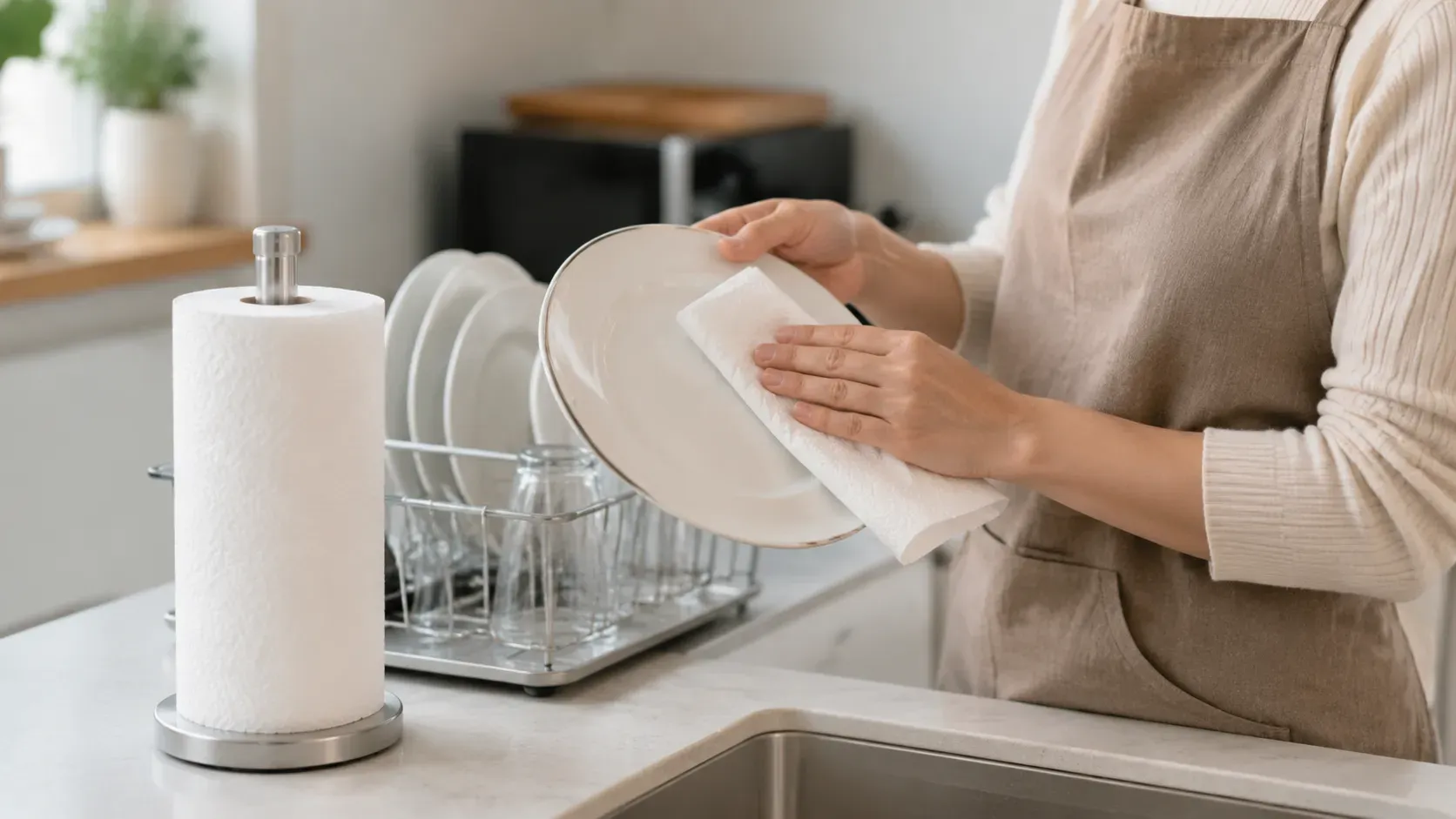
While a reusable dish towel is a common choice for drying pots, pans, and plates, it can be a breeding ground for bacteria. A damp cloth used repeatedly can transfer germs back onto your clean dishes, undermining the entire washing process.
The Risk Of Cross-Contamination
A kitchen dishcloth is constantly exposed to moisture, creating the perfect environment for bacteria like E. coli and Salmonella to thrive. Each time you use it, you risk spreading these microbes. This is a critical concern for food safety, especially in households with young children or immunocompromised individuals.
Why Paper Towels Are A Safer Alternative
Using a fresh, disposable paper towel for each drying session eliminates the risk of cross-contamination. Its single-use nature ensures that you are always using a sterile surface. For delicate glassware, a strong, lint-free paper towel also leaves a streak-free shine that cloths often can’t match.
| Feature | Reusable Dishcloth | High-Quality Paper Towel |
|---|---|---|
| Hygiene | Low (Traps moisture and bacteria) | High (Single-use, sterile) |
| Cross-Contamination Risk | High | Negligible |
| Convenience | Requires frequent washing | Grab-and-go, disposable |
| Drying Effectiveness | Good, but can become saturated | Excellent, high absorbency |
2. Extend The Life Of Your Fresh Produce
One of the biggest challenges in any kitchen is keeping fruits and vegetables fresh. The primary culprit behind wilting, mold, and decay is excess moisture. Paper towels are a simple and highly effective tool for moisture management.
Storing Leafy Greens And Herbs
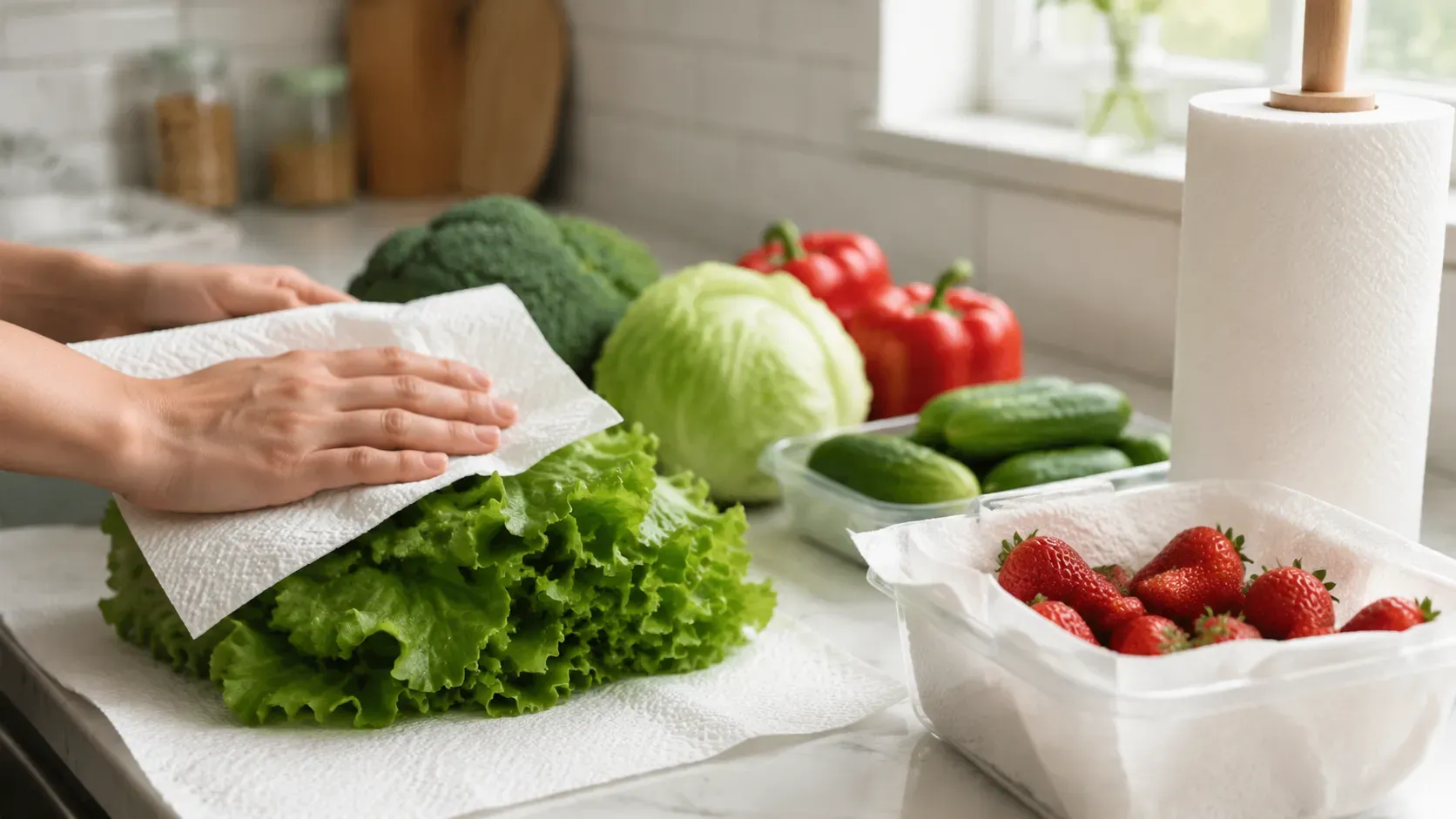
Salad greens, spinach, and fresh herbs are notorious for turning slimy in the refrigerator. To prevent this, wash and dry them thoroughly, then wrap the bundle in a sheet of paper towel before placing it in a storage container or bag. This absorbent layer will wick away any residual condensation, keeping the greens crisp and fresh for days longer.
Protecting Delicate Fruits
Berries, figs, and other soft-skinned fruits are prone to both moisture damage and bruising. Lining the bottom of the fruit container with a folded paper towel creates a cushioned, absorbent base. This not only soaks up excess juice and moisture but also provides a soft buffer that prevents the fruit from getting crushed.
3. The Secret To A Splatter-Free Microwave
Microwaving is a cornerstone of modern convenience, but it often comes with a messy consequence: food splatters that bake onto the interior. Instead of wrestling with a plastic lid that traps too much steam, use a paper towel.
Simply lay a single sheet of microwave-safe paper towel over your bowl or plate before heating. It’s porous enough to let steam escape (preventing food from becoming soggy) but absorbent enough to catch any bubbling sauces or greasy splatters. This small step transforms a potentially tedious cleanup job into a simple wipe-down.
4. Keep Frozen Breads And Pastries Fresh, Not Soggy
Freezing is an excellent way to preserve bread, croissants, and other baked goods, but the thawing process can introduce unwanted moisture, leaving them disappointingly soggy. A paper towel is the key to preserving their intended texture.
The Freezing And Thawing Process
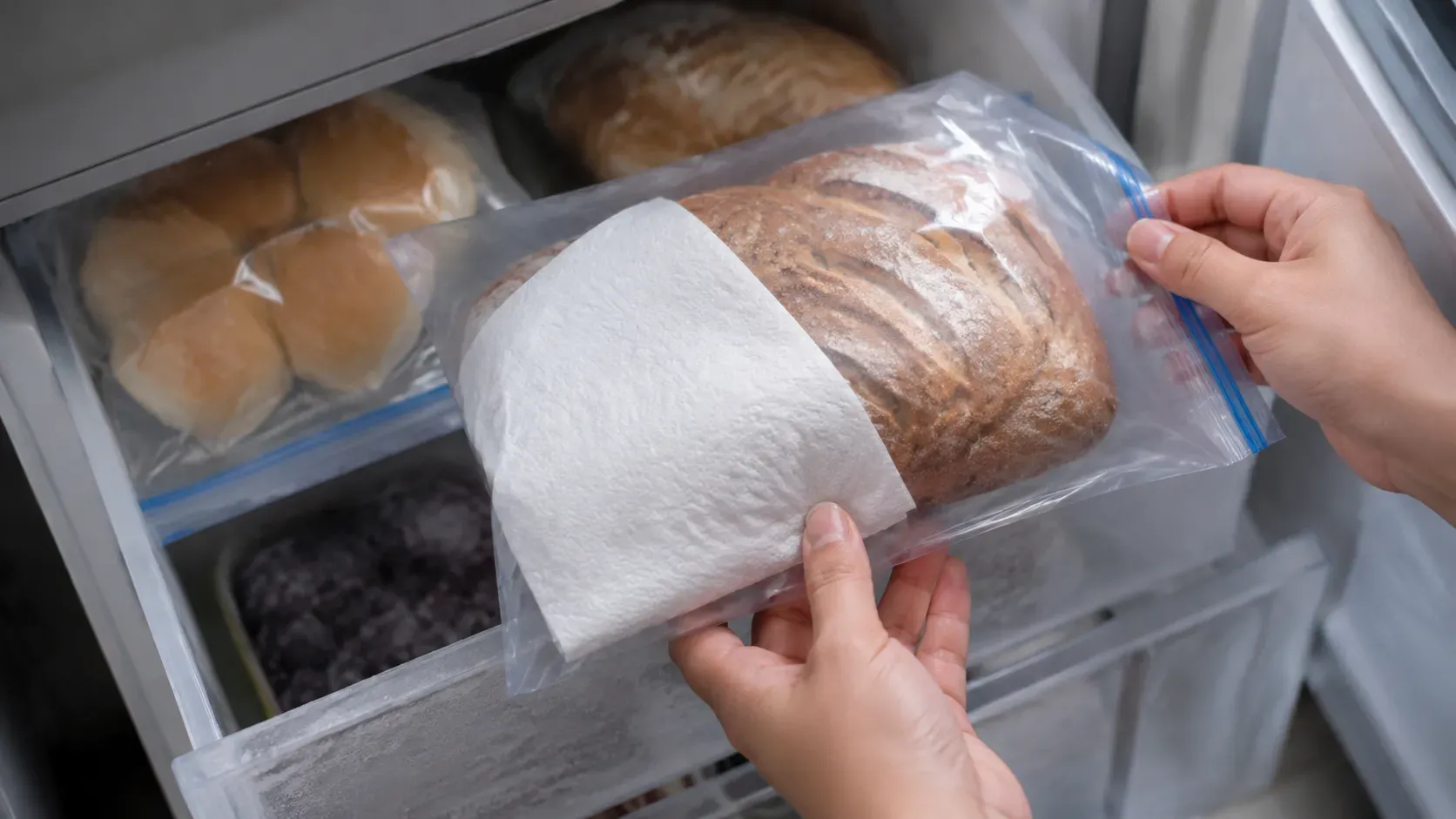
- Before Freezing: Place a sheet of paper towel inside the freezer bag with your loaf of bread or pastries. It will begin absorbing any initial surface moisture.
- During Thawing: Leave the sheet in the bag as you thaw the items on the counter. As ice crystals melt, it will trap the resulting condensation, keeping it away from the crust.
This simple trick ensures your bread thaws with a firm, fresh crust and your pastries remain flaky and delicious.
5. Achieve A Sear By Prepping Ingredients
Whether you’re searing a steak, pan-frying fish, or roasting vegetables, surface moisture is your enemy. Water creates steam, which prevents the direct heat contact needed for the Maillard reaction.
Why Patting Dry Is Non-Negotiable
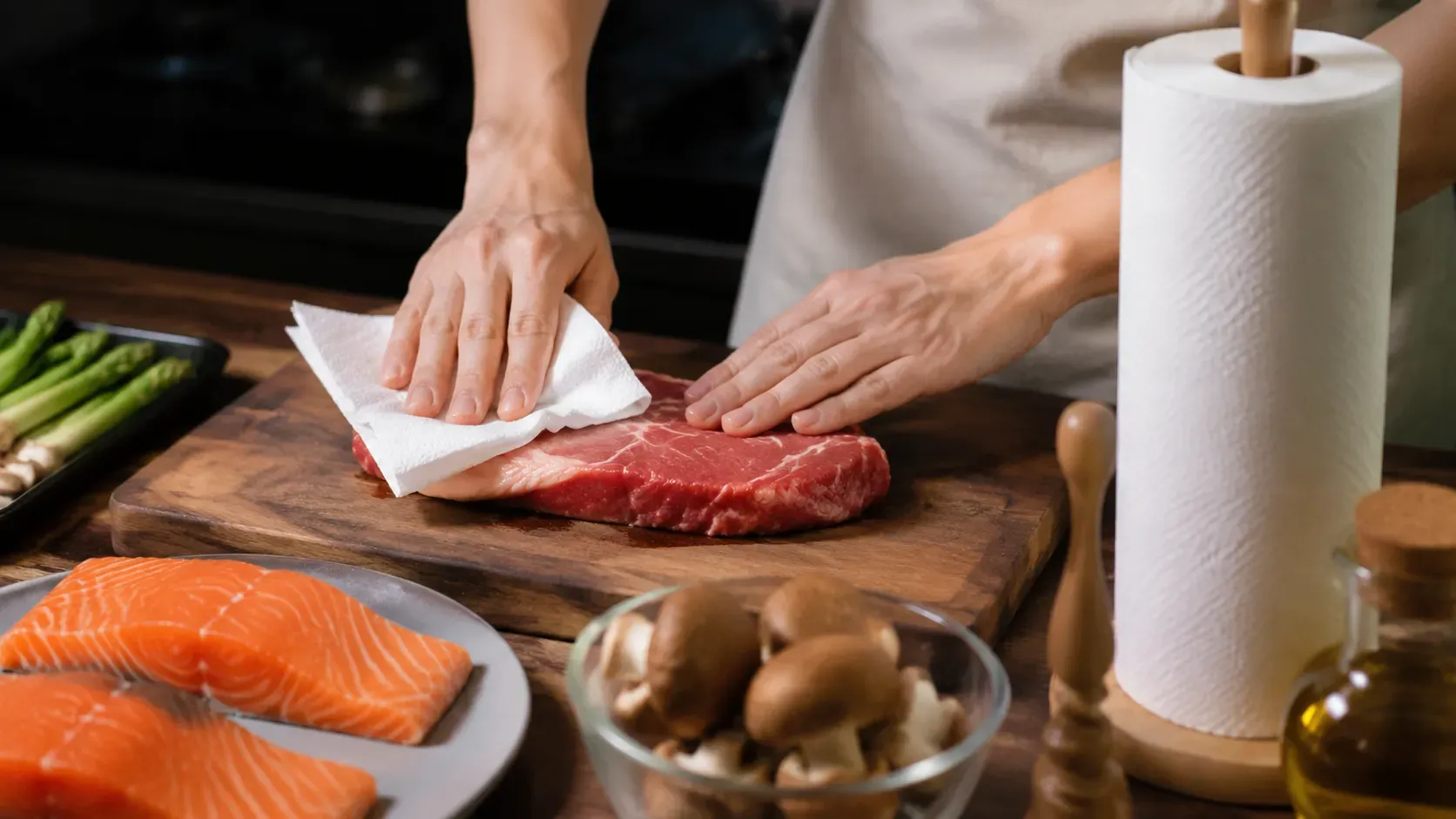
Before seasoning, thoroughly pat your ingredients dry with a strong, absorbent paper towel.
- Meats And Fish: Removing moisture allows for a crispier skin and a deep, even sear. It also prevents oil from splattering violently when the food hits the hot pan.
- Vegetables: Dry vegetables will roast or fry to a crispy, caramelized finish instead of steaming and becoming soft.
- Seasoning: Spices and rubs adhere much better to a dry surface, ensuring a more flavorful and evenly coated result.
Using a low-quality paper towel or a tissue for this task can be frustrating, as they can shred and leave behind lint or paper residue. A durable, food-safe kitchen paper towel like those from Liansheng Sempo is specifically engineered for strength.
The Liansheng Sempo Difference
As a tissue paper manufacturer dedicated to quality, we at Liansheng Sempo understand that a kitchen paper towel is more than just a cleaning supply, it’s a versatile kitchen tool.
Our products are designed with superior strength and absorbency to handle all these tasks and more, ensuring you get reliable, hygienic, and effective results every time.
If you are looking for a reliable partner for your paper towel needs or have wholesale inquiries, we invite you to connect with us. Contact Liansheng Sempo today to learn more about our product lines and partnership opportunities.
Frequently Asked Questions (FAQ)
Q: Are Paper Towels Safe To Use In The Microwave?
A: Yes, most plain, white paper towels are safe for use in the microwave. Avoid using recycled paper towels, as they may contain trace metal fragments. Also, do not use paper towels with printed designs, as the ink may not be food-safe. Always use them for short-term reheating to absorb splatters, not for long-duration cooking.
Q: Can You Put A Paper Towel In The Freezer With Food?
A: Absolutely. Placing a paper towel in a freezer bag with items like bread or baked goods is a great way to absorb excess moisture during the freezing and thawing process, which helps prevent them from becoming soggy.
Q: Is It More Hygienic To Dry Hands With Paper Towels Or A Cloth Towel?
A: Using disposable paper towels to dry your hands is more hygienic than using shared towels. These disposable sheets effectively remove bacteria and prevent their spread, while damp cloth towels are more likely to harbor and spread bacteria.
Q: Can Paper Towels Be Used To Absorb Excess Oil From Fried Foods?
A: Yes, this is one of their most popular uses. Placing freshly fried foods like bacon, french fries, or chicken on a layer of paper towels effectively drains excess grease, resulting in a crispier and less oily final product. A strong, absorbent towel works best for this task.


