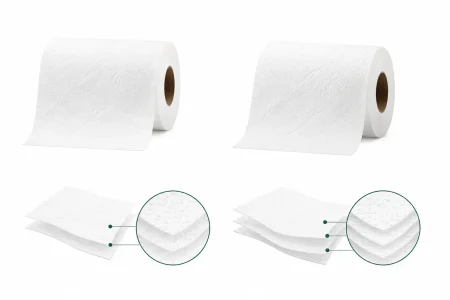
The average person uses about 6 to 8 standard rolls of toilet paper per month, or roughly 1.5 to 2 rolls per week. In sheet count, that usually equals 1,500 to 2,000 sheets per month, depending on roll size, ply, bathroom habits, time spent at home, and whether a bidet is used.
A four-person household typically needs 24 to 32 standard rolls per month. If you buy double rolls, mega rolls, or jumbo rolls, the roll count will be lower because each roll contains more sheets.
For homes, offices, hotels, the more accurate way to estimate toilet paper usage is by sheet count, not roll count.
Key Takeaways
- ✓
One person usually uses 6 to 8 standard toilet paper rolls per month.
- ✓
A four-person household usually uses 24 to 32 standard rolls per month.
- ✓
Standard rolls often contain 150 to 200 sheets, while double rolls, mega rolls, and jumbo rolls contain much more.
- ✓
People who work from home, families with children, and female users may use more toilet paper.
- ✓
Bidets can reduce toilet paper consumption by 50% or more in many households.
- ✓
Sheet count is more reliable than roll count because brands define roll sizes differently.
- ✓
For budgeting or stock planning, a safe estimate is 2 standard rolls per person per week or 1 larger roll per person per week.
- ✓
If you buy toilet paper for commercial use, hospitality, retail, or wholesale supply, focus on sheet count, ply, roll diameter, core size, and packaging format rather than only the number of rolls.
Average Toilet Paper Use Per Person
Most people use 6 to 8 standard toilet paper rolls per month, but the cleaner benchmark is about 50 to 70 sheets per day. This means one person may use around 1,500 to 2,100 sheets per month.
If your roll has 200 sheets, you will need around 8 to 10 rolls. If your roll has 400 sheets, you may only need 4 to 5 rolls.
Toilet paper usage looks simple until you compare roll sizes. A “standard roll” from one brand may have 150 sheets, while a “mega roll” from another brand may contain 400 to 500 sheets. That is why two households can both say they use “one roll per week” but consume very different amounts of paper.
The best method is to calculate toilet paper consumption by sheets per person per day, then convert that number into rolls based on the sheet count printed on the package.
Monthly Toilet Paper Usage by Person
| User Type | Estimated Sheets Per Day | Estimated Sheets Per Month | Standard Rolls Per Month |
|---|---|---|---|
| Low-use adult | 35–45 sheets | 1,050–1,350 sheets | 5–7 rolls |
| Average adult | 50–70 sheets | 1,500–2,100 sheets | 8–11 rolls |
| High-use adult | 75–90 sheets | 2,250–2,700 sheets | 11–14 rolls |
| Bidet user | 10–25 sheets | 300–750 sheets | 2–4 rolls |
| Work-from-home adult | 60–85 sheets | 1,800–2,550 sheets | 9–13 rolls |
*Based on a standard roll with about 200 sheets. Actual roll count changes by brand, roll size, ply, and sheet dimensions.
Why does the number of sheets provide a more accurate answer?
Roll count is easy to understand, but it is not always accurate. Toilet paper rolls are sold as standard rolls, double rolls, mega rolls, family rolls, jumbo rolls, and commercial rolls. These names are not always standardized across brands, so the number of sheets per roll matters more than the label.
For example, if you use 1,800 sheets per month, your roll count changes like this:
| Roll Type | Sheets Per Roll | Rolls Needed Per Month |
|---|---|---|
| Small standard roll | 150 sheets | 12 rolls |
| Standard roll | 200 sheets | 9 rolls |
| Double roll | 350 sheets | 5–6 rolls |
| Mega roll | 450 sheets | 4 rolls |
| Jumbo commercial roll | 1,000+ sheets | 1–2 rolls |
This is why wholesalers, hotels, offices, and janitorial suppliers usually estimate toilet paper by case quantity, sheets per roll, roll diameter, and usage frequency, not by retail roll names.
Simple Formula to Calculate Your Own Toilet Paper Use
You can estimate your monthly toilet paper needs with this formula:
Daily sheets used × number of people × 30 days ÷ sheets per roll = rolls needed per month
For example, if one person uses 60 sheets per day and each roll has 200 sheets:
60 × 1 × 30 ÷ 200 = 9 rolls per month
For a four-person household:
60 × 4 × 30 ÷ 200 = 36 standard rolls per month
This estimate is slightly higher than the common 24 to 32 roll range because it uses a full at-home usage model. If adults work outside the home or children use school bathrooms during the day, home consumption may be lower.
What Affects How Much Toilet Paper You Use?
Toilet paper usage depends on household size, gender mix, age, bathroom habits, time spent at home, roll size, ply, and whether you use a bidet. The average range is useful, but your real monthly toilet paper consumption may be much lower or higher.

A single adult who works outside the home may use far less toilet paper at home than a remote worker. A family with small children may use more because children often pull longer strips or use toilet paper for spills and bathroom cleanup. In commercial environments, usage rises with restroom traffic, public access, and maintenance habits.
Gender, Age, and Health Conditions
Toilet paper consumption often differs by user group. Women generally use more toilet paper than men because toilet paper is used for both urination and bowel movements. Young children may also use more than expected because they are still learning how much paper is enough.
Health conditions can change usage quickly. Digestive issues, pregnancy, menstruation, colds, allergies, and temporary illness may increase toilet paper demand. These changes are usually short-term, but they matter when stocking for families, guest bathrooms, healthcare facilities, schools, and hospitality settings.
Time Spent at Home
Your monthly toilet paper usage increases when you spend more time at home. Remote workers, stay-at-home parents, retirees, and home-based business owners usually consume more household toilet paper than people who spend most weekdays in offices, schools, or public facilities.
Roll Size, Ply, and Sheet Thickness
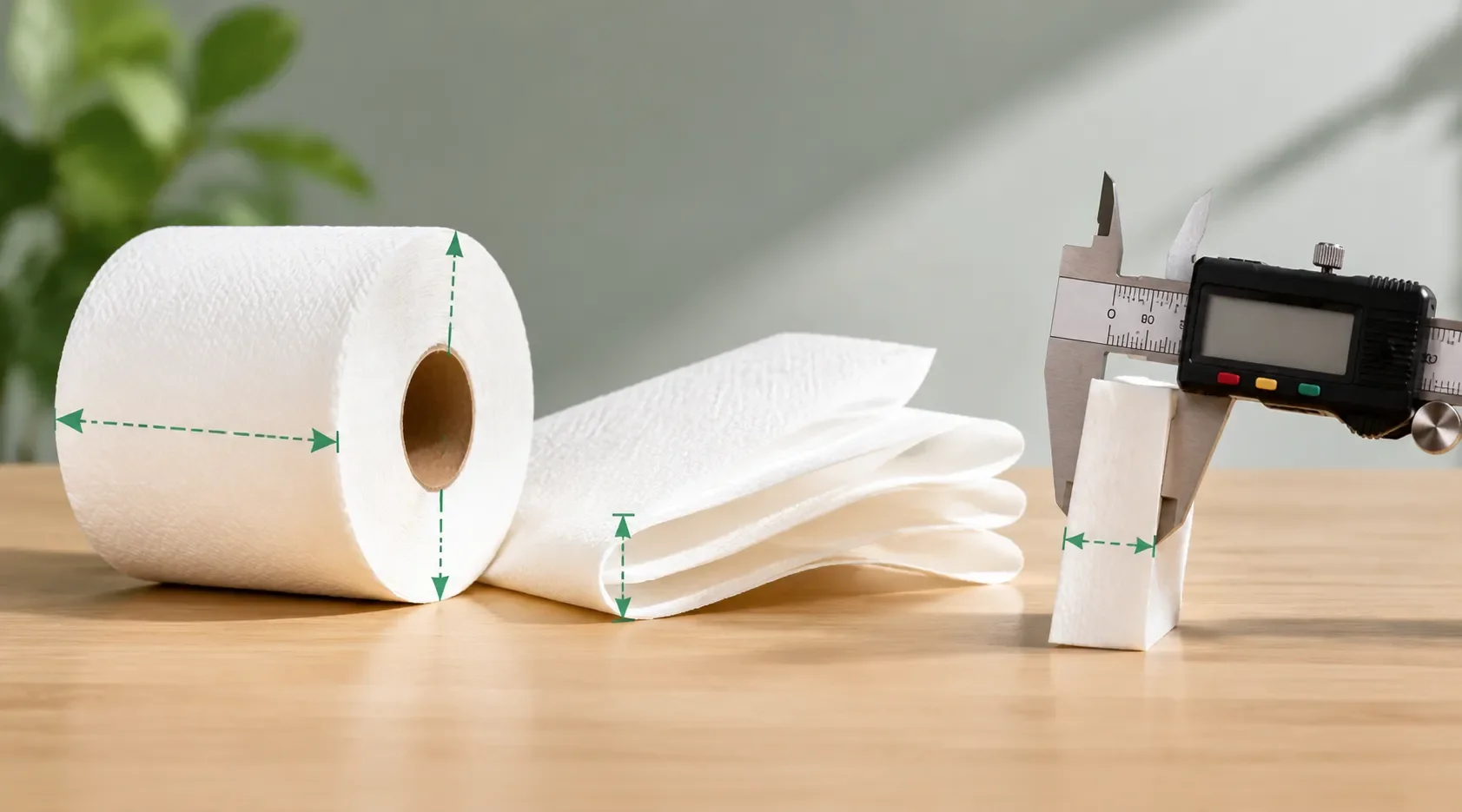
Roll size directly changes how many rolls you need per month. Ply and thickness affect how many sheets people pull each time. A stronger 2-ply or 3-ply toilet paper may reduce sheet use because users need fewer sheets per wipe, while thin paper can increase sheet use even if the roll looks economical.
| Toilet Paper Type | Typical Feature | Effect on Usage |
|---|---|---|
| 1-ply toilet paper | Thinner, often more sheets per roll | More sheets may be used per visit |
| 2-ply toilet paper | Balanced softness and strength | Common for homes, hotels, and offices |
| 3-ply toilet paper | Thicker and softer | Fewer sheets may be needed, but roll count may drop faster |
| Jumbo roll toilet paper | Large roll for dispensers | Best for high-traffic restrooms |
| Individually wrapped rolls | Hygienic and easy to store | Common for hotels, offices, and wholesale supply |
A roll with fewer sheets, weak wet strength, or poor perforation can lead to faster consumption and more frequent replacement.
Bidets and Wet Wipes
A bidet can reduce toilet paper use by 50% or more because toilet paper is mainly used for drying instead of full cleaning. Some bidet users only need 1 to 3 rolls per month, depending on their drying habits and roll size.
Wet wipes may also reduce dry toilet paper use, but they are not always suitable for toilets and plumbing systems. Even wipes labeled “flushable” can create disposal concerns in some sewer systems. For homes and facilities, dry toilet paper remains the standard choice because it is widely compatible, easy to store, and simple to manage.
How Many Rolls of Toilet Paper Should You Buy?
For most homes, you should buy enough toilet paper to cover 2 to 4 weeks of normal use. A practical rule is 2 standard rolls per person per week or 1 larger roll per person per week. For commercial buyers, calculate by restroom traffic, dispenser type, sheet count, and delivery cycle instead of using household averages.
Buying Guide for Households
If you are buying toilet paper for home use, the easiest method is to estimate by household size first, then adjust after one or two purchase cycles.
| Household Size | Standard Rolls Per Week | Standard Rolls Per Month | Suggested Purchase Size |
|---|---|---|---|
| 1 person | 1.5–2 rolls | 6–8 rolls | 12-roll pack |
| 2 people | 3–4 rolls | 12–16 rolls | 18–24-roll pack |
| 3 people | 4.5–6 rolls | 18–24 rolls | 24–30-roll pack |
| 4 people | 6–8 rolls | 24–32 rolls | 30–36-roll pack |
| 5 people | 7.5–10 rolls | 30–40 rolls | 36–48-roll pack |
A larger pack usually lowers the cost per roll, but only if the roll quality and sheet count are consistent. Before comparing prices, check the number of sheets per roll, ply, sheet size, and total square footage.
How Much Toilet Paper Is Enough?
For emergency storage, a reasonable target is one month of toilet paper per household, not a year of supply. For most people, that means 6 to 8 standard rolls per person. A four-person household should keep around 24 to 32 standard rolls as a basic reserve.
If your home has children, elderly family members, medical needs, or limited shopping access, keep a slightly larger buffer. If you use bidets, you can store less because your toilet paper demand is lower.
| Stock Period | 1 Person | 2 People | 4 People |
|---|---|---|---|
| 2 weeks | 3–4 rolls | 6–8 rolls | 12–16 rolls |
| 1 month | 6–8 rolls | 12–16 rolls | 24–32 rolls |
| 2 months | 12–16 rolls | 24–32 rolls | 48–64 rolls |
| 3 months | 18–24 rolls | 36–48 rolls | 72–96 rolls |
Long-term storage works best in a dry, clean area away from moisture, direct sunlight, and strong odors. Toilet paper is absorbent, so poor storage conditions can affect softness, hygiene, and packaging integrity.
Toilet Paper Planning for Offices, Hotels, Restaurants, and Public Restrooms
Commercial toilet paper planning should start with daily restroom traffic. A small office with 10 employees will not use toilet paper the same way as a restaurant with 200 guests per day or a hotel with high room occupancy.
For commercial sites, jumbo roll toilet paper or coreless toilet paper may reduce maintenance because staff replace rolls less often. Standard household rolls are easier to store and distribute, but they may not be efficient for high-traffic restrooms.
| Facility Type | Product Format | Buying Priority |
|---|---|---|
| Small office | Standard rolls or individually wrapped rolls | Clean storage, steady supply |
| Hotel guest room | Soft 2-ply toilet paper, wrapped rolls | Comfort, presentation, hygiene |
| Restaurant | Jumbo roll or standard roll | Fast replacement, cost control |
| School | Jumbo roll toilet paper | High capacity, durability |
| Shopping mall | Jumbo roll dispenser format | Reduced refill frequency |
| Healthcare facility | Soft, hygienic, reliable supply | Comfort, compliance, stable inventory |
You also need stable production quality, carton strength, roll consistency, pallet loading, private label options, and predictable lead time.
Cost Per Roll vs. Cost Per Sheet
The best way to compare toilet paper prices is by cost per sheet, not cost per roll. A cheaper roll can become more expensive if it has fewer sheets or lower strength.
Pack price ÷ total sheets in the pack = cost per sheet
| Pack Type | Pack Price | Rolls | Sheets Per Roll | Total Sheets | Cost Per Sheet |
|---|---|---|---|---|---|
| Standard pack | $8.00 | 12 | 200 | 2,400 | $0.0033 |
| Double roll pack | $12.00 | 12 | 350 | 4,200 | $0.0029 |
| Mega roll pack | $18.00 | 18 | 450 | 8,100 | $0.0022 |
A lower cost per sheet is useful, but it should be weighed against softness, tensile strength, absorbency, ply, embossing, lint level, and user comfort. If people use more sheets because the paper tears easily, the real cost per use may rise.
How to Choose Toilet Paper Based on Real Usage
The best toilet paper is not the thickest or the cheapest; it is the one that gives you the right balance of softness, strength, sheet count, roll size, and cost per use. If you want to control monthly toilet paper consumption, choose a product that performs consistently with fewer sheets per visit.
Key Toilet Paper Specifications to Check
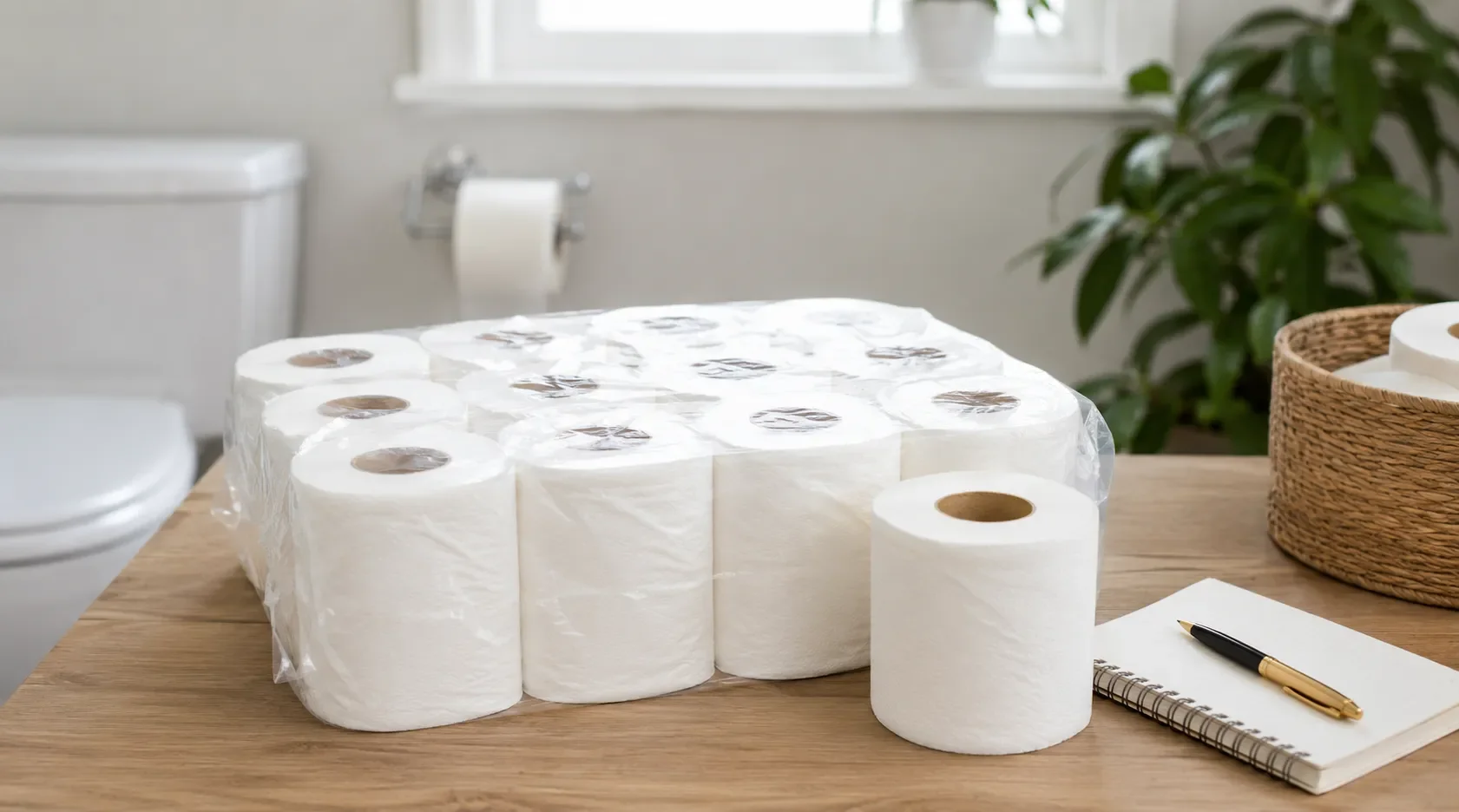
When comparing toilet paper, do not stop at the number of rolls in a pack. The technical details tell you how long the product will last and how it will perform in daily use.
| Specification | What It Means | Why It Matters |
|---|---|---|
| Ply | Number of paper layers, usually 1-ply, 2-ply, or 3-ply | Affects softness, strength, and sheet usage |
| Sheets per roll | Total sheets on each roll | Determines how long one roll lasts |
| Sheet size | Length and width of each sheet | Affects total paper area and comfort |
| GSM | Paper weight per square meter | Helps measure thickness and material use |
| Roll diameter | Physical roll size | Important for dispensers and storage |
| Core size | Inner tube diameter | Must match dispensers |
| Embossing | Pattern pressed into paper | Improves bulk, appearance, and texture |
| Perforation | Tear line between sheets | Reduces waste when clean and consistent |
| Packaging | Wrapped roll, multi-pack, carton, pallet | Affects hygiene, handling, and logistics |
1-Ply, 2-Ply, or 3-Ply: Which Uses Less?
In many homes, 2-ply toilet paper is the most balanced choice because it is soft enough for comfort and strong enough to reduce overuse. 1-ply paper can work well in high-traffic public restrooms, but users may pull more sheets. 3-ply paper feels thicker, but it may increase cost and reduce roll length.
| Ply Type | Best For | Usage Pattern |
|---|---|---|
| 1-ply | Public restrooms, schools, high-volume facilities | More sheets may be used, but roll length is often higher |
| 2-ply | Homes, hotels, offices, retail restrooms | Balanced comfort and efficiency |
| 3-ply | Premium homes, luxury hospitality | Fewer sheets per wipe, higher cost per roll |
A thicker product does not always mean lower consumption. If a 3-ply roll has fewer sheets and a higher price, it may cost more per month even if users pull fewer sheets. For most buyers, 2-ply toilet paper offers the most practical balance.
Softness, Strength, and Absorbency
Softness matters because toilet paper touches sensitive skin. Strength matters because weak paper tears too easily and forces users to take more sheets. Absorbency matters because the paper must perform without excessive layering.
A toilet paper should tear cleanly at the perforation, feel stable when folded, and leave minimal lint. For commercial use, consistent strength is especially important because complaints, waste, and refill frequency all add hidden cost.
Virgin Pulp, Recycled Pulp, and Bamboo Pulp
Toilet paper can be made from virgin wood pulp, recycled pulp, bamboo pulp, or blended fibers. Each material has a different balance of softness, strength, appearance, and cost.
| Material Type | Common Features | Suitable Scenarios |
|---|---|---|
| Virgin wood pulp | Soft, clean color, stable fiber strength | Homes, hotels, premium retail |
| Recycled pulp | Cost-conscious, lower brightness, eco-positioning | Offices, public restrooms, institutional supply |
| Bamboo pulp | Fast-renewable fiber, smooth texture | Eco-focused retail and hospitality |
| Mixed pulp | Balanced cost and performance | Wholesale, private label, daily-use markets |
Conclusion
Toilet paper quality must stay consistent from order to order. If roll diameter changes, dispenser fit may fail. If perforation becomes weak, users waste more paper. If packaging is unstable, cartons may deform during shipping.
As a tissue manufacturer, Liansheng Sempo focuses on practical product details that buyers check in real supply chains: sheet count accuracy, roll winding stability, carton strength, packaging hygiene, and specification consistency.