
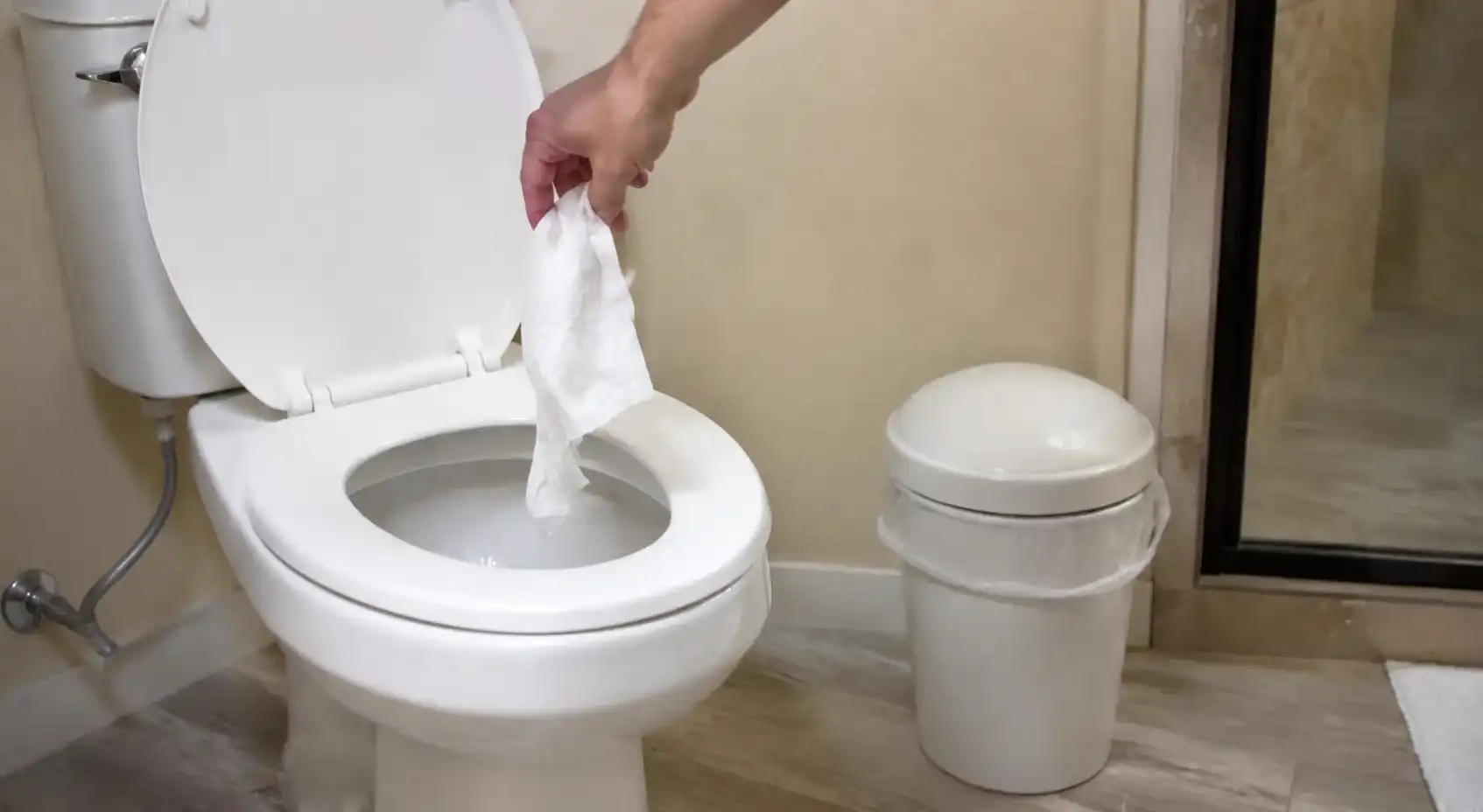
For most homes connected to a municipal sewer system, you should flush toilet paper rather than throw it away, because standard toilet paper is designed to break down in water and be processed at a wastewater treatment plant. However, you should throw used toilet paper away when local plumbing guidance, septic system conditions, or regional sanitation rules require bin disposal.
The answer: Flush ordinary toilet paper only when your local sewer or septic system can handle it. Never flush wipes, paper towels, feminine hygiene products, dental floss, or other household waste, even when a product is labeled “flushable.”
Key Takeaways
- Flushing toilet paper is usually the standard disposal method in sewer-connected homes.
- Throwing toilet paper away can reduce plumbing risk in weak systems but adds waste to landfills.
- Your local sanitation rules matter more than a universal disposal rule.
- Septic systems need low-dissolving, sewer-safe toilet paper and careful use.
- A bidet can reduce your household toilet paper consumption without changing your disposal method.
Should You Flush or Throw Away Toilet Paper?
You should usually flush toilet paper if you have a properly functioning sewer system and use toilet paper made to dissolve in water. Standard toilet tissue is engineered to lose strength after flushing, allowing wastewater systems to separate solids and treat the water before discharge or reuse.
The decision changes when your home has old plumbing, a limited septic tank, recurring blockages, or a local sanitation system that does not accept toilet paper. In some countries and travel destinations, bathrooms provide a covered waste bin because narrow pipes or local treatment infrastructure cannot process paper reliably. In that situation, throwing toilet paper away is the correct practice.
Follow local plumbing guidance first, then choose toilet paper that breaks down efficiently. You should not assume that every paper product belongs in the toilet just because it looks similar to toilet tissue.
| Household situation | Recommended disposal method |
|---|---|
| Modern municipal sewer system | Flush standard toilet paper |
| Well-maintained septic system | Flush limited amounts of septic-safe toilet paper |
| Older pipes or frequent clogs | Follow plumber or utility guidance |
| Areas with “do not flush paper” signs | Throw it away in a covered bin |
| Public restroom | Flush only toilet paper |
What Happens When You Flush Toilet Paper?
When you flush toilet paper, it travels through your household plumbing and into a sewer network or septic system. In a municipal wastewater system, treatment facilities remove solids, break down organic material, and disinfect or further treat water before it is released or reused according to local regulations.
Toilet paper does create work for wastewater infrastructure, but that does not mean it should automatically go in the trash. Conventional toilet tissue is specifically made to disperse in water faster than paper towels, facial tissue, packaging paper, and wet wipes.
Why Toilet Paper Can Still Cause Clogs
Toilet paper can contribute to a clog when too much is used at once, when pipes are already narrowed by scale or roots, or when it combines with non-flushable materials. A blockage is rarely caused by standard toilet paper alone in a healthy plumbing system; it is more often caused by wipes, paper towels, grease, sanitary products, or damaged pipes.
You can reduce your risk by using a reasonable amount per flush and choosing tissue that dissolves well without feeling weak during use. For commercial properties, hotels, offices, and high-traffic restrooms, consistent toilet paper quality also helps maintenance teams manage waste flow more predictably.
What Should Never Be Flushed?
You should flush only human waste and toilet paper unless your local utility says otherwise. Items marketed as “flushable” may travel through a toilet trap but can remain intact long enough to snag in pumps, screens, sewer pipes, or treatment equipment.
| Item | Flush it? |
|---|---|
| Standard toilet paper | Yes, where local rules allow |
| Paper towels | No |
| Facial tissues | No |
| Baby wipes | No |
| “Flushable” wipes | No |
| Tampons and pads | No |
| Cotton swabs | No |
| Dental floss | No |
| Cooking grease | No |
Is Throwing Toilet Paper Away Better for the Environment?
Throwing toilet paper away is not usually better for the environment because it increases solid waste sent to landfills or incineration facilities. Used toilet paper also becomes contaminated waste, so it is not suitable for recycling and should be placed in a lined, covered bathroom bin when disposal in the toilet is not appropriate.
Landfill conditions can limit oxygen exposure, which changes how organic waste decomposes. Waste management systems vary widely, so the environmental result depends on local landfill gas capture, collection services, wastewater treatment efficiency, and household behavior. This is why the better choice is often the method supported by your local infrastructure rather than a single rule for every location.
For a normal sewer-connected household, flushing appropriate toilet paper usually keeps contaminated hygiene waste out of the bathroom bin and directs it into a system designed to manage wastewater. You should still reduce unnecessary consumption, because using less paper lowers demand for raw materials, manufacturing energy, packaging, transportation, and disposal.
When Should You Throw Toilet Paper Away?
You should throw toilet paper away when a property owner, plumber, municipal authority, or local bathroom signage instructs you to do so. This is common in places where pipes are narrow, sewer networks are older, septic capacity is limited, or wastewater facilities are not designed to receive paper.
Use a small covered bin with a liner, empty it regularly, and wash your hands after handling waste. In shared bathrooms, a covered bin controls odor and protects users from unnecessary contact with used paper. You should never place used toilet paper in the recycling bin.
How Does Toilet Paper Affect Septic Systems?
You can flush toilet paper into a septic system, but you should choose paper that breaks down quickly and avoid excessive use. Septic tanks separate solids from liquids, and paper contributes to the solid layer that must eventually be pumped out by a qualified service provider.
A septic system works best when you avoid flushing products that do not disperse readily. Heavy paper products, wipes, feminine hygiene products, and household chemicals can interfere with the system, increase maintenance needs, or create drain field problems. If your home has a septic tank, a plumber or septic professional can advise you on the right pumping schedule and paper usage for your household size.
What Toilet Paper Is Best for Septic Tanks?
The best toilet paper for septic tanks is toilet tissue that disperses in water efficiently, contains no plastic fibers, and is used in sensible quantities. You do not need the thinnest possible tissue, but you should avoid products that behave like paper towels or stay intact after soaking.
When sourcing toilet tissue for residential, hospitality, or commercial use, look beyond softness alone. Absorbency, ply structure, tensile performance during use, and disintegration after flushing all affect the user experience and plumbing compatibility.
Can a Bidet Reduce Toilet Paper Waste?
A bidet can reduce toilet paper consumption because water performs much of the cleaning task before you use a small amount of tissue for drying. For households trying to reduce bathroom waste, this is often a more practical change than switching entirely from flushing to bin disposal.
You still need to consider water use, fixture installation, user preference, and local plumbing requirements. In many homes, a bidet attachment paired with quality toilet paper offers a balanced routine: less paper per use, familiar hygiene practices, and no need to put non-paper materials into the sewer system.
Other Ways to Use Less Toilet Paper
You can reduce toilet paper use by choosing absorbent paper, using only the amount needed, and teaching children which bathroom products belong in the toilet. A stronger, well-made tissue may reduce overuse because users do not need to layer excessive sheets for routine cleaning.
Dispensing systems can also control consumption and keep washrooms cleaner. Hotels, restaurants, healthcare facilities, and offices benefit from selecting toilet paper rolls that match dispenser capacity, traffic level, maintenance schedules, and local wastewater requirements.
How to Choose Toilet Paper for Your Market
You should select toilet paper based on local disposal practices, user expectations, plumbing conditions, and product performance. A luxury hotel may prioritize softness and presentation, while a public facility may need high-capacity jumbo rolls, controlled dispensing, and dependable disintegration.
Liansheng Sempo works as a toilet paper manufacturer for businesses that need consistent tissue products, custom packaging, private-label toilet paper, and bulk supply options. The right specification should balance softness, absorbency, sheet strength, roll length, ply count, and flushability performance for the final use environment.
Conclusion
For most households, flushing standard toilet paper is better than throwing it away because wastewater systems are designed to process toilet tissue, while trash disposal adds contaminated material to the solid-waste stream. The exception is clear: when local plumbing rules tell you not to flush paper, use the bathroom bin and follow the established sanitation practice.
Liansheng Sempo supplies toilet tissue for brands, distributors, retailers, and commercial buyers seeking reliable paper quality and flexible manufacturing support. Contact Liansheng Sempo to discuss private-label toilet paper, bulk toilet tissue specifications, packaging options, and the right product format for your market.
Frequently Asked Questions
Is it okay to throw toilet paper in the toilet?
Yes, it is usually okay to flush standard toilet paper in homes with a working sewer system or properly maintained septic system. Follow local guidance where paper disposal rules differ.
Can toilet paper clog a toilet?
Yes, excessive toilet paper can clog a toilet, especially when pipes are damaged, drains are slow, or non-flushable items are also present. Use reasonable amounts and never flush wipes or paper towels.
Should you flush toilet paper in a septic tank?
Yes, you can flush septic-safe toilet paper in normal amounts. Limit unnecessary paper use and schedule septic pumping based on professional advice and household usage.
Why do some countries not flush toilet paper?
Some countries or buildings have plumbing and wastewater systems that cannot reliably handle toilet paper. You should follow local signs and place used paper in the designated covered bin when instructed.
Are flushable wipes really flushable?
No, you should not flush wipes, including many products labeled “flushable.” They may pass through your toilet but can remain intact in sewer systems and contribute to blockages.
Is toilet paper recyclable?
No, used toilet paper is not recyclable because it is contaminated and its fibers are too short for standard paper recycling processes.


