
If you are comparing bleached toilet paper and unbleached toilet paper, the key difference is simple:
bleached toilet paper is chemically whitened for a brighter look and softer feel, while unbleached toilet paper keeps its natural fiber color and usually offers a more sustainable, low-irritation option.
Key Takeaways
- Bleached toilet paper is usually bright white and often feels softer.
- Unbleached toilet paper keeps a natural brown, beige, or off-white tone.
- Bleached paper relies on chemical whitening methods.
- Unbleached paper skips the bleaching stage and is often preferred for sensitive skin.
- The right choice depends on whether you value softness, budget, skin comfort, or sustainability.
In real procurement scenarios, this is not just a matter of color choice.
If you are sourcing products for retail, hospitality, or private label use, the products you choose need to reflect your brand philosophy.
White, soft toilet paper may be better suited to mainstream premium products, while natural, unbleached toilet paper is more aligned with eco-conscious consumers or people with sensitive skin.
Bleached toilet paper is designed to achieve a brighter white appearance and a softer feel, whereas unbleached toilet paper reduces processing and lessens its environmental impact.
This distinction affects the two products’ appearance, texture, and performance in everyday use.
Bleached Vs Unbleached Toilet Paper
| Feature | Bleached Toilet Paper | Unbleached Toilet Paper |
|---|---|---|
| Appearance | Bright white | Natural brown, beige, or off-white |
| Production | Uses chlorine, chlorine dioxide, or oxygen derivatives to strip color | Skips the bleaching stage; relies on physical softening such as steam or grinding |
| Health & Safety | May carry trace chemical residue depending on processing method | Often hypoallergenic and better suited to sensitive skin |
| Softness & Feel | Usually very plush because bleaching breaks down stiff fibers | Slightly firmer, though modern multi-ply bamboo versions can still feel soft |
| Environmental Impact | More wastewater and chemical byproducts | Lower pollution and often made from sustainable bamboo |
In sourcing and wholesale decisions, this difference also affects packaging claims.
A bleached product can highlight softness and whiteness. An unbleached product can support claims around sustainability, sensitive skin, and reduced processing.
If you are building a toilet paper line under Liansheng Sempo, this is often where product positioning starts.
If you want the technical answer, bleached toilet paper is paper whitened through chemical or oxygen-based treatment, while unbleached toilet paper is paper that skips that whitening step and keeps more of its natural fiber character. That one manufacturing choice changes softness, color, and the overall product profile.
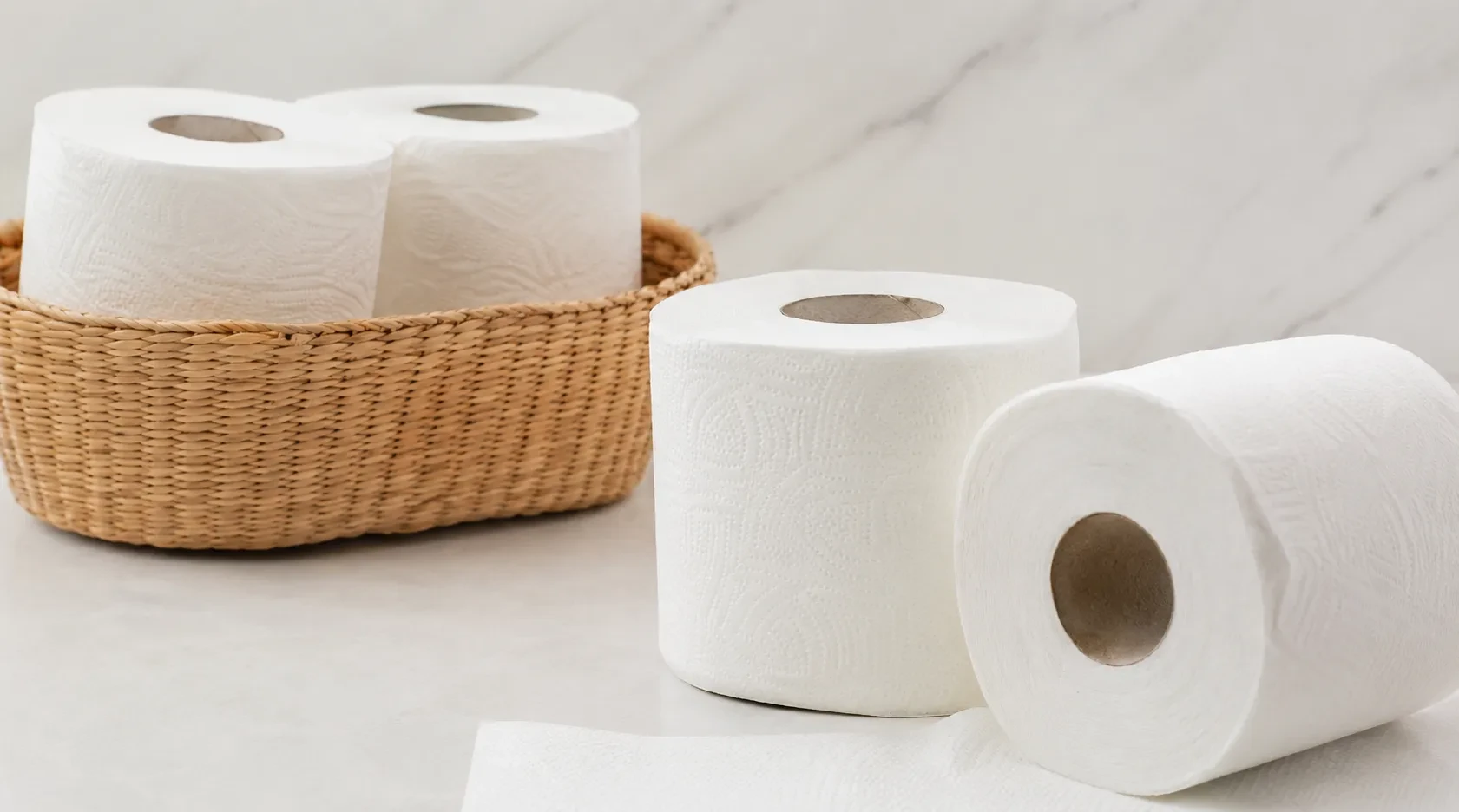
What Is Bleached Toilet Paper
Bleaching does more than make paper look white. It helps break down lignin, the natural substance that holds wood fibers together, and that makes the paper softer, more absorbent, and more uniform in appearance.
Today, most major manufacturers use cleaner methods, but the process still has tradeoffs.
- Elemental Chlorine-Free (ECF): Toilet paper uses chlorine dioxide, which reduces harmful byproducts but still depends on chlorine derivatives.
- Totally Chlorine-Free (TCF) :Toilet paper uses oxygen, ozone, or hydrogen peroxide instead, which is a cleaner choice for the environment but still less common in many traditional wood-pulp product lines.
What Is Unbleached Toilet Paper?
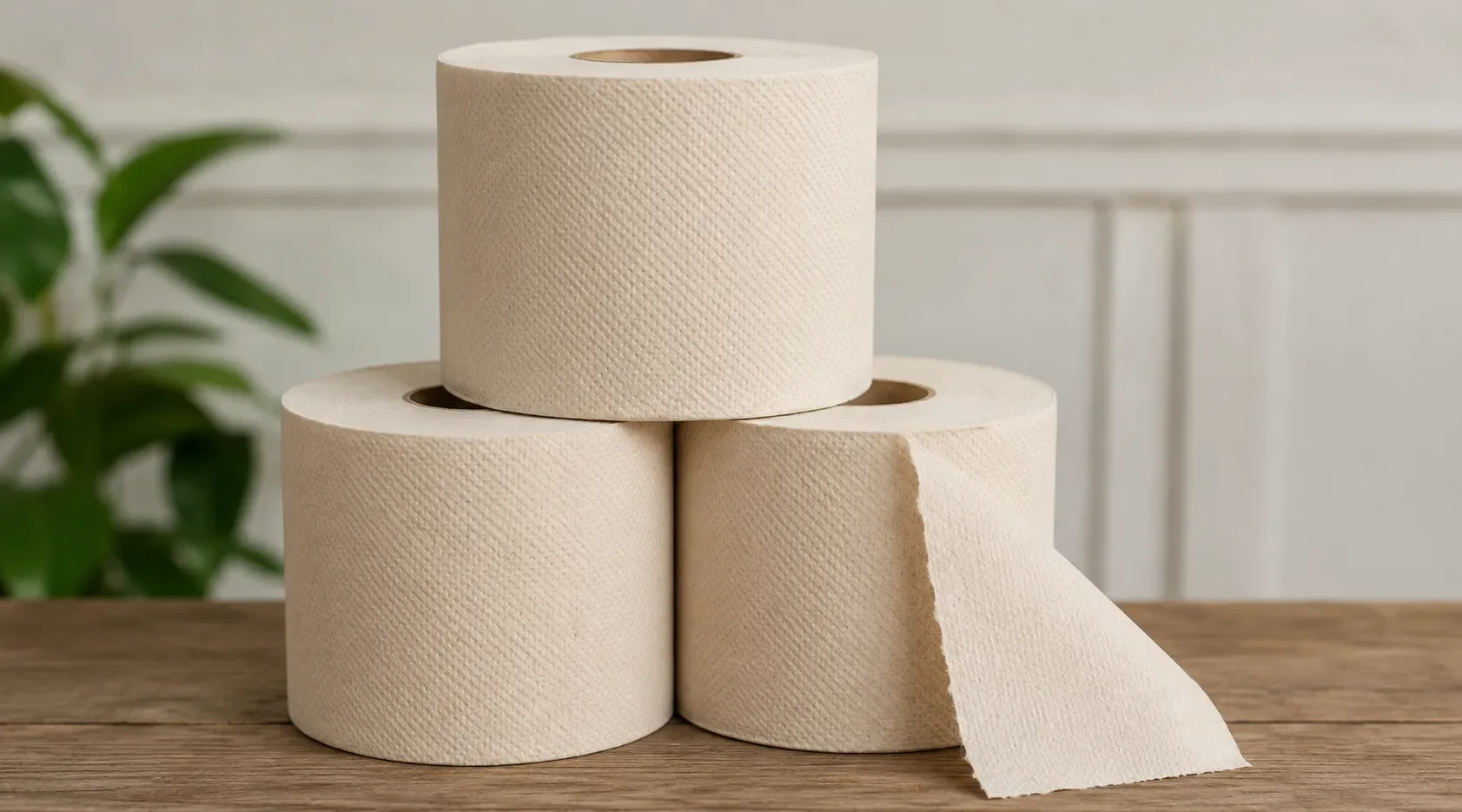
True unbleached toilet paper avoids the chemical whitening stage and instead uses physical processing methods such as high-temperature steam or mechanical softening. This keeps the fibers closer to their natural structure and gives the paper its beige, tan, or off-white appearance.
For skin-sensitive buyers, that matters. Removing bleaching chemicals can reduce the risk of irritation, especially for users who are prone to contact dermatitis or recurring sensitivity. Sensitive skin users often prefer products with fewer additives because fewer triggers can mean less irritation.
Organizations such as the American College of Obstetricians and Gynecologists (ACOG) explicitly recommend using only fragrance-free and colorless toilet paper to maintain daily hygiene and safety. because fewer additives usually mean fewer triggers.
Unbleached paper also has a strong sustainability case. It is often made from bamboo, which grows quickly and can reduce pressure on tree-based raw materials.
Bleached Vs Unbleached Toilet Paper Pros And Cons
Bleached Toilet Paper
Pros
- Readily available in nearly all grocery stores and wholesale channels
- Usually offers maximum softness and a more premium hand-feel
- White color makes it easier to monitor hygiene-related changes
Cons
- Traditional chlorine bleaching can create environmental pollutants
- Some conventional products may contain added fragrance, dye, or trace processing chemicals
- Less suitable for buyers who want a minimal-ingredient product
Unbleached Toilet Paper
Pros
- Better suited for people with allergies, sensitivities, or recurring irritation
- Generally more environmentally responsible because it skips the most polluting stage
- Often breaks down faster in septic systems
- Strong fit for eco-focused brand positioning
Cons
- Can feel slightly firmer than mainstream bleached paper
- Usually more expensive
- May be harder to find in regular retail stores and more common through specialty channels
Which One Should You Choose?
Choose unbleached toilet paper if skin sensitivity and sustainability matter most; choose bleached toilet paper if you want the softest feel, bright white appearance, and easier access at a lower price point.
If you have highly sensitive skin, a history of irritation, or you want to avoid trace chemicals, unbleached toilet paper is the safer practical choice. It fits daily use in bathrooms where fragrance-free, dye-free, and low-processing products are preferred. It also works well for buyers looking for bamboo toilet paper with a more natural market position.
If your priority is plushness, familiar appearance, and mainstream retail convenience, bleached toilet paper is still the stronger match. This is especially true for hotels, office washrooms, and general household shopping where users expect a bright white roll and a softer texture.
If you choose bleached paper, look for Process Chlorine Free (PCF) or Totally Chlorine Free (TCF) labeling to reduce processing concerns.
A bleached line can focus on softness, comfort, and premium presentation. An unbleached line can focus on sustainability, reduced processing, and sensitive-skin use cases. At Liansheng Sempo, you can build either direction depending on your target market and packaging claims.
Conclusion
The real difference between bleached and unbleached toilet paper is not just color. It is a tradeoff between softness, processing, skin comfort, and environmental impact. If you want a mainstream product with a softer feel, bleached paper is the common choice. If you want a lower-processing product with a stronger eco message, unbleached paper is usually the better fit.
If you are sourcing toilet paper for wholesale, retail, or private label, Liansheng Sempo can help you choose the right product structure for your market. Contact us to discuss specifications, packaging, and custom supply options that match your brand positioning.
FAQ
What’s the difference between bleached and unbleached toilet paper?
Bleached toilet paper is whitened through chemical or oxygen-based processing, while unbleached toilet paper skips the whitening stage and keeps its natural color and less-processed fiber structure.
Which is better, bleached or unbleached paper?
It depends on your priority. Bleached paper is usually softer and whiter, while unbleached paper is often better for sensitive skin and is generally more eco-friendly.
Is unbleached toilet paper healthier?
For many people, yes. It is often preferred because it avoids bleaching chemicals and usually contains fewer additives, which may reduce irritation risk.
What toilet paper do gynecologists recommend?
Many gynecologists recommend unscented, dye-free, and gentle toilet paper. For people with sensitivity, unbleached or minimally processed paper is often a good choice.
What is the healthiest toilet paper to use?
The healthiest option is usually soft, unscented, dye-free, and free from harsh chemicals. For sensitive users, unbleached toilet paper may be the best fit.
Is unbleached toilet paper better for sensitive skin?
Yes. It is usually a better option because it avoids bleaching chemicals and often has fewer additives.
Why is bleached toilet paper white?
It is whitened with chemical or oxygen-based bleaching agents that remove natural color from the fibers.
Is unbleached toilet paper eco-friendly?
Usually yes. It skips the bleaching stage, which reduces chemical use and wastewater impact.
Does unbleached toilet paper dissolve easily?
In most cases, yes. Many unbleached products break down well, especially septic-safe bamboo versions.


