
Yes, facial tissues are good for your face when you use them briefly and gently for oil blotting, sweat removal, hygienic drying, or light makeup touch-ups.
They are not a replacement for cleansing because tissue cannot remove deep dirt, sunscreen, bacteria, or cosmetic residue from pores.
The safest way to use tissue on your face is to press, not rub, and choose soft, fragrance-free, low-lint facial tissue designed for skin contact.
If your skin is sensitive, acne-prone, or dry, the product quality and wiping method matter more than the tissue itself.
Key Takeaways
- Facial tissue is safe for temporary use on the face when it is soft, clean, and fragrance-free.
- Tissue can help absorb oil, sweat, and surface moisture without disturbing makeup.
- Tissue should not replace washing your face with cleanser and water.
- Rubbing with dry tissue can cause redness, dryness, or irritation.
- Low-quality tissue may shed fibers and leave lint on your skin.
- Disposable cotton tissue can be a better option if you often wipe your face with dry or wet tissue.
When Tissue Is Good For Your Face
Facial tissue is good for your face when you use it for light, short-contact tasks such as blotting oil, drying after rinsing, wiping sweat, or fixing makeup. It works best when you press it onto the skin instead of dragging it across the face. For daily skincare, tissue should support your routine, not replace cleansing.
Oil Control
Facial tissue can work as a simple oil blotting sheet when your T-zone gets shiny at work, after commuting, or during hot weather. You can press one sheet on your forehead, nose, or chin for a few seconds to absorb sebum without removing too much makeup.
This is useful for office workers, travelers, students, and anyone who needs quick oil control without carrying skincare tools. Compared with washing your face several times a day, gentle blotting is less disruptive to your skin barrier.
However, you should not scrub oily areas with tissue. Excess rubbing can trigger more redness and may make already irritated skin feel tight.
Hygienic Drying
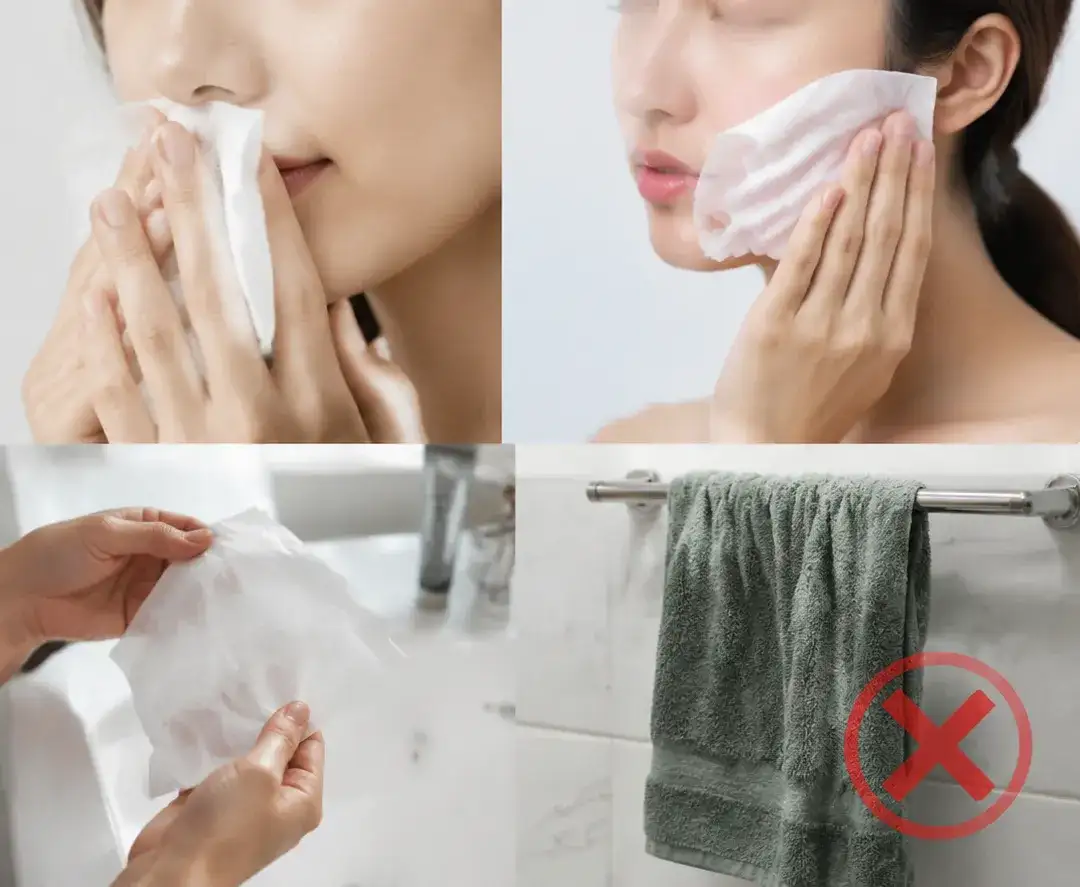
Using a fresh disposable facial tissue to dry your face can be more hygienic than using a damp towel that stays in the bathroom all day. Damp towels can collect bacteria, dead skin cells, and detergent residue, especially when they are not washed often.
For acne-prone skin, post-workout cleansing, travel, guest bathrooms, and skincare clinics, a clean tissue or disposable cotton tissue can reduce repeated contact with used fabric.
The key is absorbency. A good tissue for face drying should hold moisture without breaking apart, leaving dust, or sticking to the skin.
| Face-Drying Option | Use Scenario | Benefit | Risk |
|---|---|---|---|
| Facial tissue | Light drying after rinsing | Clean and disposable | May tear if too thin |
| Face towel | Home use after washing | Soft when clean | Can hold bacteria when damp |
| Paper towel | Emergency use only | Strong absorbency | Often too rough for facial skin |
| Disposable cotton tissue | Daily skincare and travel | Soft, durable, low-lint | Usually costs more |
Gentle Absorbency
Soft facial tissues are designed to touch the nose, cheeks, and mouth area more gently than regular paper towels. During cold seasons, allergy flare-ups, or frequent sneezing, this matters because the skin around the nose can become dry and sensitive.
A facial tissue should feel smooth, absorb moisture quickly, and avoid rough friction. This is why tissue softness, wet strength, and fiber control are important for face use.
At Liansheng Sempo, these factors are especially important in tissue manufacturing because the end user often judges quality by how the sheet feels on sensitive skin, not only by thickness.
When Tissue Is Bad For Your Face
Tissue is bad for your face when you use it as a cleanser, rub aggressively, or choose low-quality tissue that sheds fibers. Dry wiping creates friction, and friction can disturb the skin barrier. Tissue can remove surface oil or sweat, but it cannot deeply cleanse pores or remove sunscreen properly.
Tissue Cannot Replace Cleansing
A facial tissue can lift surface moisture, oil, and loose makeup, but it cannot fully remove sunscreen, foundation, pollution particles, bacteria, or sebum trapped in pores. If you rely only on tissue, residue can remain on your skin and increase the chance of clogged pores.
For proper cleansing, you still need water and a suitable facial cleanser. If you wear sunscreen or long-wear makeup, you may need a makeup remover or cleansing oil before your normal cleanser.
Think of tissue as a skincare support product, not a cleansing product. It is useful for touch-ups, but it does not perform the chemical and physical cleansing needed at the end of the day.

Rubbing Can Cause Irritation
The main problem is not using tissue on your face; it is rubbing your face with tissue. Dry tissue dragged across the skin can create friction, especially on cheeks, around the nose, and under the eyes.
If you rub too hard, you may strip natural oils, worsen dryness, cause redness, or create tiny surface irritation. This risk is higher if your skin is sensitive, sunburned, acne-prone, or already damaged from active ingredients such as retinol or exfoliating acids.
The better method is simple: press and lift. If you need more cleansing, use a proper cleanser instead of increasing pressure.
Low-Quality Tissue May Leave Lint
Some low-quality tissues break apart when they touch water, sweat, toner, or lotion. They may leave lint, paper dust, or small fibers on your face, which can feel uncomfortable and interfere with skincare or makeup.
This is especially noticeable when you use tissue after applying toner, drying your face after washing, or wiping around beard stubble. If a tissue pills or sheds easily, it is not the best tissue for face use.
A better facial tissue should have soft fibers, stable structure, good absorbency, and low lint performance.
| Tissue Quality Factor | Why It Matters For Face Use | What You Should Look For |
|---|---|---|
| Softness | Reduces friction on cheeks and nose | Smooth touch, no scratchy feel |
| Absorbency | Removes sweat and moisture quickly | Blots without repeated wiping |
| Wet strength | Prevents tearing after contact with water | Holds shape when damp |
| Low lint | Keeps fibers off skin and makeup | Minimal dust or shedding |
| Fragrance-free | Lowers irritation risk | No added perfume |
How To Use Tissue On Your Face Safely
To use tissue on your face safely, press it gently onto the skin, avoid rubbing, and choose fragrance-free, low-irritation, low-lint tissue. If you wipe your face often, consider disposable cotton tissue because it is usually softer, stronger when wet, and less likely to shed fibers.
Pat, Do Not Rub
After washing your face, place the tissue on your skin and lightly press until the water is absorbed. Do not drag it across your face like a towel. This small change reduces friction and helps protect the skin barrier.
For sweat, use the same method. Press the tissue onto sweaty areas, lift it away, and use a clean section if needed. If your skin still feels sticky, rinse with water instead of rubbing harder.
For makeup, blot gently around oily zones. Avoid wiping under the eyes unless the tissue is very soft and slightly dampened with a proper makeup remover.
Choose The Right Facial Tissue
The best tissue for face use is soft, clean, fragrance-free, low-lint, and strong enough to hold together during light contact with moisture. Avoid rough paper towels, heavily scented tissues, and thin tissues that break apart easily.
If your skin reacts easily, choose hypoallergenic facial tissue or disposable cotton tissue. These products reduce unnecessary fragrance contact and usually provide a smoother touch.
Product consistency matters. Liansheng Sempo focuses on tissue solutions where softness, absorbency, and clean daily use are central buying factors.
Consider Disposable Cotton Tissue
If you often dry your face with tissue after cleansing, disposable cotton tissue may be a better fit than standard dry tissue. It is commonly softer, more durable when wet, and less likely to leave lint.
This makes it useful for skincare routines, facial cleansing, post-gym washing, travel kits, beauty salons, and sensitive-skin households. It can also replace shared towels in settings where hygiene matters.
Disposable cotton tissue is usually more expensive than regular facial tissue, but it can be worth it if you care about low lint, wet strength, and skin comfort.
Face Tissue Vs Face Towel: Which Is Better?
Face tissue is better for hygiene and convenience, while a face towel is better for repeated home use when it is washed and dried properly. If your towel stays damp or is reused for several days, disposable tissue can be cleaner. If your towel is fresh, soft, and washed often, it can be skin-friendly too.
| Comparison | Face Tissue | Face Towel |
|---|---|---|
| Hygiene | Single-use and clean each time | Depends on washing frequency |
| Skin feel | Good if soft and low-lint | Good if fabric is gentle |
| Travel use | Easy to carry and dispose | Less convenient |
| Wet durability | Varies by tissue quality | Usually strong |
| Acne-prone skin | Useful when fresh each time | Risky if reused damp |
| Cost per use | Higher over time | Lower over time |
Use a clean towel at home if you wash it often, and use facial tissue or disposable cotton tissue when traveling, after workouts, or when hygiene is the priority.
What Type Of Tissue Should You Use On Your Face?
Use facial tissue that is soft, fragrance-free, low-lint, and suitable for skin contact. If you plan to use tissue after washing your face, choose a product with better wet strength. If you have sensitive skin, avoid scented tissue and rough paper products.
A good facial tissue should not feel scratchy, tear quickly, or leave visible fibers. It should absorb moisture with light pressure and stay comfortable around delicate areas such as the nose, lips, and under-eye area.
For daily face drying, disposable cotton tissue is often a stronger option because it handles water better than ordinary dry facial tissue. For quick oil control, a soft facial tissue is usually enough.
A tissue for hospitality, beauty care, or skincare use should prioritize softness, low lint, and clean packaging over only price per sheet.
Conclusion
Facial tissue is good for your face when you use it correctly: blot oil, absorb sweat, dry gently, and avoid rubbing. It is not a substitute for washing your face, and low-quality tissue can irritate skin or leave fibers behind. If your goal is cleaner, safer face care, choose soft, fragrance-free, low-lint tissue and use a press-and-lift method.
Liansheng Sempo manufactures tissue products for daily hygiene, skincare support, hospitality, and personal care use. If you need soft facial tissue or disposable cotton tissue for your brand, retail channel, hotel, clinic, or beauty business, contact us to discuss product specifications, packaging, and wholesale supply options.
FAQs
Is It Good To Use Tissue On Your Face?
Yes, it is good to use tissue on your face for gentle oil blotting, sweat removal, light drying, or makeup touch-ups. It is not good to use tissue as your only cleansing method.
Which Tissue Is Best For The Face?
The best tissue for the face is soft, fragrance-free, hypoallergenic, low-lint, and absorbent. Disposable cotton tissue is often better if you use it after washing your face.
Is It Okay To Wipe Face With Tissue?
Yes, it is okay to wipe your face with tissue if you do it gently, but patting is safer than rubbing. Strong rubbing can cause dryness, redness, or irritation.
Can I Use Tissue As A Face Mask?
No, regular tissue should not be used as a face mask because it is not designed to hold skincare formulas evenly or safely on skin. Use a proper sheet mask or cotton pad made for skincare.
How To Glow Face In 7 Days?
Cleanse your face daily, use moisturizer, apply sunscreen every morning, sleep enough, drink water, and avoid harsh rubbing. Tissue can help with hygiene, but it will not create glowing skin by itself.
Which Is Better, Face Towel Or Tissue?
Tissue is better for single-use hygiene, travel, and acne-prone routines. A face towel is better for daily home use only if it is clean, soft, dry, and washed frequently.


