
You should not flush napkins down the toilet. Toilet paper is designed to “break down quickly in water,” while napkins are usually thicker and more wet-resistant. After entering the toilet drain, napkins may clump together, stick to the pipe wall, or combine with grease and hair, causing a blockage. The safe practice is this: toilet paper can be flushed in proper amounts, while napkins, paper towels, and wet wipes should go in the trash.
Napkins and toilet paper may both look like paper, but they differ in fiber structure, wet strength, absorbency, and breakdown speed. For home bathrooms, restaurant restrooms, hotel rooms, and commercial plumbing systems, flushing napkins by mistake increases the cost of unclogging and also puts pressure on septic tanks and municipal wastewater systems.
Key Takeaways
- Napkins are not suitable for flushing because they are thicker than toilet paper and do not disperse quickly in water.
- Toilet paper is designed for toilets and drain pipes, while napkins are designed for wiping, absorbing liquid, and holding food residue.
- Flushing one or two napkins once may not cause an immediate clog, but doing it repeatedly creates a high risk.
- If your toilet is already clogged with paper, you can first stop the water, then use a plunger, hot water with dish soap, or a toilet auger.
- For homes, restaurants, offices, and hotels, providing a trash can and clear signage is the simplest way to prevent problems.
The Difference Between Napkins and Toilet Paper
The core difference between napkins and toilet paper is their purpose: toilet paper needs to break down quickly in water, while napkins need to maintain strength during dining, hand wiping, and cleaning. If you flush napkins as if they were toilet paper, your plumbing has to deal with paper fibers that break down more slowly and clump more easily.
In tissue manufacturing, different paper products are adjusted according to their use cases, including fiber mix, embossing, ply count, wet strength, and absorbency. As a tissue factory, Liansheng Sempo puts the “use case” first when producing napkins, facial tissues, toilet paper, and other tissue products, instead of applying one single standard to every paper product.
Napkins vs. Toilet Paper
| Comparison Item | Napkins | Toilet Paper |
|---|---|---|
| Main Use | Dining wipes, tabletop cleaning, holding food | Bathroom use |
| Behavior in Water | Absorbs water but still keeps some structure | Disperses more easily after contact with water |
| Thickness | Usually thicker | Usually thinner |
| Wet Strength | Higher, to prevent breaking during wiping | Lower, to help it flush apart |
| Suitable for Flushing | Not recommended | Yes, but only in proper amounts |
| Clog Risk | Higher | Lower |
Risks to Plumbing Systems and the Environment
After a napkin enters the toilet, it may not disperse as quickly as toilet paper. It can stay longer in bends, old pipes, low-flow toilets, or septic systems, forming a paper clump and eventually affecting drainage speed.
If you manage a restroom in a restaurant, office, or hotel, the risk is higher. In a high-traffic restroom, one napkin may not be the problem, but dozens of napkins, wet wipes, and other items entering the sewer together can easily create a blockage point.
From an environmental perspective, flushing napkins also increases the burden on wastewater systems. Napkins with grease, food residue, or chemical cleaners are especially unsuitable for entering the drainage system, because they are not helpful to wastewater treatment.
Proper Disposal of Napkins and Other Items That Should Not Be Flushed
The correct practice is simple: napkins, paper towels, wet wipes, cotton swabs, sanitary pads, diapers, and disposable gloves should not be flushed down the toilet. They should be placed in the trash, and clear reminders should be posted in public restrooms.
Many clogs are not caused by users intentionally doing something wrong, but by the lack of a trash can on site or unclear signage. You can place a lidded trash can next to the toilet and use a short notice, such as “Do not flush napkins or wet wipes.”
| Item | Can It Be Flushed? | Recommended Disposal |
|---|---|---|
| Toilet paper | Yes | Flush in proper amounts |
| Napkins | Not recommended | Put in the trash |
| Paper towels | Not recommended | Put in the trash |
| Wet wipes | Not recommended, even if labeled flushable | Put in the trash |
| Facial tissues | Not recommended | Put in the trash |
| Sanitary pads | No | Wrap and put in the trash |
| Cotton swabs | No | Put in the trash |
| Diapers | No | Wrap and put in the trash |
Follow Simple and Safe Practices
The safest rule is: toilets should only flush human waste and a proper amount of toilet paper. This rule applies to home bathrooms, restaurant restrooms, hotel rooms, offices, and schools.
If you purchase tissue products, you should also choose them according to the use case. Use toilet paper in bathrooms, napkins on dining tables, and paper towels in kitchens. The products themselves are not good or bad; the key is not to put different paper products into the wrong use case.
What Happens If You Flush Napkins Down the Toilet Drain?
After you flush a napkin down the toilet, it may be carried away by the water flow, or it may stop at a pipe bend. One time may not cause an immediate clog, but repeated flushing will make paper clumps build up, eventually causing slow drainage, backflow, odors, or toilet overflow.
When you see the water level rising, weak flushing, gurgling sounds, or sewer odors coming from the floor drain, it usually means the drainage system has already been affected. At that point, continuing to flush will only push the problem deeper.
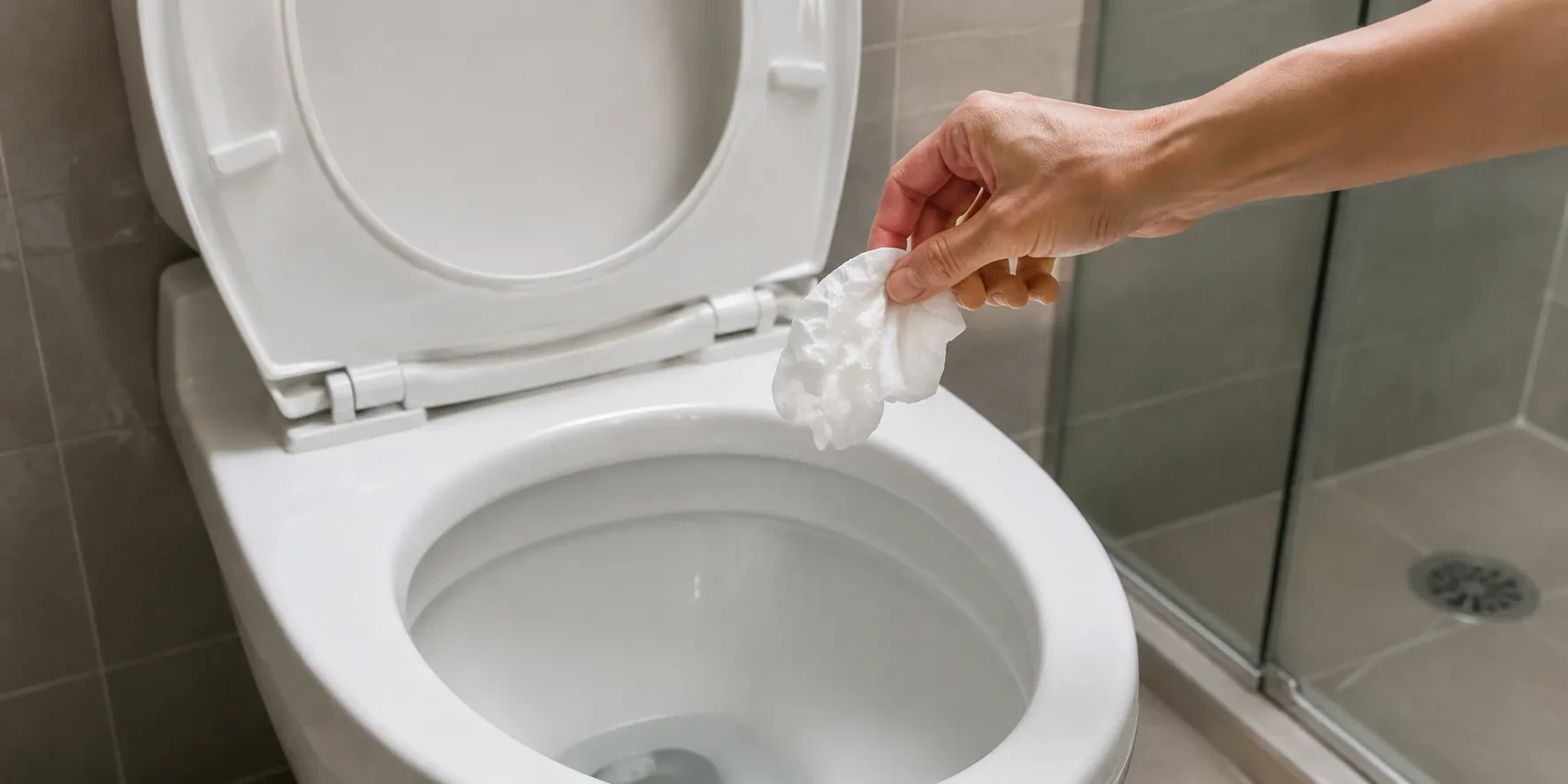
Understanding the Risks of Flushing Napkins
The fiber structure of napkins is more suitable for wiping, so they may still keep a sheet-like or clumped shape after getting wet. After entering the toilet, they absorb water and expand, and may stick together with existing debris.
Older cast iron pipes, drainage pipes with insufficient slope, low-flow toilets, and septic systems are more vulnerable. When the water flow is not strong enough, napkins cannot be fully carried away and will stay inside the pipe.
If your restroom is used frequently by many people, such as in restaurants, shopping malls, office buildings, and hotels, the risk of flushing napkins down the toilet increases significantly. In public-use settings, prevention is more cost-effective than unclogging after the fact.
Common Problems Caused by Napkins Blocking Toilet Drains
Napkin clogs usually do not happen all at once. They often start with “slow drainage.” Many users mistake this for a water pressure issue and continue using the toilet until a serious clog appears.
| Common Sign | Possible Cause | What You Should Do |
|---|---|---|
| Water level rises after flushing | Paper clump stuck in the toilet trap | Stop flushing and use a plunger first |
| Slow drainage | Napkins accumulating inside the pipe | Try hot water and dish soap |
| Toilet makes gurgling sounds | Venting or drainage is restricted | Check whether there is a deep blockage |
| Sewage backs up | Blockage is deeper in the line | Use an auger or contact a plumber |
| Odor in the restroom | Poor drainage or residue buildup | Clear the blockage and check the floor drain |
If the toilet has already started backing up, do not press the flush button repeatedly. Repeated flushing can make water overflow onto the floor, creating sanitation problems and possibly affecting downstairs neighbors.
The Best Way to Dispose of Napkins
The best way to dispose of napkins is to put them in the trash. Napkins with grease, soup, or food scraps after dining should never enter the toilet or sink drain.
In restaurants and hotels, you can place trash cans within easy reach and use a short reminder. The clearer the reminder is, the lower the chance of accidental flushing.
If you are a tissue buyer, you can also choose products that better match the use case. For example, Liansheng Sempo can provide napkins, toilet paper, and hand towel solutions for food service, hotels, retail, and cleaning service customers, helping you reduce operational problems caused by incorrect use.
How to Unclog a Toilet Blocked by Paper Towels or Napkins
If your toilet is clogged by napkins or paper, stop flushing first and then check the water level. A light clog can be handled with a plunger; a medium clog can be helped with hot water and dish soap; a deep clog requires a toilet auger or a professional plumber.
The key to dealing with a clog is not forcefully flushing water, but loosening, dispersing, or pulling out the paper clump. The earlier you deal with it, the easier it is to solve.
Prepare the Items You Need
You do not need to use a highly corrosive drain cleaner at the beginning. For toilet clogs, physical unclogging methods are usually safer and more effective.
Prepare the following items:
| Tool / Item | Purpose | Notes |
|---|---|---|
| Rubber gloves | Maintain hygiene | Put them on before handling the clog |
| Plunger | Clear shallow clogs | Choose a toilet-specific model |
| Hot water | Soften the paper clump | Do not use boiling water |
| Dish soap | Lubricate the pipe and paper clump | A small amount is enough |
| Toilet auger | Handle deeper clogs | Avoid scratching the porcelain |
| Old towels | Prevent wastewater from spreading | Place them around the toilet |
Stop Overflow Immediately
If the water level keeps rising, first shut off the water supply valve next to the toilet tank. If there is no supply valve, open the tank lid and manually lift the float or hold the shutoff mechanism.
Then stop flushing and wait a few minutes to see whether the water level drops. If the water level slowly drops, the clog may be light. If the water level does not move, the blockage may be tighter or deeper.
This step is important because many restroom sanitation problems are not caused by the clog itself, but by users repeatedly flushing and causing sewage to overflow.
Use a High-Quality Plunger First
A plunger is the most practical tool for handling a toilet clogged with paper. You need to choose a toilet-specific plunger with a flange, not a flat-bottom sink plunger.
When using it, make sure the plunger fully covers the drain opening and creates a seal. Press gently first to push out the air, then push and pull steadily 15 to 20 times. Keep a steady rhythm and do not strike forcefully.
If the clog starts to loosen, you may hear water passing through, and the water level will drop. At that point, you can test with a small flush, but do not flush repeatedly.
Use Hot Water and Dish Soap to Loosen the Blockage
If the plunger does not work well, pour in a small amount of dish soap, then add a bucket of hot water. The water temperature should be similar to hot bath water. Do not use boiling water, because boiling water may crack the ceramic toilet due to temperature shock.
Dish soap can reduce friction and help the paper clump move more easily. Wait 10 to 15 minutes, then use the plunger again.
This method is suitable for light to medium clogs caused by napkins or too much toilet paper, but it is not suitable for clogs caused by sanitary pads, wet wipes, plastic items, or hard objects.
Use a Toilet Auger or Drain Snake
If the blockage is deep inside the toilet trap, a plunger may not reach it. At that point, you can use a toilet auger.
Slowly insert the auger into the drain opening and turn the handle to move the cable forward. When you feel resistance, do not force it. Gently rotate it so the tip can hook or break up the blockage.
If you are working on a public restroom or hotel restroom, use a dedicated toilet auger instead of a regular metal drain snake to avoid scratching the glaze.
Check and Prevent Napkin Clogs
After unclogging, test the toilet with a small flush first. Once the water flows smoothly, resume normal use. Next, check whether the trash can, tissue placement, and reminder signs are reasonable.
If the same toilet clogs repeatedly, the issue may not be just napkins. Insufficient pipe slope, tree root intrusion, old pipe scale, or a blocked vent pipe can all make a toilet more likely to clog.
In commercial settings, you can make “put the right paper product in the right place” a management standard. Place only toilet paper in the restroom, hand towels by the sink, and napkins on dining tables. This helps reduce accidental flushing.
Napkins, Facial Tissues, Paper Towels, and Wet Wipes: Which Ones Should Not Be Flushed?
Except for toilet paper, most paper products and wet wipes are not recommended for flushing. Facial tissues, napkins, paper towels, and wet wipes are not designed to break down quickly, and they may all increase the risk of drain blockage.
Many people mistakenly believe that “all paper products can be flushed.” This is a common cause of toilet clogs. The judgment standard is not whether it is paper, but whether it is designed for toilet drainage systems.
Safety Judgment for Different Paper Products
| Product Type | Common Use Case | Recommended for Flushing? | Reason |
|---|---|---|---|
| Toilet paper | Bathroom | Yes | Quickly disperses in water |
| Napkins | Dining tables, takeout, coffee shops | No | Relatively thick and not easy to disperse quickly |
| Facial tissues | Face wiping, blowing the nose | No | Higher wet strength |
| Paper towels | Absorbing grease, wiping countertops | No | Harder to break down after absorbing water and oil |
| Hand towels | Public restrooms | No | High strength, often designed as multifold towels |
| Wet wipes | Cleaning, personal care | No | Fiber structure is more resistant to tearing |
Even if some wet wipe packaging says “flushable,” you should still be cautious. Many wastewater treatment departments still do not recommend flushing wet wipes because they may not break down quickly in real plumbing conditions.
How to Choose Tissue Products for Different Use Cases
When choosing tissue products, do not look only at softness and price. You should also consider the use case, absorbency, strength, ply count, and disposal method. Choosing the right paper product can reduce waste, lower clog risk, and improve user experience.
Common Use Cases and Tissue Choices
| Use Case | Recommended Product | Selection Focus |
|---|---|---|
| Home bathroom | Toilet paper | Dispersibility, softness, proper use |
| Restaurant tabletop | Napkins | Thickness, embossing, absorbency, appearance |
| Coffee shop takeout | Paper napkins | Folding style, size, brand printing |
| Hotel room | Facial tissues, toilet paper | Softness, packaging quality |
| Public restroom | Hand towels | Strength, smooth dispensing, usage control |
| Kitchen cleaning | Paper towels | Oil absorbency, wet strength |
Why Tissue Factory Experience Matters
Tissue products look simple, but stable production is not simple. Base paper quality, rewinding tension, embossing depth, cutting accuracy, folding method, and packaging seal all affect the final user experience.
As a tissue factory, Liansheng Sempo can provide product solutions for napkins, toilet paper, facial tissues, hand towels, and other tissue products based on your sales channels and use cases. You can choose ply count, basis weight, size, packaging format, and brand customization based on your target market.
Conclusion
Napkins should not be used as toilet paper, and they are not recommended for flushing. Their strength, thickness, and absorbency are suitable for dining table wiping, but not for drain pipes. You only need to remember one rule: toilets should only flush human waste and a proper amount of toilet paper, while other paper products should go in the trash.
If you are purchasing tissue products for restaurants, hotels, retail channels, or offices, Liansheng Sempo can provide suitable tissue product solutions based on your use cases. Contact us for specification recommendations, packaging solutions, and customization support for napkins, toilet paper, facial tissues, and hand towels.
FAQ
Can you flush napkins down the toilet?
No. Napkins are thicker than toilet paper and do not break down quickly in water, so they may clog the toilet drain.
Will one napkin clog a toilet?
One napkin may not clog the toilet immediately, but there is still risk. Old pipes, low-flow toilets, and septic systems are more vulnerable.
What is the difference between toilet paper and napkins?
Toilet paper is designed to disperse quickly in water, while napkins are designed to maintain strength during wiping. They serve different purposes and should not replace each other.
Can you flush facial tissues down the toilet?
Not recommended. Facial tissues are usually more wet-resistant than toilet paper and may clump in the pipe, increasing clog risk.
Can you flush paper towels down the toilet?
No. Paper towels have strong water and oil absorbency and still keep high strength after getting wet, making them likely to cause clogs.
Can you flush wet wipes down the toilet?
Not recommended, even if the packaging says “flushable.” Wet wipes may not break down quickly in real plumbing systems and are a common cause of clogs.
What should I do if I accidentally flushed a napkin?
If you flushed only one napkin and the toilet drains normally, observe it first. If the water level rises, drainage slows, or gurgling sounds appear, stop flushing and unclog it promptly.
Will paper towels break down in a clogged toilet?
They may soften slowly, but napkins, facial tissues, and paper towels do not necessarily break down quickly. If the clog is obvious, do not wait too long.
Can hot water unclog a toilet clogged with paper?
Hot water with dish soap may help loosen the paper clump, but do not use boiling water. Boiling water may damage the ceramic toilet.
What can be flushed down the toilet?
Only human waste and a proper amount of toilet paper should be flushed. Napkins, wet wipes, sanitary pads, cotton swabs, diapers, and paper towels should go in the trash.


