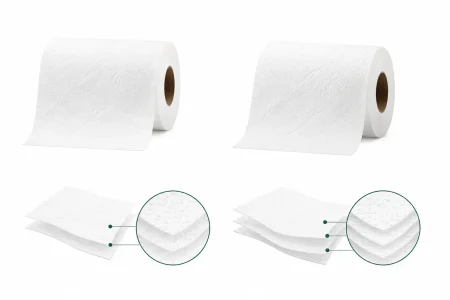
Bamboo vs. Wood Pulp Facial Tissues comes down to sustainability, comfort, absorbency, cost, and availability. Bamboo facial tissues are usually the better choice if you want a lower-impact, biodegradable, and skin-friendly tissue made from a fast-renewing plant. Wood pulp facial tissues are usually better if you need lower cost, high absorbency, wide retail availability, and familiar softness.
For households, hotels, offices, healthcare settings, and private label tissue buyers, the right choice depends on whether environmental performance or price efficiency matters more.
Key Takeaways
- Bamboo facial tissues are made from fast-growing bamboo, which can mature in about 3-5 years.
- Wood pulp facial tissues are widely available, cost-effective, and highly absorbent.
- Bamboo tissues are often less chemically processed and suitable for sensitive skin.
- Wood pulp tissues may contain fragrances, lotions, dyes, or bleaching agents depending on the product.
- Bamboo is generally stronger on sustainability and end-of-life disposal.
- Wood pulp remains stronger on price, supply scale, and product variety.
- For eco-conscious buyers, bamboo facial tissues are usually the better long-term option.
- For budget-driven procurement, wood pulp facial tissues may be more practical.
Understanding Bamboo Facial Tissues
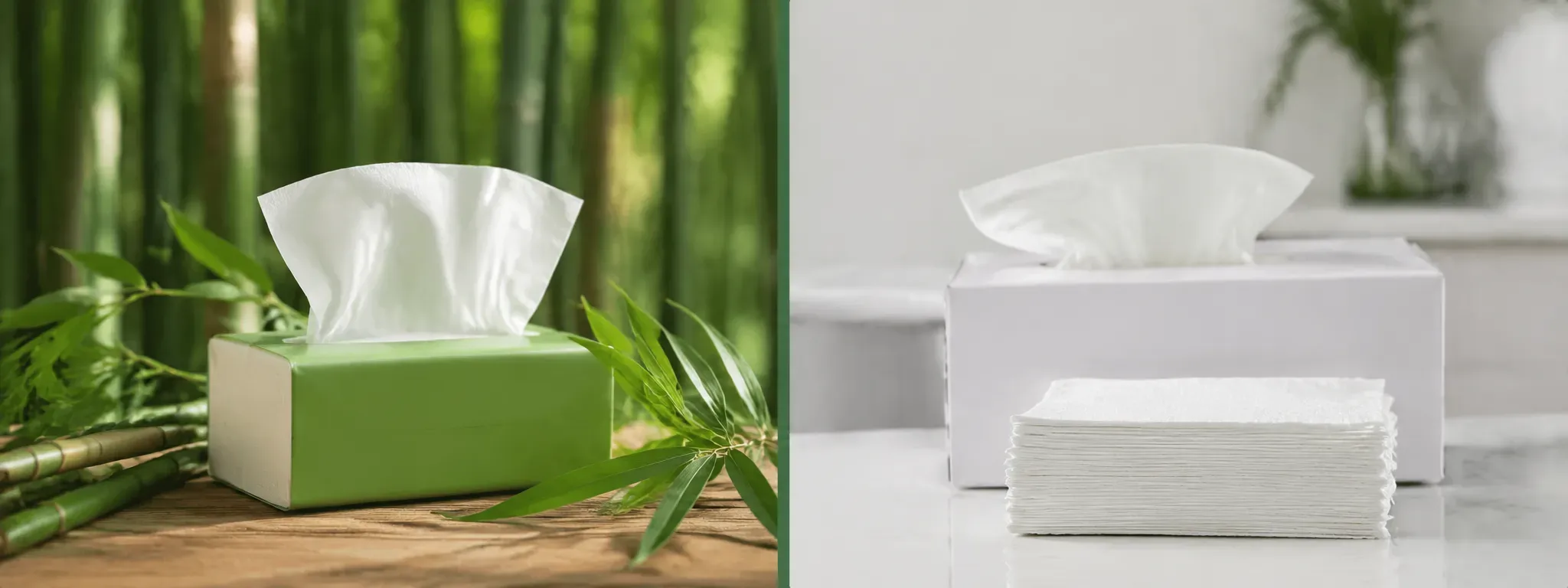
Bamboo facial tissues are made from bamboo fibers instead of traditional tree-based pulp. You choose them when you want a softer environmental footprint, a renewable raw material, and a tissue that is often free from heavy fragrance or unnecessary additives.
Bamboo grows quickly without replanting after every harvest, which makes it a strong raw material for sustainable paper products. Unlike trees used for pulp, bamboo can regenerate from its root system and reach maturity in a few years. This reduces pressure on forest resources when bamboo is responsibly farmed and processed.
For daily hygiene scenes such as nose care, makeup removal, baby care, guest bathrooms, hotel rooms, and office washrooms, bamboo facial tissues offer a balance of softness and environmental responsibility. Many consumers also prefer bamboo because it feels cleaner from an ingredient perspective, especially when the tissue is fragrance-free, dye-free, and produced with chlorine-free bleaching methods.
Advantages of Bamboo Facial Tissues
Bamboo facial tissues are a strong option if sustainability is your main buying standard. Bamboo is renewable, biodegradable, and usually requires fewer agricultural inputs than traditional tree-based pulp sources.
| Advantage | What It Means for You |
|---|---|
| Fast regrowth | Bamboo can be harvested in about 3-5 years, much faster than trees used for pulp. |
| Lower resource pressure | Bamboo can reduce dependence on forest-based raw materials. |
| Biodegradable material | Bamboo tissues break down naturally under suitable disposal conditions. |
| Gentle texture | Bamboo fibers can create a smooth tissue for face, nose, and sensitive skin use. |
| Lower chemical load | Many bamboo tissue products avoid fragrance, dye, and chlorine bleaching. |
| Eco-positioning | Suitable for sustainable retail, hospitality, office, and private label programs. |
Limitations of Bamboo Facial Tissues
Bamboo facial tissues are usually more expensive than wood pulp facial tissues because bamboo tissue production is less mature, less scaled, and often uses more controlled sourcing and processing.
The price gap matters in high-volume settings such as public facilities, schools, large offices, and commercial cleaning supply. If your priority is lowest unit cost, bamboo may be harder to justify unless your brand or procurement policy places clear value on sustainability.
Availability can also vary by region. Wood pulp tissues are stocked almost everywhere, while bamboo facial tissues are more common in eco-focused retail channels, online stores, and custom manufacturing programs. Texture can differ by manufacturer as well; some bamboo tissues feel silky and clean, while premium wood pulp tissues may feel thicker or fluffier because of added softeners, lotions, or multi-ply structures.
Understanding Wood Pulp Facial Tissues
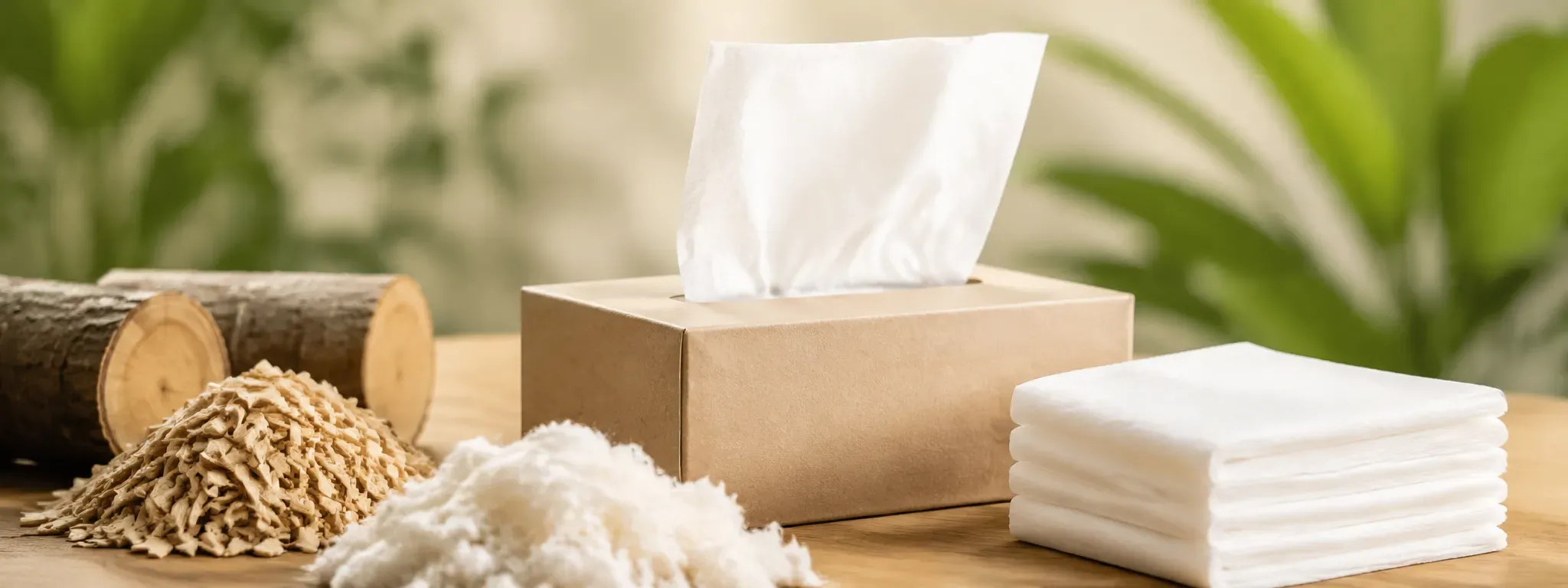
Wood pulp facial tissues are the traditional and most widely used option. You choose them when you need strong absorbency, familiar softness, many packaging formats, stable supply, and competitive pricing.
Wood pulp tissues are made from cellulose fibers sourced from trees. Because the wood pulp tissue industry is mature, manufacturers can produce large volumes efficiently. This gives buyers more choices in ply, sheet size, box style, fragrance, lotion treatment, embossing, softness level, and price tier.
For everyday tissue use in homes, offices, clinics, hotels, schools, and travel packs, wood pulp facial tissues remain practical. They work well for runny noses, small spills, facial wiping, and general hygiene because wood pulp has strong liquid absorption performance.
Advantages of Wood Pulp Facial Tissues
Wood pulp facial tissues are popular because they are soft, absorbent, easy to buy, and cost-effective. If you need predictable performance at scale, wood pulp is still a practical material.
| Advantage | What It Means for You |
|---|---|
| High absorbency | Wood pulp fibers absorb moisture quickly, useful during cold and allergy seasons. |
| Familiar softness | Many products are processed for a plush, smooth hand feel. |
| Wide availability | Easy to find in supermarkets, pharmacies, convenience stores, and online channels. |
| Product variety | Available in cube boxes, flat boxes, pocket packs, travel packs, and bulk formats. |
| Lower cost | Large-scale production keeps pricing competitive. |
| Custom | Easy to source in different ply counts, sheet sizes, embossing, and packaging styles. |
Limitations of Wood Pulp Facial Tissues
The main concern with wood pulp facial tissues is environmental impact. Tree harvesting, pulp processing, bleaching, and single-use disposal all affect the product’s total footprint.
Some wood pulp tissues come from responsibly managed forests, and certifications such as FSC can improve sourcing confidence. However, trees take much longer to mature than bamboo, and large-scale pulp production still places pressure on land, water, and forest ecosystems.
Another concern is chemical treatment. Many wood pulp facial tissues are bleached for whiteness and may include fragrances, lotions, dyes, or softening agents. These additives can improve comfort, but they may irritate sensitive skin. If you have allergies, eczema-prone skin, or frequent nose wiping during cold season, you should check whether the tissue is fragrance-free, dye-free, and hypoallergenic.
Bamboo vs. Wood Pulp Facial Tissues
Bamboo facial tissues are stronger on sustainability, compostability, and low-additive positioning. Wood pulp facial tissues are stronger on cost, absorbency, availability, and product variety.
| Criteria | Bamboo Facial Tissues | Wood Pulp Facial Tissues |
|---|---|---|
| Raw material | Bamboo fiber | Tree-based cellulose fiber |
| Regrowth rate | Fast; bamboo can mature in 3-5 years | Slow; trees often take decades to mature |
| Environmental impact | Generally lower when responsibly sourced | Higher risk from deforestation and resource pressure |
| Biodegradability | Biodegradable and often compostable | Biodegradable, but additives may affect compostability |
| Chemical processing | Often lower; many use chlorine-free methods | May involve bleaching, softeners, fragrance, or lotions |
| Skin comfort | Smooth, gentle, often suitable for sensitive skin | Soft and familiar, but additives may irritate some users |
| Absorbency | Good for daily use | Usually very absorbent |
| Texture | Silky, clean, sometimes less fluffy | Plush, soft, and available in premium textures |
| Cost | Usually higher | Usually lower |
| Availability | Growing, but less common in physical stores | Very widely available |
| Use | Eco-conscious homes, hotels, baby care, sensitive skin, sustainable brands | Budget use, offices, high-volume supply, general hygiene |
If you are comparing products for home use, bamboo makes sense when you care about ingredients and disposal. If you are buying for large facilities, wood pulp may still be preferred when price and consistent supply are the main requirements.
Key Factors to Consider Choosing
You should compare bamboo facial tissues and wood pulp facial tissues by use case, not only by material. A tissue for baby care, guest rooms, office desks, healthcare reception areas, and retail shelves may need different performance standards.
Environmental Impact
Bamboo has a clear advantage when the tissue is responsibly sourced and processed. Its fast growth, lower replanting demand, and biodegradable profile make it a strong choice for buyers who want to reduce dependence on tree-based pulp.
Wood pulp can still be a responsible option when sourced from certified forests, but the raw material takes longer to renew. If you are building a sustainable product line or improving your procurement policy, bamboo facial tissues give you a more direct sustainability message.
Softness and Skin Comfort
Bamboo facial tissues are often preferred by users with sensitive skin because they are commonly fragrance-free, dye-free, and lightly processed. They feel smooth rather than heavily coated.
Wood pulp facial tissues can be extremely soft, especially premium versions with lotion or added softeners. The trade-off is that those same additives may not suit everyone. For facial care, allergy season, baby care, and frequent nose wiping, always review the ingredient profile.
Absorbency
Wood pulp facial tissues usually perform better when maximum absorbency is needed. Their cellulose fibers hold liquid well, making them useful for runny noses, small spills, and general cleaning.
Bamboo facial tissues are absorbent enough for most daily hygiene scenes, but the feel and liquid-holding capacity can vary by ply, basis weight, and production method. If you choose bamboo for commercial use, request samples and test wet strength, softness, lint level, and sheet durability before placing a large order.
Cost and Supply
Wood pulp facial tissues usually cost less because the supply chain is larger and more established. This matters for offices, schools, cleaning supply distributors, and high-volume private label buyers.
Bamboo facial tissues usually cost more, but the higher price can support a stronger sustainability claim and better appeal to eco-conscious consumers. For brands, hotels, and retailers, that difference may be justified when the product supports your market positioning.
Certifications and Claims
Certifications help you avoid vague sustainability claims. For both bamboo and wood pulp facial tissues, look for recognized standards such as FSC, chlorine-free processing claims, plastic-free packaging claims, or verified compostability where applicable.
A better product specification should state the raw material, ply count, sheet size, fragrance status, bleaching method, packaging material, and relevant certification.
How Liansheng Sempo Helps You Choose the Right Facial Tissue
At Liansheng Sempo, we manufacture facial tissue products for buyers who need clear material choices, stable quality, and practical customization. If you are comparing bamboo facial tissues with wood pulp facial tissues, the right specification should match your target market, price point, packaging channel, and sustainability requirements.
Summary
Bamboo vs. Wood Pulp Facial Tissues is not a one-size decision. Bamboo facial tissues are the better choice when you prioritize renewable materials, biodegradability, sensitive skin comfort, and sustainable branding. Wood pulp facial tissues are the better choice when you need lower cost, stronger absorbency, wide availability, and more product formats.
If your customers care about environmental impact, bamboo is worth serious consideration. If your purchase is driven by volume and price, wood pulp remains practical. For private label, hospitality, retail, and wholesale tissue programs, Liansheng Sempo can help you compare both options and develop facial tissues that match your market needs.
Contact Liansheng Sempo to discuss bamboo facial tissues, wood pulp facial tissues, packaging options, and custom specifications for your next tissue product line.
FAQ
Are bamboo facial tissues better than wood pulp facial tissues?
Bamboo facial tissues are better for sustainability, biodegradability, and sensitive skin. Wood pulp facial tissues are better for lower cost, high absorbency, and wider availability.
Are bamboo tissues good for sensitive skin?
Yes. Many bamboo tissues are fragrance-free, dye-free, and less chemically processed, which makes them suitable for sensitive skin. Always check the product label for additives.
Are bamboo facial tissues biodegradable?
Yes. Bamboo facial tissues are biodegradable, and many are compostable under suitable conditions. Compostability depends on additives, coatings, and local composting rules.
Why are bamboo tissues more expensive?
Bamboo tissues usually cost more because bamboo tissue production is smaller in scale, sourcing is more controlled, and processing may require different technology than traditional wood pulp tissue production.
Are wood pulp facial tissues bad for the environment?
Wood pulp facial tissues can have a higher environmental impact because they rely on trees, energy-intensive pulping, bleaching, and single-use disposal. Certified sourcing and chlorine-free processing can reduce the impact.
Which facial tissue is more absorbent?
Wood pulp facial tissues are usually more absorbent because of their cellulose fiber structure. Bamboo facial tissues still work well for daily facial use, but performance depends on ply, weight, and manufacturing quality.
Do bamboo tissues break down faster than regular tissues?
In many cases, yes. Bamboo tissues can break down faster than heavily treated wood pulp tissues, especially when they are free from fragrance, lotion, plastic coating, or synthetic additives.
Can bamboo tissues be flushed?
No. Facial tissues, including bamboo facial tissues, should not be flushed unless the product is specifically labeled as flushable. Most facial tissues are designed to stay strong when wet and can block plumbing.
What are the disadvantages of bamboo tissues?
The main disadvantages are higher cost, limited retail availability in some markets, fewer brand options, and texture differences compared with premium wood pulp tissues.
What should I look for when buying facial tissues?
Check the raw material, ply count, softness, absorbency, fragrance status, bleaching method, certifications, packaging type, and whether the tissue fits your use case, such as baby care, office use, hotel supply, or sensitive skin.