
Toilet paper trends in 2026 will center on sustainable fibers, product performance, and value per roll.
Demand for bamboo pulp, unbleached toilet paper, plastic-free packaging, flushable wipes, mega rolls, and septic-safe toilet paper will become stronger. Comfort will remain important, but in addition to softness, consumers will consider strength, dissolvability, packaging waste, and total household cost.
Key Takeaways
- Bamboo pulp is becoming a mainstream premium fiber rather than a niche alternative.
- Unbleached and dye-free paper appeals to consumers who want fewer processing steps.
- Paper, cardboard, and compostable packaging are replacing conventional plastic packaging.
- Plastic-free wipes are increasingly being used alongside dry toilet paper.
- Family-size mega rolls and bulk toilet paper help households control costs and reduce shopping frequency.
- Three-ply and four-ply toilet paper compete in terms of softness, strength, and embossing.
- Rapid-dissolving toilet paper is becoming increasingly important for septic systems and sensitive plumbing.
- Toilet paper with added lotion ingredients meets the needs of the sensitive-skin and comfort-focused markets.
The Toilet Paper Market in 2026
The toilet paper market in 2026 will be influenced by three major purchasing priorities: environmental impact, reliable performance, and measurable value.
Sustainable packaging may be the first thing consumers notice, but repeat purchases depend on softness, paper strength, roll life, and plumbing compatibility. If a product makes strong environmental claims but tears easily or dissolves poorly, it is unlikely to retain consumers. Fiber composition, ply count, sheet size, number of sheets per roll, embossing, packaging materials, and carton structure are just as important as the brand.
1. Bamboo Pulp Becomes a Mainstream Material
Bamboo toilet paper will remain one of the most noticeable toilet paper trends in 2026 because bamboo grows quickly and, when processed properly, can be made into soft and strong paper. Improvements in pulp preparation and processing technology are helping manufacturers produce bamboo toilet paper that can compete directly with premium wood-pulp toilet paper.
Why Consumers Choose Bamboo Toilet Paper
You are likely to see bamboo toilet paper marketed to households that want renewable fibers without sacrificing comfort. High-quality bamboo toilet paper supports its environmental positioning with clear fiber information, responsible documentation, and practical performance details.
Bamboo itself does not automatically guarantee that a product has a lower environmental impact. Consider where the bamboo is grown, how the pulp is processed, the transportation distance, and whether the supplier can provide relevant test reports or records. Before approving a bulk order, evaluate the product’s softness, tensile strength, dust levels, wet disintegration rate, and roll consistency.
How to Improve Bamboo Toilet Paper
Bamboo fiber requires careful processing because excessive processing can reduce strength, while insufficient processing can result in a rough surface. Softness and durability can be balanced by adjusting the pulp blend, creping, embossing, and ply bonding processes. Some products use 100% bamboo pulp, while others blend bamboo pulp with other fibers to achieve a specific texture or price target.
2. Unbleached and Dye-Free Paper
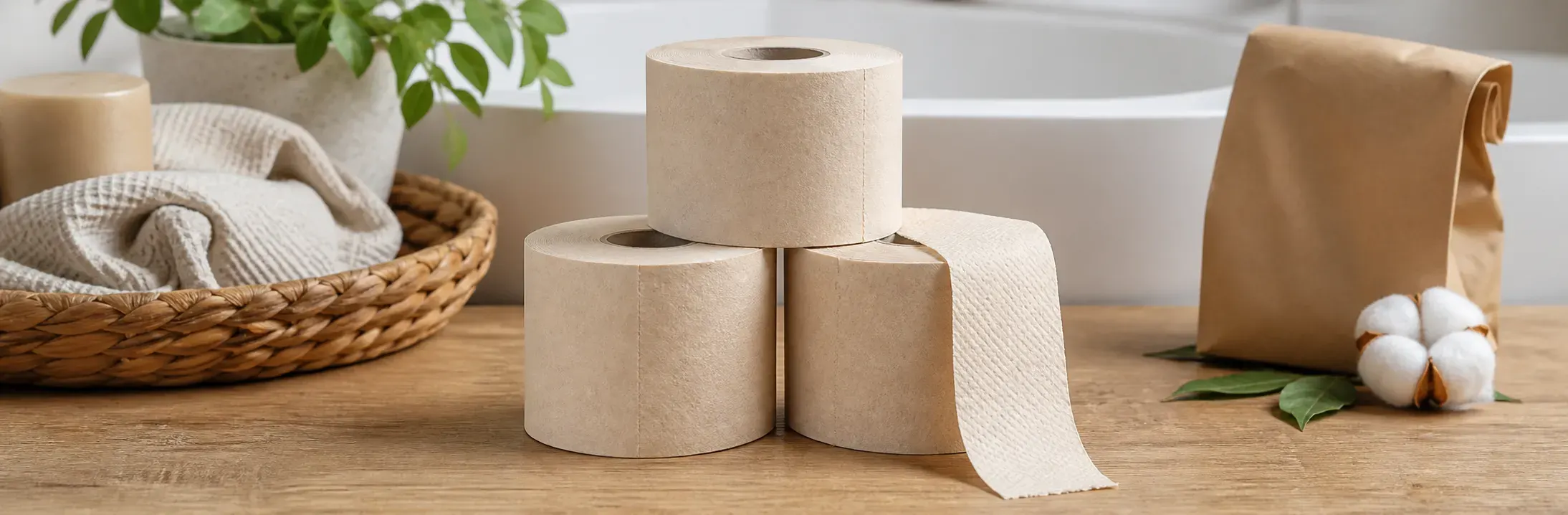
Unbleached and dye-free toilet paper is attracting attention from consumers who prefer products with less cosmetic processing. Its natural beige or light-brown appearance distinguishes it from bright-white toilet paper and shows that whiteness is not the main measure of cleanliness or quality.
Natural-Color Toilet Paper
Conventional toilet paper is usually bleached to create a familiar retail appearance. By 2026, more consumers will be willing to accept natural-color toilet paper, provided that the packaging clearly explains the product.
Odor, dust, surface texture, and visible impurities must still be controlled. Removing dyes or reducing bleaching does not replace hygiene controls and consistent manufacturing standards. For unbleached toilet paper, buyers should request information about fiber sources, processing methods, product testing, and intended marketing claims.
A brown roll may look environmentally friendly, but color alone does not prove that it contains recycled materials, uses fewer chemicals, or comes from responsible sources. Packaging should distinguish among unbleached pulp, recycled pulp, bamboo pulp, and naturally colored virgin fibers. These terms describe different product characteristics and should not be used interchangeably.
3. Plastic-Free Packaging
Plastic-free packaging is moving from being a special feature to becoming a standard feature of sustainable toilet paper. Paper bands, cardboard boxes, paper wrappers, and certified compostable materials allow brands to reduce their use of conventional plastics while keeping products effectively protected during storage and transportation.
Packaging Must Protect the Product
Toilet paper is lightweight but vulnerable to moisture, dust contamination, compression, and packaging damage. Paper-based packaging must withstand warehouse handling, pallet pressure, transportation vibration, and humid retail environments. Changing packaging materials without proper testing may result in torn packaging, deformed rolls, or moisture damage.
Packaging tests should use the final roll dimensions, pack quantity, carton layout, and shipping method. Important checks include seal strength, tear resistance, print abrasion resistance, barcode readability, compression resistance, and moisture resistance. A material that performs well for a two-roll retail pack may not be suitable for a bulk pack.
Plastic bags may still be appropriate when moisture protection, a hygiene barrier, or regional distribution conditions require them. In 2026, the practical direction is to reduce unnecessary material use, improve recyclability where recycling systems already exist, and offer plastic-free packaging where it can effectively protect the toilet paper.
4. Flushable Wipes and Dry Toilet Paper
Flushable wipes are increasingly sold alongside dry toilet paper because some consumers want to use both for more complete hygiene. The key trend is not simply adding moisture, but developing plastic-free wipes that break down easily and are supported by reliable testing.
Flushability
A wipe cannot be described as flushable simply because it can pass through a toilet. It must disperse under appropriate wastewater conditions and avoid causing unnecessary damage to household plumbing, pumps, sewers, and treatment systems. Requirements may vary by market, so suppliers should confirm the testing methods and labeling rules that apply in the target country or region.
Buyers should review the material composition, dispersibility test results, biodegradability information, and instructions for use. Wipes made with plastic fibers may still create persistent waste even if their packaging uses environmental claims.
5. Bulk Packs and Mega Rolls
Sales of bulk toilet paper, family-size mega rolls, and extra-large rolls are increasing because households want to shop less frequently and reduce the actual cost per usable sheet. Consumers no longer consider only the number of rolls. They also compare the number of sheets, sheet dimensions, ply count, roll dimensions, and actual usage.
A 24-roll pack is not necessarily better value than a 12-roll pack. Some products may have longer rolls, larger sheets, or stronger paper, reducing the number of sheets required per use. Clear and transparent specifications make comparisons easier and prevent confusion caused by vague descriptions such as “double roll” or “mega roll.”
For business-to-business buyers, case quantities, carton dimensions, pallet loads, and container utilization also affect the final cost. Large rolls can reduce refill frequency, but they may require compatible dispensers or additional restroom storage space.
6. Customization Goes Beyond Ply Count
Premium toilet paper in 2026 will be defined by a balanced combination of softness, strength, absorbency, and appearance. Three-ply and four-ply toilet paper will remain popular premium products, but consumers will also evaluate embossing depth, lamination quality, sheet dimensions, perforation, and roll firmness.
Embossing Improves Comfort
Embossing can increase the paper’s visual thickness, improve absorbency, and create a distinctive surface pattern. Wave embossing, micro-embossing, and custom patterns give private-label products a distinctive appearance, but deeper patterns do not necessarily mean better performance. Excessive embossing may reduce the paper’s effective density or create weak points.
Embossed samples should be evaluated through touch and controlled performance testing. Relevant checks include dry tensile strength, wet tensile strength, ply separation, absorbency, softness, lint levels, and perforation accuracy.
More Plies Do Not Necessarily Mean Better Value
Adding more plies can improve cushioning, but fiber quality, basis weight, and inter-ply bonding all affect the final result. Three-ply toilet paper may be stronger and better balanced than a low-quality four-ply product. Product comparisons should therefore be based on measurable specifications and representative samples.
7. Septic-Safe Toilet Paper
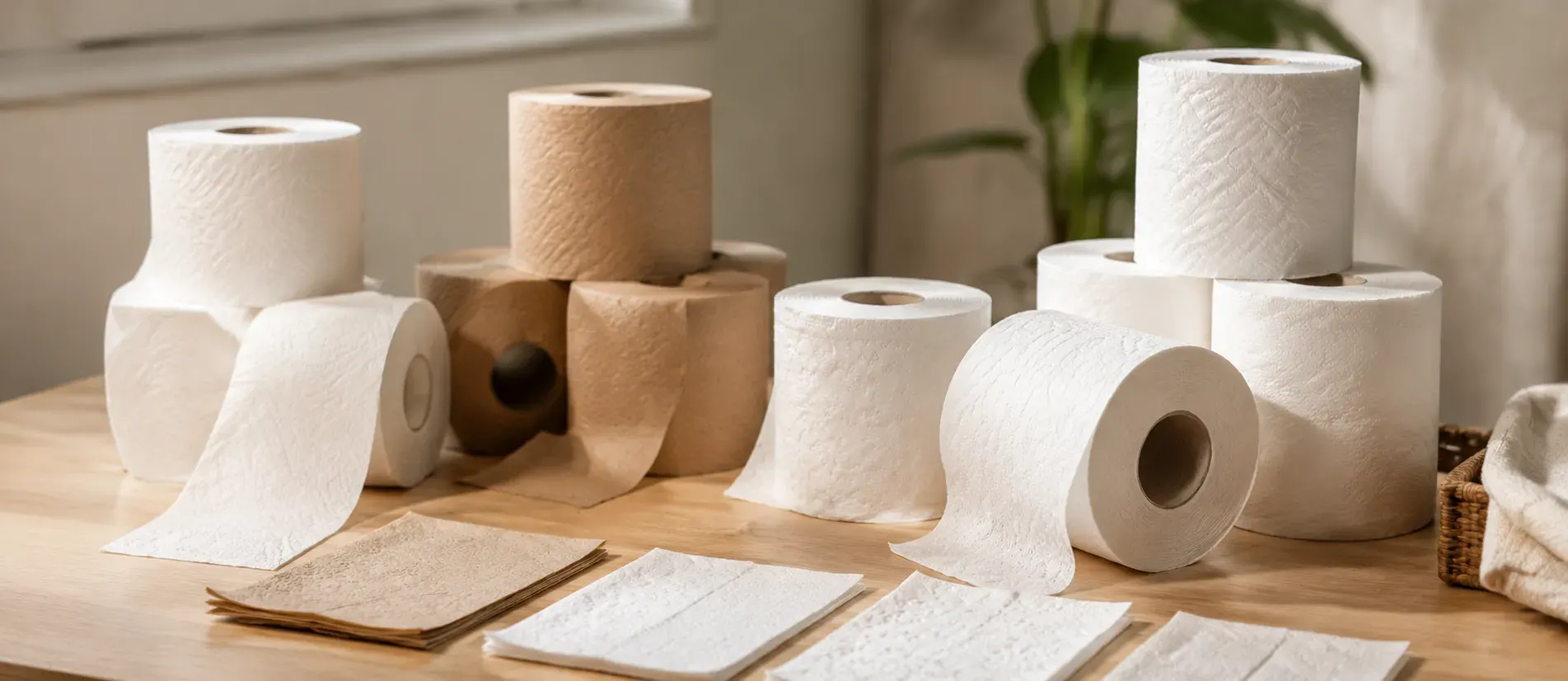
Demand is increasing for septic-safe and rapid-dissolving toilet paper among households with septic tanks and users of recreational vehicles, marine toilets, older plumbing, and low-flow water systems. These products must break down quickly in water while remaining strong enough for everyday use.
Dissolvability and Strength
If toilet paper is too weak, consumers will use more sheets, reducing the expected value of the entire roll. If the paper remains intact for too long, it may not be suitable for sensitive plumbing systems. These factors can be balanced through fiber selection, refining, basis weight, wet-strength formulation, laminated structure, and embossing.
8. Lotion and Sensitive Skin
Toilet paper with added lotion and toilet paper designed for sensitive skin are becoming increasingly popular as consumers look for products that create less friction and are more suitable for frequent use. Aloe vera, vitamin E, and other lotion ingredients can provide a more comfortable experience, but ingredient control and clear labeling are essential.
Fragrances, colorants, preservatives, and lotion ingredients may not be suitable for some sensitive users. The formulation should be clearly stated, and the safety, stability, and regulatory assessments required for the target market should be completed.
The amount of lotion applied must remain consistent throughout the roll. Excessive application may affect absorbency, paper strength, winding performance, dust removal, or dissolvability. The finished product should be tested rather than evaluating the lotion ingredients alone.
Conclusion
The main toilet paper market trends for 2026 show that the market is moving toward sustainability, reliability, and practicality. Bamboo pulp, unbleached paper, plastic-free packaging, rapid-dissolving toilet paper, bulk packs, and products for sensitive skin will influence consumer purchasing decisions. However, successful toilet paper products must still provide consistent softness, strength, roll capacity, and plumbing compatibility.
Liansheng Sempo works with importers, distributors, retailers, and private-label brands to develop toilet paper for specific markets and use cases. Contact Liansheng Sempo with your required fiber type, ply count, roll dimensions, packaging specifications, order quantity, and target market so that we can discuss product specifications and production solutions.
Frequently Asked Questions
Which Toilet Paper Is the Most Environmentally Friendly?
The best choice depends on the product’s entire life cycle. However, toilet paper made from responsibly sourced bamboo or recycled fibers and packaged with a minimal amount of recyclable or compostable material can reduce dependence on virgin wood and conventional plastics. Instead of relying only on general environmental claims, review the fiber source and relevant certifications.
Is Bamboo Toilet Paper Better Than Regular Toilet Paper?
Bamboo is a rapidly renewable fiber, and bamboo toilet paper can provide softness, strength, and comfort comparable to regular toilet paper. However, its overall environmental impact still depends on cultivation, pulping, energy consumption, transportation, packaging, and production efficiency.
Is Unbleached Toilet Paper Safe to Use?
Unbleached toilet paper produced according to applicable standards is suitable for everyday hygiene. Its natural color reflects a lower level of bleaching or the characteristics of the pulp itself, but buyers should still verify the product’s quality, material composition, and compliance with local regulations.
Does Bamboo Toilet Paper Dissolve Easily?
Well-designed bamboo toilet paper can dissolve effectively, but fiber type alone does not determine the rate of disintegration. Ply count, basis weight, chemical treatment, embossing, and paper structure also affect dispersibility.
Which Toilet Paper Is Best for Septic Systems?
Septic-safe toilet paper that dissolves quickly in water is generally a suitable choice. Review specific dissolvability information or relevant test results rather than assuming that all thin or recycled toilet paper is suitable for septic systems.
Are Flushable Wipes Really Flushable?
Some wipes are designed and tested to disperse under specific wastewater conditions, but not all products labeled “flushable” perform in the same way. Before flushing wipes, review their material composition, local wastewater guidelines, and independent or authoritative testing information.
Is Three-Ply or Four-Ply Toilet Paper Better?
Four-ply toilet paper is generally thicker, while three-ply toilet paper may provide a better balance of comfort, roll life, cost, and dissolvability. Fiber quality, basis weight, embossing, and inter-ply bonding provide a more effective basis for comparison than ply count alone.
Why Is Toilet Paper Sold in Mega Rolls?
Mega rolls contain more sheets per roll, which can reduce replacement frequency and the amount of packaging used per usable sheet. Because roll dimensions are not standardized across brands, you should check the roll diameter and dispenser compatibility.
Is Recycled Toilet Paper Hygienic?
Recycled toilet paper produced under appropriate manufacturing and quality-control standards is suitable for its intended hygiene use. Its performance depends on pulp preparation, cleaning, process control, and finished-product testing.
Can Toilet Paper Contain Plastic?
Conventional dry toilet paper is generally fiber-based, but some wet wipes contain plastic fibers, and some toilet paper packaging uses plastic film. If you need a plastic-free product, review the product composition and packaging separately.


