
Toilet paper is categorized by ply count, material source, texture, added ingredients, and roll size. The right choice depends on how you balance softness, strength, price, skin sensitivity, environmental impact, and plumbing safety.
For most homes, 3-ply toilet paper is the practical standard because it offers reliable comfort without dissolving too slowly.
For high-traffic public restrooms, 1-ply or jumbo commercial toilet paper usually works better because it controls cost and reduces clog risk.
For eco-focused buyers, recycled toilet paper and bamboo toilet paper are the main alternatives to virgin wood pulp.
Key takeaways:
- 1-ply toilet paper is thin, low-cost, and fast-dissolving.
- 2-ply toilet paper is the most common household option.
- 3-ply and 4-ply toilet paper feel thicker and softer but may not suit older plumbing.
- Virgin wood pulp toilet paper is usually the softest.
- Recycled toilet paper reduces waste and often breaks down quickly.
- Bamboo toilet paper is a tree-free option with good strength.
- Unbleached toilet paper avoids chlorine whitening and suits sensitive-skin users.
- Quilted toilet paper improves absorbency through raised texture.
- Jumbo rolls and coreless rolls are mainly used in commercial and institutional settings.
Classification By Ply: 1-Ply, 2-Ply, 3-Ply, And 4-Ply Toilet Paper
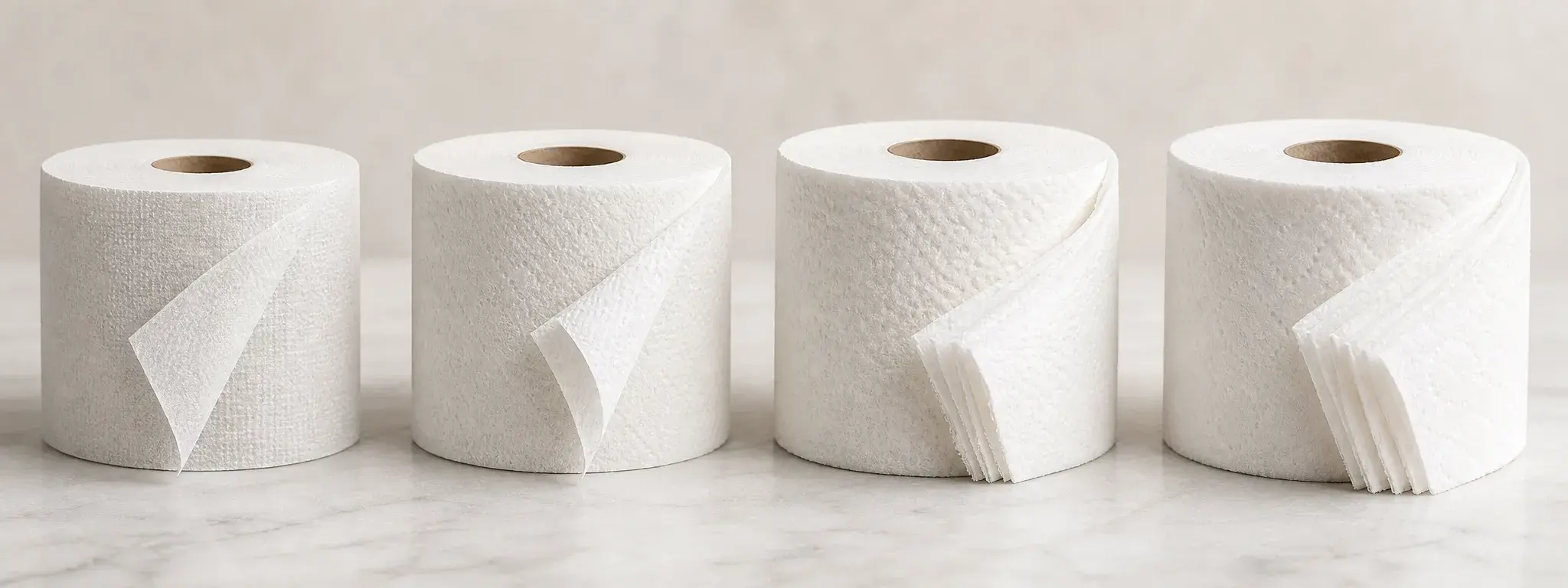
Ply means the number of paper layers in each sheet. A higher ply count usually means more thickness, softness, and absorbency, while a lower ply count usually means faster breakdown, lower cost, and better plumbing compatibility.
1-Ply Toilet Paper
1-ply toilet paper has one layer of paper per sheet. It is the most cost-effective type of toilet paper and dissolves quickly in water, which makes it suitable for public restrooms, high-traffic facilities, RVs, boats, septic systems, and older plumbing.
You may choose 1-ply toilet paper when usage volume matters more than plush comfort. In airports, schools, restaurants, factories, shopping centers, and office buildings, the goal is often steady supply, simple maintenance, and lower blockage risk.
Because 1-ply sheets are thinner, users may use more sheets per visit, so buyers should compare actual sheet count, roll length, and cost per meter instead of looking only at roll price.
2-Ply Toilet Paper
2-ply toilet paper has two bonded layers. It is the standard choice for households because it balances softness, strength, absorbency, and price better than most other types of toilet paper.
2-ply toilet paper gives you enough thickness without becoming too heavy for normal plumbing. It is also widely used in hotels, offices, serviced apartments, and retail washrooms where the user experience matters.
3-Ply And 4-Ply Toilet Paper
3-ply and 4-ply toilet paper are premium options designed for a thicker, softer, and more absorbent feel.
The trade-off is that thicker toilet paper takes longer to break down. This may not be a problem when users flush reasonable amounts, but older pipes, low-flow toilets, septic tanks, and commercial systems can be more sensitive.
| Ply | Main Advantage | Main Limitation |
|---|---|---|
| 1-Ply Toilet Paper | Low cost and fast breakdown | Less soft and less thick |
| 2-Ply Toilet Paper | Balanced comfort and strength | Not as plush as premium multi-ply |
| 3-Ply Toilet Paper | Softer and more absorbent | Higher cost and slower dissolving |
| 4-Ply Toilet Paper | Very thick and plush | Greater clog risk in sensitive plumbing |
Classification By Material: Virgin Pulp, Recycled Paper, Bamboo, And Unbleached Toilet Paper
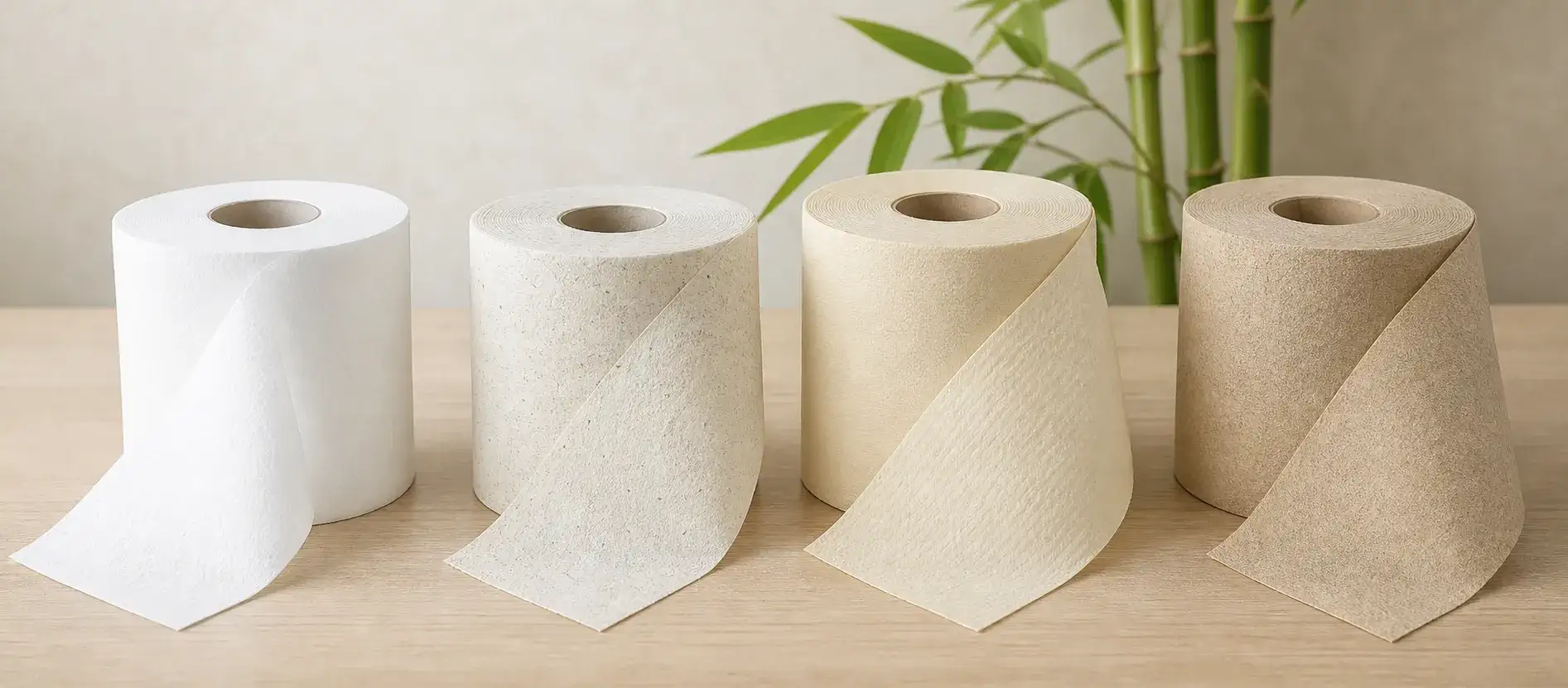
Toilet paper material affects softness, strength, environmental impact, color, price, and skin feel. The most common materials are virgin wood pulp, recycled paper, bamboo fiber, and unbleached natural pulp.
Virgin Wood Pulp Toilet Paper
Virgin wood pulp toilet paper is made from newly processed wood fibers. It is known for softness, clean color, and consistent sheet quality, which is why it remains common in mainstream household toilet paper and premium bathroom tissue.
Long, clean fibers help create a smoother sheet with good tensile strength. The concern is environmental impact, because virgin pulp depends on forest resources and requires more raw material processing.
Recycled Toilet Paper
Recycled toilet paper is made from post-consumer or post-industrial recycled paper fibers. It is a practical eco-friendly toilet paper option because it reduces landfill waste and lowers demand for virgin wood pulp.
It may feel slightly less soft than virgin pulp, depending on fiber quality and processing, but modern recycled bathroom tissue can still meet normal comfort standards.
Bamboo Toilet Paper
Bamboo toilet paper is made from bamboo fiber instead of tree pulp. Bamboo grows quickly and can be harvested without the same long forest replacement cycle, which makes bamboo toilet paper a popular tree-free toilet paper option.
Bamboo fiber can produce a smooth, durable sheet, and many buyers see it as a premium eco category.
Unbleached And Natural Toilet Paper
Unbleached toilet paper skips the whitening process, leaving the paper with a tan, beige, or light brown color. It is often chosen by people who want toilet paper without chlorine bleaching or added dyes.
This type can be useful if you have highly sensitive skin or prefer fewer chemical treatments in personal care products. The feel depends on the raw material and manufacturing process, not only the color. Some natural toilet paper is soft and refined, while some is rougher and more utilitarian.
| Material Type | Environmental Profile | Common Use Scenario |
|---|---|---|
| Virgin Wood Pulp | Higher resource demand | Premium household toilet paper |
| Recycled Paper | Reduces paper waste | Offices, schools, eco households |
| Bamboo Fiber | Tree-free, fast-growing source | Eco premium bathroom tissue |
| Unbleached/Natural | Avoids whitening chemicals | Sensitive-skin and natural product buyers |
Classification By Texture And Infusions
Texture and added ingredients change how toilet paper feels during use. Plain sheets are simple and low-cost, quilted toilet paper improves thickness and absorbency, and infused toilet paper adds skin-care ingredients such as aloe vera, lotion, or vitamin E. You should choose this category based on comfort needs, skin sensitivity, and restroom setting.
Standard Or No-Frills Toilet Paper
Standard toilet paper has a plain surface without raised patterns, lotions, or special coatings. It is usually selected for budget control, simple supply chains, and predictable performance.
This type works well in public restrooms, commercial washrooms, office buildings, and value-focused household products. Since it has fewer manufacturing features, it often costs less and may dissolve faster than heavily textured or coated tissue.
Quilted Or Rippled Toilet Paper
Quilted toilet paper has stamped patterns, raised dots, waves, or ripples that improve hand feel and help trap moisture. The texture makes the sheet feel thicker without relying only on extra ply.
Quilted toilet paper can improve perceived quality. Guests often judge restroom standards through small details, and a soft textured sheet feels more finished than a flat sheet. The key is to balance embossing depth with sheet strength, because overly aggressive patterns can weaken the paper if the base tissue is not well made.
Infused Or Medicated Toilet Paper
Infused toilet paper includes added ingredients such as aloe vera, lotion, vitamin E, or mild antibacterial agents. It is designed to reduce wiping friction and improve comfort for users with irritation concerns.
You may consider infused toilet paper for personal home use, healthcare-adjacent settings, or premium retail categories. It is not always the best choice for every user, because fragrances, lotions, or antibacterial ingredients may irritate sensitive skin. For broad distribution, fragrance-free and dermatologically gentle claims are usually more practical than heavily scented products.
Classification By Roll Style And Sizing
Roll size affects dispenser fit, storage, maintenance, and cost per use. Standard residential rolls fit home dispensers, jumbo toilet paper rolls serve public facilities, and coreless toilet paper rolls reduce packaging waste. roll style is not a minor detail; it directly affects labor, refill frequency, and user complaints.
Standard Residential Rolls
Standard residential toilet paper rolls are compact and designed for ordinary home spring-loaded holders. They are the default format for supermarkets, convenience stores, household packs, and hotel rooms.
You can use these rolls in almost any bathroom without special dispensers. The limitation is capacity. In busy restrooms, standard rolls run out quickly and require more frequent replacement.
Jumbo And Commercial Toilet Paper Rolls
Jumbo toilet paper rolls are large-capacity rolls made for public restrooms and commercial dispensers. They reduce restocking frequency and help facilities maintain supply during peak traffic.
You will often see jumbo rolls in airports, malls, schools, stadiums, factories, hospitals, and office towers. They are not designed for normal home holders, so dispenser compatibility must be checked before purchase. Jumbo roll toilet paper should be compared by roll diameter, sheet width, roll length, core size, ply, and dissolving performance.
Coreless Toilet Paper Rolls
Coreless toilet paper rolls are wound without the center cardboard tube. This reduces physical packaging waste and allows more paper to fit into each roll.
Coreless toilet paper is useful for facilities that want less waste collection and fewer discarded tubes in restroom bins. It can also improve storage efficiency. The main requirement is the correct dispenser system, because coreless rolls may not work with standard holders. Coreless rolls can be paired with recycled toilet paper for a stronger low-waste position.
| Roll Type | Best Setting | Dispenser Requirement |
|---|---|---|
| Standard Residential Roll | Homes, hotels, small offices | Standard holder |
| Jumbo Roll | Public and commercial restrooms | Jumbo dispenser |
| Coreless Roll | Commercial and eco-focused facilities | Coreless dispenser |
How To Choose The Right Type Of Toilet Paper
Choose toilet paper by matching the product to the use scenario. For homes, 2-ply toilet paper is usually the best starting point. For old plumbing or septic systems, choose fast dissolving toilet paper. For public restrooms, prioritize cost, capacity, and low clog risk. For premium spaces, softness and texture matter more.
Best Toilet Paper Types By Scenario
Different bathrooms need different toilet paper. A family bathroom, a hotel suite, a factory restroom, and a public washroom do not have the same usage pattern. The best toilet paper is the one that fits the user expectation, plumbing condition, dispenser type, and operating budget.
What Liansheng Sempo Considers In Toilet Paper Manufacturing
As a toilet paper factory, Liansheng Sempo focuses on matching product structure to real use conditions: home comfort, commercial durability, dispenser compatibility, and supply efficiency. This matters because toilet paper quality is not only about softness; it is also about stable production, clean converting, correct roll sizing, and packaging that fits the sales channel.
When you develop a toilet paper line, you need clear specifications before production starts. Ply count, raw material, embossing style, sheet size, roll length, core diameter, packing format, and carton strength all affect the final product.
Liansheng Sempo can support toilet paper products for different purchasing scenarios, including household toilet paper, commercial toilet paper, jumbo roll toilet paper, recycled toilet paper, and customized private label bathroom tissue.
Conclusion
Different types of toilet papers are mainly defined by ply count, material, texture, ingredients, and roll format. If you want a simple household choice, start with 2-ply toilet paper. If you manage a public restroom, look at 1-ply jumbo rolls or commercial toilet paper that dissolves quickly. If sustainability is your priority, compare recycled toilet paper, bamboo toilet paper, unbleached toilet paper, and coreless roll options.
If you need a toilet paper manufacturer for retail, wholesale, private label, or commercial supply, contact Liansheng Sempo with your target market, ply requirement, material preference, roll size, packing format, and expected order volume. We can help you match the product specification to your price point, user scenario.
FAQ
What Are The Main Types Of Toilet Paper?
The main types of toilet paper are 1-ply, 2-ply, 3-ply, 4-ply, virgin pulp, recycled, bamboo, unbleached, quilted, infused, standard roll, jumbo roll, and coreless roll toilet paper.
Is 1-Ply Or 2-Ply Toilet Paper Better?
2-ply toilet paper is better for most homes because it is softer and stronger. 1-ply toilet paper is better for high-traffic restrooms, septic systems, RVs, and plumbing that needs fast-dissolving paper.
What Toilet Paper Is Best For Not Clogging Toilets?
Fast dissolving 1-ply toilet paper is usually best for reducing clog risk. Some septic-safe 2-ply toilet paper also works well if it breaks down quickly in water.
Is Bamboo Toilet Paper Better Than Regular Toilet Paper?
Bamboo toilet paper can be better if you want a tree-free material with good strength and a lower forest impact. Regular virgin pulp toilet paper is often softer, depending on the product grade.
Is Recycled Toilet Paper Safe To Use?
Yes, recycled toilet paper is safe to use when it is produced under hygiene and quality standards. It is commonly used in homes, offices, schools, and public facilities.
What Is The Softest Type Of Toilet Paper?
Virgin wood pulp 3-ply or 4-ply toilet paper is usually the softest type. Quilted texture can also make toilet paper feel thicker and softer.
What Toilet Paper Is Best For Sensitive Skin?
Fragrance-free, dye-free, unbleached toilet paper is often best for sensitive skin. Avoid heavily scented or lotion-coated toilet paper if your skin reacts easily.
What Is Jumbo Roll Toilet Paper Used For?
Jumbo roll toilet paper is used in commercial and public restrooms. It holds more paper than standard rolls, so staff do not need to refill dispensers as often.
Does Thicker Toilet Paper Clog Pipes?
Thicker toilet paper can increase clog risk if it is used in large amounts or flushed through older plumbing, septic systems, or low-flow toilets. Fast-dissolving toilet paper is safer for sensitive systems.
What Is Coreless Toilet Paper?
Coreless toilet paper is a roll made without the cardboard tube in the center. It reduces packaging waste and is usually used with compatible commercial dispensers.


