
No, you should not flush paper towels. Paper towels are designed to absorb liquid and remain usable while wet, so they do not lose strength as quickly as toilet paper. A sheet may disappear from the bowl, but it can catch in the toilet trap, a pipe bend, a private sewer line, a pump, or a septic tank. If you accidentally flush one paper towel, stop flushing, let the bowl return to its normal level, and watch for slow drainage, rising water, or gurgling. Put used paper towels in a lined waste bin instead. In a commercial washroom, place the bin next to the dispenser and keep it from overflowing. That simple layout makes correct disposal easier and reduces the chance that users will put hand towels into the toilet.
Key takeaways
- Paper towels should go in a waste bin, not a toilet.
- Wet strength helps a paper towel work, but it also makes the sheet harder to disperse in plumbing.
- One towel may pass without an immediate backup, but repeated flushing raises the risk.
- A slow flush, rising bowl, gurgling, or nearby drain backup can indicate a restriction.
- Homes and commercial facilities can prevent misuse with accessible bins and direct signage.
Why You Cannot Flush Paper Towels
You cannot flush paper towels safely because they are built for absorption and wet handling rather than rapid disintegration. When you use a paper towel to dry your hands, wipe a counter, or lift a spill, the sheet needs enough wet strength to stay in one piece. That performance is useful above the drain. Inside a toilet and sewer pipe, the same performance becomes a problem because the towel can travel as a flexible sheet instead of separating into small fibers.
The bowl is only the first part of the route. After the flush, material has to move through the internal toilet trap, the branch drain, the building drain, and either a public sewer connection or a septic system. Each change in direction creates a place where a strong wet sheet can catch. Scale, grease, roots, construction debris, and an existing partial clog make that risk higher. The fact that you can no longer see the towel does not mean it has dispersed or reached a treatment facility.
Municipal wastewater guidance commonly limits toilet disposal to human waste and toilet paper. Erie County sewer guidance, for example, lists paper towels among the products that can cause blockages and damage. The practical rule is easy to apply in any home or facility: if a paper product is designed for wiping, cleaning, or hand drying, do not assume it is suitable for flushing.
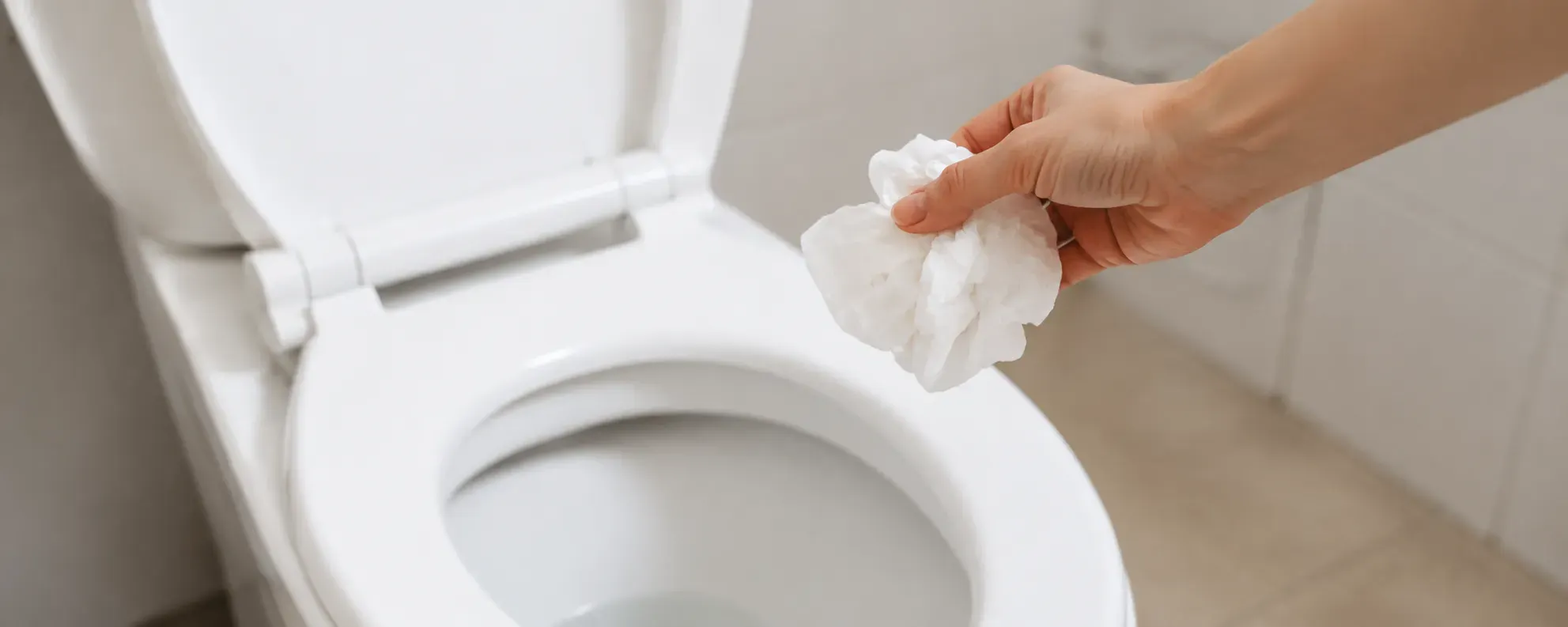
Wet Strength
Wet strength describes a sheet’s ability to resist tearing after it absorbs water. Paper towel manufacturers control fiber selection, sheet formation, bonding, embossing, and converting to achieve the performance required by the intended use. A kitchen towel may need to scrub a wet surface, while a folded hand towel needs to leave a dispenser cleanly and dry hands without falling apart. Neither use requires the rapid dispersibility expected from toilet tissue.
You should not judge flushability by thickness alone. A thin towel can still retain enough structure to wrap around debris or collect at a narrow point. A thicker towel can create a denser wad when folded. The relevant issue is how the whole sheet behaves in moving water under real plumbing conditions, not how soft, light, or paper-like it feels in your hand.
Paper Towels vs Toilet Paper
Paper towels and toilet paper may use similar cellulose fibers, but they serve different functions. Toilet paper is intended for personal hygiene and must move through plumbing after use. Paper towels are intended for wiping and hand drying, so they need more usable strength after contact with water. That difference is more important than color, ply, softness, or roll size when you decide what belongs in a toilet.
| Factor | Paper towels | Toilet paper | Why it matters |
|---|---|---|---|
| Primary use | Cleaning, wiping, and hand drying | Personal hygiene | The intended disposal route is different. |
| Wet behavior | Retains useful strength after absorbing liquid | Weakens and separates more readily | An intact sheet is more likely to snag or collect. |
| Typical disposal | Waste bin or an approved compost stream | Toilet, subject to local guidance | Using the designed route reduces system problems. |
| Main purchasing criteria | Absorbency, strength, format, dispenser fit, and sheet efficiency | Softness, strength in use, and dispersibility | Similar appearance does not mean equal performance. |
Toilet paper can still contribute to a clog when too much is used at once or when the plumbing is damaged. That does not make paper towels an acceptable substitute. If you need more context on the intended disposal of bathroom tissue, read whether it is better to flush or throw away toilet paper. The distinction helps you give users a consistent rule instead of asking them to judge each sheet by appearance.
What Happens After Flushing
After you flush a paper towel, one of three things usually happens. It may remain in the toilet trap, move into the building drain, or travel farther into a sewer or septic system. You may see no immediate symptom if the towel passes through the first section of pipe. That outcome is uncertain rather than safe, because the sheet can still meet an obstruction farther downstream.
A paper towel can act as a collection surface. Small pieces of waste, grease, hair, wipes, and additional paper can attach to it. A restriction that begins with one sheet can gradually narrow the pipe until normal toilet paper and wastewater can no longer pass. In a shared building, the person who flushed the towel may never see the final backup because the blockage appears in a lower fixture, a maintenance cleanout, or another unit.
Pumps and treatment screens create another concern. Material that remains intact can wrap, jam, or collect where wastewater equipment is designed to move liquids and dispersible solids. Your household or facility may only pay for the first plumbing call, but repeated disposal errors can also increase maintenance work for the larger sewer system.
| Location | What can happen | Common sign | Recommended response |
|---|---|---|---|
| Toilet trap | The sheet folds or wedges in the curved passage. | Water rises or drains slowly after one flush. | Stop flushing and use a toilet plunger carefully. |
| Branch drain | The towel catches at a bend, joint, or existing deposit. | Repeated weak flushing or gurgling near the toilet. | Limit use and arrange drain inspection if the symptom continues. |
| Building drain | Several fixtures are affected by the same restriction. | A lower drain backs up when an upper toilet is used. | Stop water use and contact a qualified drain professional. |
| Septic system | The towel adds persistent solids or restricts an inlet or outlet. | Slow drains, odors, alarms, or wastewater surfacing outside. | Reduce water use and call a septic service provider. |
| Public sewer equipment | Non-dispersed material collects at screens or pumps. | The user may see no direct sign. | Prevent the problem by keeping towels out of toilets. |
One Paper Towel
One paper towel does not always clog a toilet immediately, but it can. The result depends on the sheet size, whether it was folded or wadded, the toilet’s flush performance, the pipe condition, and what is already in the drain. A single half sheet entering a clear modern line creates a different situation from several full sheets entering an older pipe with scale and roots. You usually cannot see those conditions, so you cannot calculate a safe amount.
If one towel has already passed, do not run an experiment by flushing another. Continue to use the toilet only if the bowl returns to its normal level and the flush remains strong. Watch nearby fixtures as well. A gurgling sink, a shower drain that moves when the toilet flushes, or an odor from a floor drain can indicate that air and water are being displaced by a restriction.
Several paper towels create a more urgent risk because they can compress into a dense mass. Repeated flushing also moves the material farther from the toilet, where a simple plunger may no longer reach it. In a public washroom, a user may add towels to an already restricted toilet without knowing what someone else flushed earlier. That is why facilities need prevention rather than a rule based on the number of sheets.
| Scenario | Risk level | What you should do |
|---|---|---|
| One small sheet, normal flush, no symptoms | Uncertain | Do not flush more and monitor the toilet and nearby drains. |
| One wadded towel and a slow flush | Elevated | Stop flushing and address the restriction immediately. |
| Several sheets flushed together | High | Limit toilet use and prepare for plunging or professional service. |
| Paper towels repeatedly flushed in a shared washroom | High and recurring | Clear the drain, correct bin placement, and add direct signage. |
What to Do After Flushing
If you accidentally flush a paper towel, stop and observe before you take action. Do not keep flushing to push the sheet farther into the line. Wait for the bowl to settle. If the water level is normal and the toilet drains at its usual speed, the towel may have passed the trap, but you should still monitor the system. Tell other household members or maintenance staff what happened so they do not add more paper while you are checking the drain.
If the bowl rises, remove the tank lid only if you can do so safely and stop the refill by closing the toilet supply valve. A toilet plunger with a flange can apply controlled pressure at the trap. Use steady strokes rather than splashing or excessive force. If the bowl is near overflowing, remove some water with an appropriate container before plunging. Wear gloves and clean the area afterward.
Do not pour a strong chemical drain cleaner into the toilet. The product may remain in the bowl or pipe if the towel blocks flow, creating a chemical exposure risk for you or the plumber who works on the line. A toilet auger may help with a nearby restriction, but improper use can scratch the bowl or push material deeper. When symptoms involve more than one fixture, recur after plunging, or appear in a septic system, professional inspection is the safer next step.
| What you observe | Immediate action | Avoid | When to get help |
|---|---|---|---|
| Normal water level and normal flush | Monitor the next few uses and keep other waste out. | Testing the line with more towels | If slow drainage or gurgling develops |
| Water rises and then drains slowly | Stop flushing and use a toilet plunger carefully. | Repeated flushing | If plunging does not restore normal flow |
| Bowl is close to overflowing | Close the supply valve and protect the floor. | Adding more water or chemicals | If you cannot lower the water safely |
| Several fixtures drain slowly | Reduce water use throughout the building. | Treating the problem as a single-toilet clog | Contact a drain or septic professional promptly. |
Paper Towels and Septic Systems
Paper towels are a poor match for septic systems because the tank is designed to separate wastewater, settled solids, and floating material under controlled conditions. Toilet paper is selected for a system where dispersibility matters. A paper towel can stay intact longer, add to the solids in the tank, or collect near an inlet, baffle, filter, or outlet. The risk is not limited to a dramatic clog. Extra non-dispersible material can also shorten the interval between maintenance needs.
If your property uses a septic system, the rule should be stricter rather than looser: flush human waste and the toilet paper recommended for your system, and put paper towels in the trash. Do not rely on extra water to move a towel through the tank. High water use can disturb settling, move solids, and create additional stress without making the paper towel suitable for treatment.
Watch for slow fixtures throughout the property, sewage odors, wet areas near the drain field, alarms, or wastewater surfacing outside. Those signs can have several causes and need professional assessment. If you are selecting toilet tissue for this use case, review the separate septic safe bath tissue guide. Do not transfer a toilet tissue claim to a kitchen towel or folded hand towel simply because both products are made from paper fibers.
How to Dispose of Paper Towels
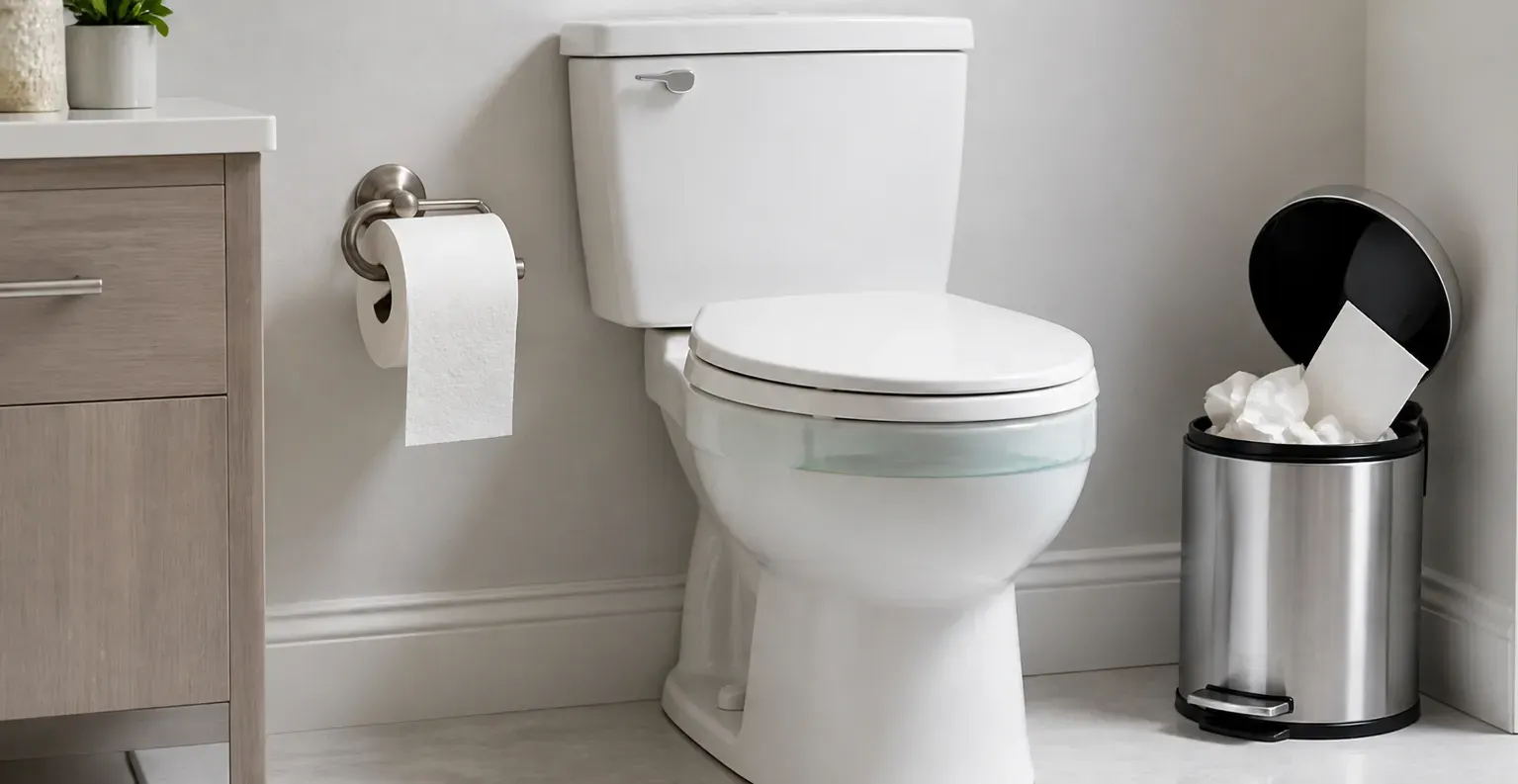
The normal disposal route for a used paper towel is a lined waste bin. This route is appropriate when the towel contains food, grease, cleaning chemicals, paint, bodily fluids, pet waste, or other contamination. Put the bin close to where the towel is used. A correct rule that requires users to walk across the room is less reliable than a correct rule supported by a convenient layout.
Do not put used paper towels into paper recycling automatically. Short fibers, wet-strength treatments, food residue, oils, and cleaning products can make them unsuitable for a local recycling process. Clean cardboard cores and outer packaging may follow a different rule, so separate those items rather than treating the entire paper towel product as one waste stream.
Composting depends on the towel material, what the towel absorbed, and the rules of your local compost program. An unprinted towel used with water may be acceptable in one program, while a towel with disinfectant or grease may be rejected. Review local requirements before setting up a collection bin, and confirm the fiber, additives, printing, and contamination limits before you describe a used paper towel as compostable.
| Paper towel condition | Likely route | Check before disposal |
|---|---|---|
| Used for food, grease, chemicals, or hygiene | Lined waste bin | Facility hygiene and local waste rules |
| Plain towel used only with water | Waste bin or approved compost collection | Fiber, additives, printing, and compost-provider rules |
| Clean cardboard roll core | Recycling or compost where accepted | Local fiber and packaging collection rules |
| Any used paper towel | Not the toilet | The towel is not designed for wastewater dispersal. |
Commercial Washroom Prevention
Commercial washrooms prevent paper towel clogs by making correct disposal visible and convenient. Put the waste bin directly beside or below the hand-towel dispenser. Select enough capacity for peak traffic, not the average hour. A bin that is full during a shift change, event, school break, or meal period encourages users to leave towels on counters, floors, or toilets. The placement decision therefore affects plumbing, cleaning labor, and the overall appearance of the washroom.
Use a short sign with one action: “Place paper towels in the bin. Flush toilet paper only.” Position the sign where a user finishes drying their hands and where a person can see it from the toilet. Avoid long lists of prohibited items. If your facility serves international visitors, use a familiar waste-bin icon or add the most relevant local language. The instruction should remain readable after cleaning and should not be hidden behind an open dispenser or bin lid.
Maintenance teams need a repeatable inspection routine. Record recurring clogs by room, fixture, time, and probable cause. If the same washroom has repeated paper towel incidents, inspect dispenser location, bin size, refill timing, cleaning frequency, and signage before assuming the plumbing is the only problem. The commercial washroom tissue paper guide provides a broader framework for matching tissue products and dispensers to facility traffic and operating conditions.
| Control | What to check | Operational benefit |
|---|---|---|
| Bin placement | Users can reach the bin from the drying point without crossing the room. | Reduces disposal in toilets and on floors. |
| Bin capacity | The bin handles peak traffic between collection rounds. | Prevents overflow during busy periods. |
| Dispenser control | The dispenser releases usable sheets without jams or excess feeding. | Reduces dropped towels and unnecessary consumption. |
| Signage | The instruction is short, visible, and understandable. | Sets one consistent disposal rule. |
| Inspection log | Staff record clogs, overflows, and repeated misuse by location. | Helps you correct the real source of recurring problems. |
Paper Towel Selection
Paper towel selection cannot make a standard hand towel flushable, but it can influence how many sheets users take and how much waste a washroom generates. When you source for a commercial facility, compare absorbency, wet strength, sheet dimensions, fold format, dispenser compatibility, pack count, and refill frequency. A product that dries hands effectively with fewer sheets may reduce bin volume, while a controlled dispenser can reduce accidental over-dispensing.
Do not evaluate sheet cost in isolation. A lower price per towel can be offset by higher consumption, more frequent refills, overflowing bins, or additional cleaning. Review the complete use scenario: daily visitor count, peak periods, staff availability, bin capacity, storage space, local waste route, and user expectations. Ask for samples and test them in the actual dispenser before committing to a larger order.
When you review product claims, keep each statement aligned with verified performance. Describe a paper towel as absorbent, strong, folded, rolled, embossed, recycled, or made for a particular dispenser only when the specification supports the statement. Do not add a flushable claim to a standard paper towel. Clear product information helps facility managers give users the correct disposal instruction.
Conclusion
The answer to can you flush paper towels is no. Paper towels are designed to remain useful when wet, so they can stay intact inside a toilet, drain, sewer line, pump, or septic system. Put them in a nearby lined bin, avoid repeated flushing after an accident, and respond quickly to rising water, slow drainage, gurgling, or backups. In shared washrooms, bin placement, capacity, signage, dispenser control, and routine inspections prevent the same mistake from becoming a recurring plumbing cost.
Liansheng Sempo is a tissue factory. To discuss paper towel formats, sheet structure, absorbency, packaging, or dispenser requirements, contact Liansheng Sempo with your use scenario and product requirements.
FAQ
Can you flush one paper towel?
You should not. One sheet may pass without an immediate backup, but it can remain intact and contribute to a restriction farther down the drain.
Will paper towels dissolve in water?
Paper towels absorb water and may weaken over time, but they do not disperse as quickly as toilet paper. Wetting a towel does not make it suitable for flushing.
How long do paper towels take to break down?
There is no reliable household time that makes flushing safe. Breakdown depends on fiber, additives, sheet structure, water movement, temperature, and the surrounding waste.
What happens if you accidentally flush a paper towel?
The towel may pass the bowl, catch in the trap, or travel into a drain or septic system. Stop flushing and monitor water level, flow, and nearby fixtures.
Can paper towels clog a septic tank?
Yes. They can add persistent solids and collect at septic components. Use a waste bin and flush only suitable toilet tissue.
Can you use drain cleaner for a paper towel clog?
Do not rely on chemical drain cleaner in a toilet. If the chemical cannot pass the restriction, it can remain in the bowl or pipe and create a handling hazard.
Are thin paper towels flushable?
No. Thinness alone does not prove dispersibility. A thin hand towel can still retain wet strength and catch in plumbing.
Can you flush napkins or facial tissues?
You should place them in a waste bin unless local guidance and product-specific evidence say otherwise. The related guide on whether you can flush napkins explains why another paper product should not be treated as toilet tissue.
What should commercial washrooms put on a sign?
Use one direct instruction: “Place paper towels in the bin. Flush toilet paper only.” Put it near the dispenser, bin, or toilet where users make the disposal decision.


