
Yes, paper towels are compostable when they are plain, uncoated, and used with compost-safe residue such as water, vegetable scraps, coffee, tea, or light food crumbs. You should not compost paper towels used with disinfectants, bleach, synthetic cleaners, heavy grease, meat juices, dairy waste, pet waste, or unknown chemicals.
The towel itself is usually cellulose fiber, so it can break down as a carbon-rich “brown” material. The real question is what touched the towel before it reached the compost bin.
Compost clean paper towels and towels with plant-based kitchen residue, but keep contaminated towels out of compost.
Key Takeaways
- Plain paper towels can be composted because they are made mainly from cellulose fiber.
- What the towel absorbed matters more than the towel itself.
- Do not compost towels used with disinfectants, bleach, solvents, pet waste, meat juices, or heavy oil.
- Unbleached and certified compostable paper towels are easier to approve for compost programs.
- For business use, choose paper towels with reliable absorbency, controlled additives, and clear product documentation.
When Are Paper Towels Compostable?
Paper towels are compostable when the sheet is free from plastic coatings, heavy inks, synthetic fragrance, and unsafe residues. A towel used to dry washed lettuce, wipe water from a counter, collect coffee grounds, or clean up vegetable prep is usually acceptable in a home compost pile. In that setting, the fiber helps balance wet food scraps by adding carbon and structure.
Disinfectants, bathroom cleaners, motor oil, paint, pet waste, and meat drippings can introduce pathogens or chemical residues.If the paper towel carried something you would not want returning to soil, put it in the trash.
A towel with predictable wet strength and absorbency helps staff use fewer sheets and sort waste more accurately. For more on performance, see paper towel absorbency, because absorbency directly affects how many sheets are used before disposal.
| Paper Towel | Compost? | Reason |
|---|---|---|
| Drying clean hands or clean counters | Yes | Plain cellulose fiber breaks down as carbon material. |
| Wiping fruit, vegetables, coffee grounds, or tea leaves | Yes | Plant-based residue is generally compost-friendly. |
| Cleaning cooking oil, butter, meat juice, or dairy spills | No | Fats and animal residue can smell, attract pests, and slow decomposition. |
| Using bleach, disinfectant, glass cleaner, or degreaser | No | Chemical residue does not belong in compost for soil use. |
| Printed, scented, or coated paper towels | Check first | Additives can change compost suitability. |
Are All Paper Towels Biodegradable?
Most paper towels are biodegradable because paper fiber can be broken down by microbes, but biodegradable does not always mean suitable for your compost bin. A product can biodegrade slowly, leave unwanted residues, or require industrial composting conditions.
Plain white, brown, recycled, bamboo, and virgin pulp towels can all be biodegradable if they are made primarily from plant fiber. The compost question depends on additives, coatings, wet-strength agents, dyes, fragrance, and real-world use. In a small home compost bin, thick or heavily wet-strengthened towels may need to be torn into smaller pieces and mixed well.
The practical choice is not only “brown versus white.” You should ask whether the towel is food-contact suitable, whether it uses unnecessary fragrance or decorative printing, and whether your local composting program accepts paper towels.
If your goal is kitchen use, the kitchen paper towels is a better fit than bathroom tissue or facial tissue because the sheet is built for wet handling and spill control.
What Makes A Paper Towel Bad For Compost?
A paper towel becomes bad for compost when it carries the wrong residue or includes materials that do not break down cleanly. The most common issues are chemical cleaners, heavy grease, animal-based food waste, synthetic coatings, fragrance, and decorative inks. These materials can interfere with microbial activity, create odors, or leave residues you do not want in finished compost.
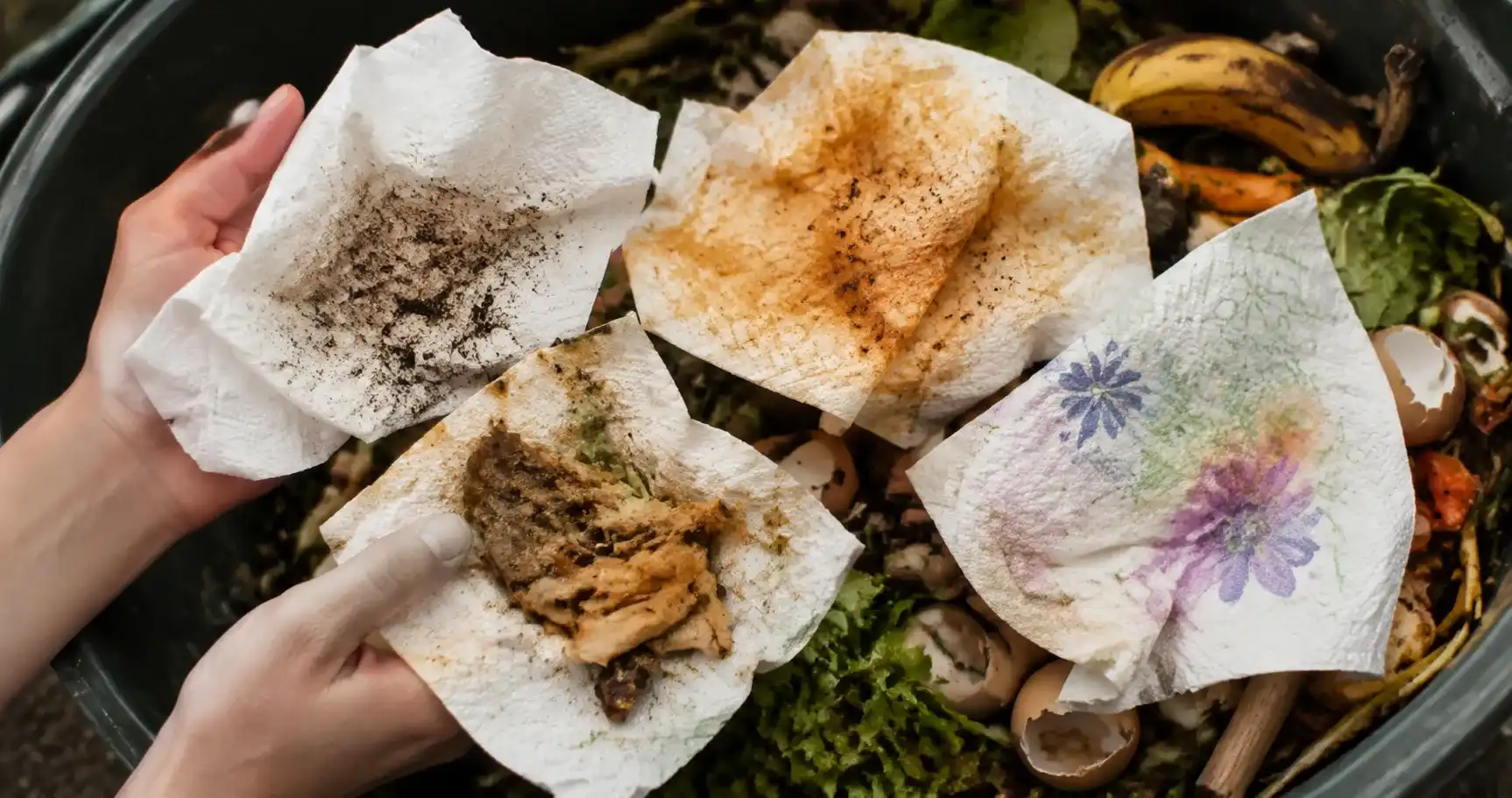
Common Residues And Compost Safety
| Residue On The Towel | Disposal Choice | Note |
|---|---|---|
| Water, tea, coffee, vegetable juice | Compost | Tear thick sheets so they break down faster. |
| Small crumbs or fruit peels | Compost | Cover with browns or mix into the pile. |
| Frying oil, butter, cheese, meat, fish | Trash | Animal residue and grease create odor and pest risk. |
| Sanitizer, bleach, disinfectant, degreaser | Trash | Cleaner residue is not soil input. |
| Pet waste, human waste, medical residue | Trash | Pathogen risk is too high for normal composting. |
Can Used Paper Towels Go In A Home Compost Bin?
Used paper towels can go in a home compost bin when they were used for clean or plant-based tasks. Tear the sheets into smaller pieces, mix them with wet food scraps, and keep the pile aerated. Paper towels work as browns, so they help offset fruit peels, vegetable scraps, and coffee grounds that can otherwise become too wet.
Do not add a stack of wet towels in one clump. Dense paper can mat together, block airflow, and slow decomposition. A better method is to shred or tear the towels and spread them through the pile. If the compost smells sour, feels slimy, or attracts pests, you probably have too much wet food waste or the wrong residue in the mix.
Some city programs accept paper towels, and others reject them because contamination is hard to control. Always follow local bin rules. If your program says no paper towels, the best environmental decision is to follow that rule, even if the towel itself could break down biologically.
Home Composting Vs Commercial Composting
Home composting is more sensitive to towel thickness, moisture, and contamination because the pile is smaller and temperatures are less controlled. A few torn paper towels from vegetable prep can work well, but a pile of damp sheets from a busy kitchen may mat together. If you compost at home, add paper towels gradually, tear them first, and mix them with leaves, cardboard, or other dry browns.
Operators may reject paper towels because they cannot see whether the sheet absorbed sanitizer, bathroom residue, or animal-based food waste. That is why a product that is technically compostable may still be banned from a local green bin.
Keep compost bins near coffee stations and food prep areas, but use trash bins for cleaning stations and restrooms. This reduces wishful sorting and keeps finished compost cleaner.
Compostable Paper Towels Vs Reusable Cloth Towels
Compostable paper towels and reusable cloth towels solve different hygiene problems. Cloth towels can reduce single-use waste in low-risk drying tasks, but they require washing, storage, and strict separation from raw food, grease, and restroom cleaning.
In kitchens, the best choice depends on the task. Use washable cloth for clean hands, dry dishes, or light surface drying when laundering is well managed. Use paper towels for raw ingredient prep, greasy surfaces, shared workstations, or cleaning tasks where reuse would spread residue.
For a broader comparison, read kitchen paper towels vs cloth towels. That comparison helps you match the product to the actual cleaning scene instead of treating every towel as interchangeable.
Product Factors That Affect Compostability
- Fiber source
Virgin pulp, recycled fiber, and bamboo can all break down, but sourcing and purity differ. - Wet strength
Strong towels reduce sheet waste but may break down more slowly if too dense. - Printing and fragrance
Extra additives can complicate compost approval.
How To Compost Paper Towels Correctly
To compost paper towels correctly, sort by contamination first, then tear approved towels into smaller pieces and mix them with food scraps and dry browns. Keep the pile damp like a wrung-out sponge, not soaked. Turn or aerate it when possible so paper does not compact into wet layers.
- Accept towels used with water, plant-based food residue, coffee, tea, and clean drying tasks.
- Reject towels used with chemicals, restroom cleaning, pet waste, heavy oil, meat, fish, or dairy.
- Tear towels into smaller pieces before adding them to the bin.
- Mix towels with wet food scraps instead of dropping them in as a thick stack.
FAQ
Can you compost used paper towels?
Yes, if they were used with water, vegetables, fruit, coffee, tea, or other compost-safe residue. Do not compost towels used with cleaners, grease, meat, dairy, pet waste, or medical residue.
Are white paper towels compostable?
Plain white paper towels can be compostable. Color alone is not the main issue. Check whether the towel is coated, scented, printed, or contaminated after use.
Are paper towels biodegradable or compostable?
Most paper towels are biodegradable because cellulose fiber breaks down. They are compostable only when the product and the residue on it are suitable for composting.
Can paper towels with food go in compost?
Yes for plant-based food residue such as vegetable scraps, fruit juice, coffee grounds, and crumbs. No for meat, fish, dairy, and heavy grease.
Do paper towels break down in compost?
Yes, but speed depends on thickness, wet strength, moisture, airflow, and how well the towels are mixed. Tearing them into smaller pieces helps them break down faster.
Conclusion
Paper towels are compostable when they are plain, uncoated, and used with compost-safe residue. They should not go into compost after contact with chemicals, disinfectants, pet waste, meat juices, dairy, or heavy oil. For everyday kitchens and commercial spaces, the cleanest system is to choose the right paper towel, train staff by use case, and follow local compost rules.
Liansheng Sempo can support paper towel buyers with material selection, private-label options, and product specifications for household, food-service, and commercial cleaning needs. To discuss paper towel products for your market, contact us with your size, ply, packaging, and application requirements.


