
Modern commercial toilet paper was invented in America in 1857 by Joseph Gayetty. He sold it as “Gayetty’s Medicated Paper,” a pack of 500 flat manila hemp sheets infused with aloe for 50 cents. Before Gayetty’s product, Americans used whatever was available in the home, farm, outhouse, or coastal area, including corncobs, seashells, newspapers, catalogs, and the Farmer’s Almanac.
Roll toilet paper came later, shaped by Seth Wheeler’s perforated roll patents from 1871 to 1891, Scott Paper Company’s roll sales in 1890, and Northern Tissue Company’s splinter-free toilet paper in 1935.
Key Takeaways
- Toilet paper was invented in America as a commercial product in 1857.
- Joseph Gayetty is credited with creating the first modern toilet paper sold in the United States.
- Early toilet paper was sold as flat medicated sheets, not rolls.
- Seth Wheeler patented perforated toilet paper rolls and dispensers between 1871 and 1891.
- Scott Paper Company helped popularize rolled toilet paper in 1890.
- Northern Tissue introduced the first commercially successful “splinter-free” toilet paper in 1935.
- Before toilet paper, Americans used corn cobs, newspapers, catalogs, shells, and other available materials.
When Was Toilet Paper Invented in America?
Toilet paper was invented in America in 1857, when Joseph Gayetty introduced Gayetty’s Medicated Paper in New York. It was the first widely recognized commercial toilet paper product in the United States and marked the shift from improvised bathroom materials to purpose-made personal hygiene paper.
Gayetty’s product was not a roll. It was sold as individual flat sheets of manila hemp paper, infused with aloe, and marketed as a medical hygiene product. Each package contained 500 sheets and cost 50 cents, a relatively high price at the time.
The invention mattered because it changed bathroom hygiene from a private improvisation into a manufactured consumer product. For a tissue factory like Liansheng Sempo, Gayetty’s product represents one of the earliest examples of how paper softness, hygiene, packaging, and consumer trust became part of toilet paper history.
Who Invented Toilet Paper in America?
Joseph Gayetty invented the first modern commercial toilet paper in America. His 1857 product, Gayetty’s Medicated Paper, was designed for personal hygiene and promoted as a cleaner, more comfortable alternative to common materials used in homes and outhouses.
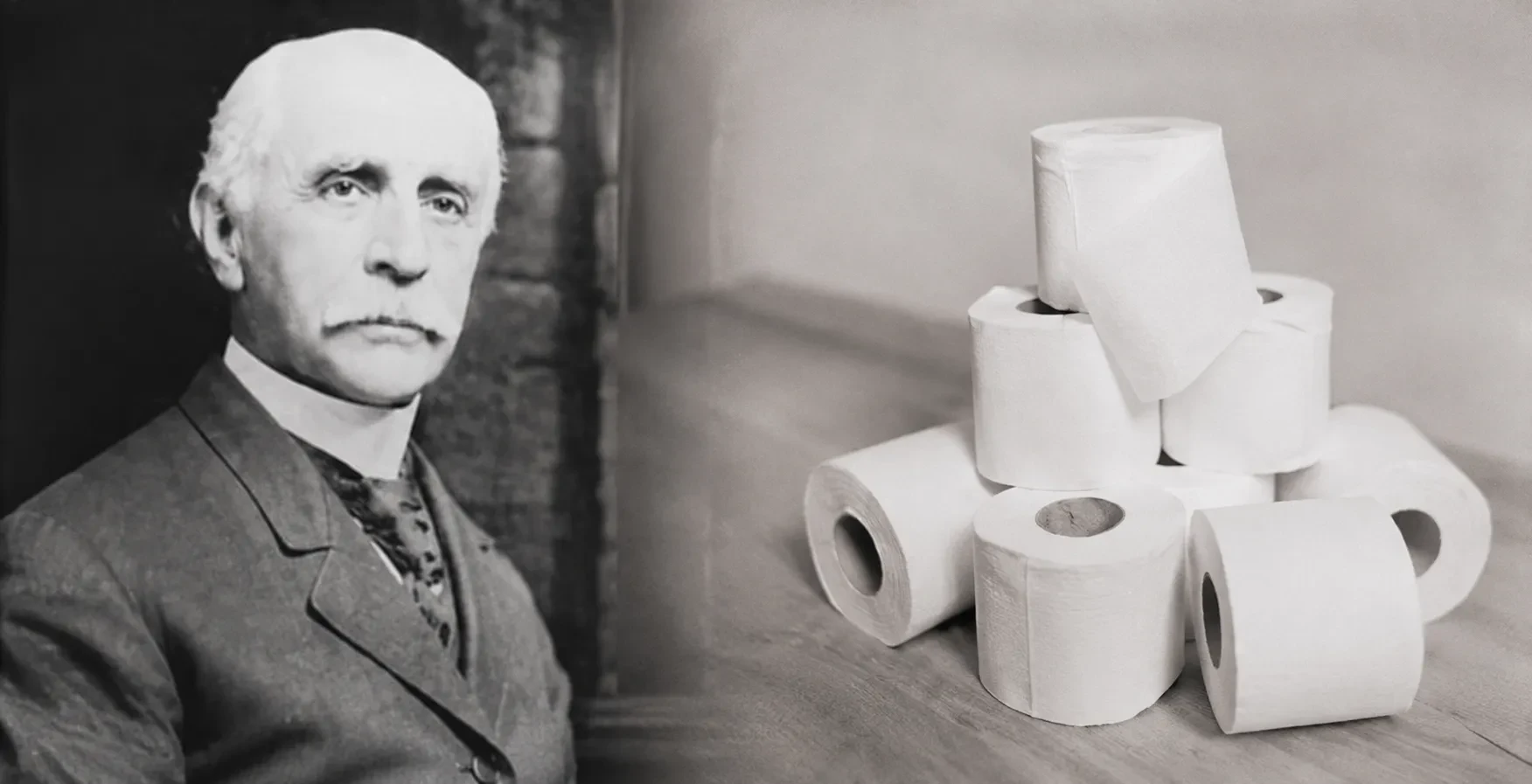
Gayetty printed his name on each sheet, which shows how strongly he wanted consumers to recognize the product as a trusted personal care item. This was unusual for a bathroom product at a time when public discussion of hygiene was often avoided.
Although Gayetty’s Medicated Paper was an important invention, it did not immediately become a mass-market success. The product was expensive, and many households continued using cheaper materials they already had. Still, Gayetty established the core idea behind modern toilet paper: a clean, disposable paper product made specifically for bathroom use.
What Did Americans Use Before Toilet Paper?
Before toilet paper was invented in America, people used materials that were cheap, available, and practical for their setting. In rural homes and outhouses, corn cobs were common. In coastal areas, shells could be used. In towns, newspapers, catalogs, and almanacs often served the same purpose.
The choice depended on location and income. A farm household might use corn cobs because they were plentiful. A family with access to printed paper might reuse newspapers or mail-order catalogs. The Old Farmer’s Almanac was famously designed with a hole so it could be hung in outhouses.
These materials were not made for comfort or hygiene. They were available substitutes, not specialized products. That is why Gayetty’s Medicated Paper was such a clear departure from everyday practice: it introduced bathroom tissue as a dedicated hygiene item.
Common Materials Used Before Toilet Paper
| Material | Common Scenario | Why It Was Used |
|---|---|---|
| Corn cobs | Farms and rural outhouses | Readily available after harvest |
| Newspapers | Town homes and outhouses | Cheap and reusable |
| Catalogs | Households with mail-order access | Large supply of thin paper |
| The Old Farmer’s Almanac | Rural homes | Easy to hang and reuse |
| Shells | Coastal areas | Locally available |
| Leaves or grass | Outdoor settings | Immediate natural materials |
When Did Toilet Paper Rolls Become Common?
Toilet paper rolls became commercially important after Seth Wheeler’s patents between 1871 and 1891 and Scott Paper Company’s mass-market push in 1890. These developments turned toilet paper from flat sheets into the roll format most people recognize today.
Seth Wheeler of Albany, New York, played a major role in the early development of rolled toilet paper. His patents included perforated sheets and toilet paper dispensers, two features still used in modern tissue products. Perforation made each sheet easier to tear, while dispensers helped keep rolls cleaner and easier to use.
Scott Paper Company helped bring roll toilet paper into broader public use in 1890. At first, the company avoided putting its name on the product because bathroom hygiene carried social stigma. Retailers often sold it under private labels, which allowed consumers to buy the product with less embarrassment.
Key Milestones in American Toilet Paper History
| Year | Milestone | Why It Matters |
|---|---|---|
| 1857 | Joseph Gayetty sells Gayetty’s Medicated Paper | First modern commercial toilet paper in America |
| 1871–1891 | Seth Wheeler patents perforated rolls and dispensers | Introduces roll-based convenience |
| 1890 | Scott Paper Company popularizes roll toilet paper | Helps move toilet paper toward mass-market use |
| 1935 | Northern Tissue launches splinter-free toilet paper | Solves a major comfort and quality problem |
Why Was Early Toilet Paper Not Immediately Popular?
Early toilet paper was not immediately popular because it was expensive, socially awkward to discuss, and competing with free household materials. Many Americans did not see a reason to buy paper for bathroom use when newspapers, catalogs, and corn cobs were already available.
There was also a cultural barrier. In the 19th century, personal hygiene was not marketed as openly as it is today. Companies had to sell bathroom products carefully because consumers were uncomfortable discussing them in public.
Cost was another issue. Gayetty’s 50-cent package was not cheap for many families. Even when roll toilet paper became available, manufacturers had to overcome the idea that toilet paper was unnecessary or embarrassing to buy.
What Changed Toilet Paper from a Niche Product to a Household Essential?
Toilet paper became a household essential when indoor plumbing, mass manufacturing, perforated rolls, better paper quality, and changing hygiene standards came together. The product became easier to use, easier to buy, and more acceptable in daily life.
Indoor bathrooms increased the need for paper that could be flushed more safely than newspapers or catalogs. Roll formats made storage and dispensing easier. Perforation improved convenience. Better paper processing helped manufacturers create softer and cleaner tissue.
By the early 20th century, toilet paper was no longer only a specialty item. It became part of the modern bathroom. The 1935 launch of splinter-free toilet paper was especially important because earlier paper could contain rough wood pulp fragments due to older manufacturing methods.
How American Toilet Paper History Shapes Modern Tissue Products
American toilet paper history shows that bathroom tissue evolved through practical improvements, not overnight invention. Consumers moved from improvised materials to medicated sheets, then to perforated rolls, branded tissue, and splinter-free paper.
This history explains why product details matter. A toilet paper roll is not only paper on a core. Sheet count, ply, softness, embossing, roll size, raw material, and packaging all affect the user experience.
Tissue products must match the use scenario. A hotel may need soft and reliable toilet paper for guest satisfaction. A public restroom may need high-capacity rolls. A retailer may need private-label packaging with stable quality and competitive cost.
Is Toilet Paper Still Evolving?
Toilet paper is still evolving through better softness, sustainable materials, improved embossing, stronger wet performance, and packaging designed for retail or bulk supply. The basic roll format is familiar, but the product continues to change with consumer habits and business needs.
Modern buyers often ask for bamboo toilet paper, recycled toilet paper, virgin pulp toilet paper, plastic-free packaging, septic-safe toilet paper, and customized private-label toilet paper. These demands reflect a wider shift toward comfort, supply stability, and environmental responsibility.
The toilet paper industry now serves many scenarios: family bathrooms, hotel rooms, restaurants, hospitals, office buildings, supermarkets, and e-commerce bundles. Each use case requires different specifications, which is why experienced tissue manufacturers focus on both product performance and supply consistency.
Conclusion
Toilet paper was invented in America in 1857, when Joseph Gayetty introduced Gayetty’s Medicated Paper in New York. The product began as flat medicated sheets, then evolved into perforated rolls through Seth Wheeler’s patents, wider roll sales through Scott Paper Company, and smoother splinter-free tissue through Northern Tissue in 1935.
It explains why softness, hygiene, format, packaging, and manufacturing quality still define a good toilet paper product. If you need stable toilet paper supply, private-label tissue, or product specifications for retail, hospitality, or commercial use, contact Liansheng Sempo to discuss your market, packaging needs, and target price range.
FAQ
When was toilet paper first invented in America?
Toilet paper was first invented in America in 1857 by Joseph Gayetty, who sold it as Gayetty’s Medicated Paper.
Who invented toilet paper in the United States?
Joseph Gayetty is credited with inventing the first modern commercial toilet paper in the United States.
What did people use before toilet paper in America?
Americans used corn cobs, newspapers, catalogs, shells, leaves, and pages from The Old Farmer’s Almanac before toilet paper became common.
When did toilet paper rolls start?
Toilet paper rolls developed after Seth Wheeler patented perforated roll toilet paper and related dispensers between 1871 and 1891.
Was toilet paper always sold in rolls?
No. The first commercial toilet paper in America was sold as flat sheets, not rolls.
Why was Gayetty’s toilet paper called medicated paper?
It was called medicated paper because it was infused with aloe and marketed as a hygiene product with soothing benefits.
When did Scott Paper Company sell toilet paper?
Scott Paper Company began popularizing roll toilet paper in 1890, often selling it under private labels at first.
Why did early toilet paper have splinters?
Early paper production could leave small wood pulp fragments in the sheet, which made some toilet paper rough and uncomfortable.
When was splinter-free toilet paper invented?
Northern Tissue introduced the first commercially successful splinter-free toilet paper in 1935.
When did toilet paper become common in homes?
Toilet paper became more common in American homes in the late 19th and early 20th centuries as roll products, indoor plumbing, and hygiene standards improved.


